


Fashion has emerged as one of the most lucrative global business opportunities, with shoppers increasingly looking beyond their local markets to discover international brands, emerging designers and exclusive collections. For enterprises, this opens up opportunities to reach new customers, bring global fashion labels onto one platform, and build a fashion online marketplace that serves buyers across countries.
However, turning this opportunity into a successful global fashion marketplace requires more than onboarding international sellers. Every new market brings different fashion preferences, sizing standards, currencies, languages, payment methods and fulfilment requirements. Managing these differences while keeping sellers, inventory and operations connected can quickly become challenging.
That's where the right technology makes a difference. A scalable AI-powered marketplace can help businesses manage regional storefronts, simplify catalogue operations and deliver personalised shopping experiences across markets.
So, how can businesses turn this opportunity into a thriving global fashion marketplace? Let’s first look at the growth of the global fashion eCommerce market and what it means for enterprises.
Table of Contents
- Global Fashion Ecommerce: Key Trends and Statistics
- What Is an International Fashion Online Marketplace?
- How Is an International Fashion Marketplace Different from a Regular Fashion Marketplace?
- Step-by-Step Process to Set Up a Global Fashion Online Marketplace
- 1. Define Your Fashion Marketplace Business Model
- 2. Choose the Right Fashion Marketplace Platform
- 3. Onboard Fashion Brands, Designers and Retailers
- 4. Use AI to Improve Fashion Discovery
- 5. Build a Fashion Marketplace That Works Across Channels
- 6. Customise Your Marketplace for Different Markets
- 7. Set Up International Payments and Tax Management
- 8. Plan International Shipping, Returns and Exchanges
- 9. Create a Marketing Strategy for Every Global Market
- 10. Test, Launch and Expand Gradually
- How StoreHippo Helps You Build and Scale a Global Fashion Online Marketplace
- 1. Built-in Multi-Vendor Marketplace Management
- 2. Multi-Store Management for Regional Fashion Collections
- 3. AI-Powered Core for Smarter Fashion Commerce
- 4. Unified Omnichannel Fashion Selling
- 5. Multilingual and Localised Shopping Experiences
- 6. Multi-Currency Payments and Checkout
- 7. Integrated Logistics for International Fulfilment
- 8. Built-in Marketing and Promotion Tools
- 9. Flexible Integrations and APIs
- 10. Support for Multiple Fashion Business Models
- Conclusion
- FAQs
Global Fashion Ecommerce: Key Trends and Statistics
Fashion ecommerce has made it easier for shoppers to discover brands and collections beyond their local markets. Customers can explore international labels, compare styles, discover independent designers, and shop for products that may not be available in their home country.
For fashion enterprises, this creates an opportunity to reach new audiences without relying entirely on physical stores. However, customers still expect convenient checkout, clear product information, reliable delivery and an easy returns process.
Here are a few statistics that highlight the opportunity.
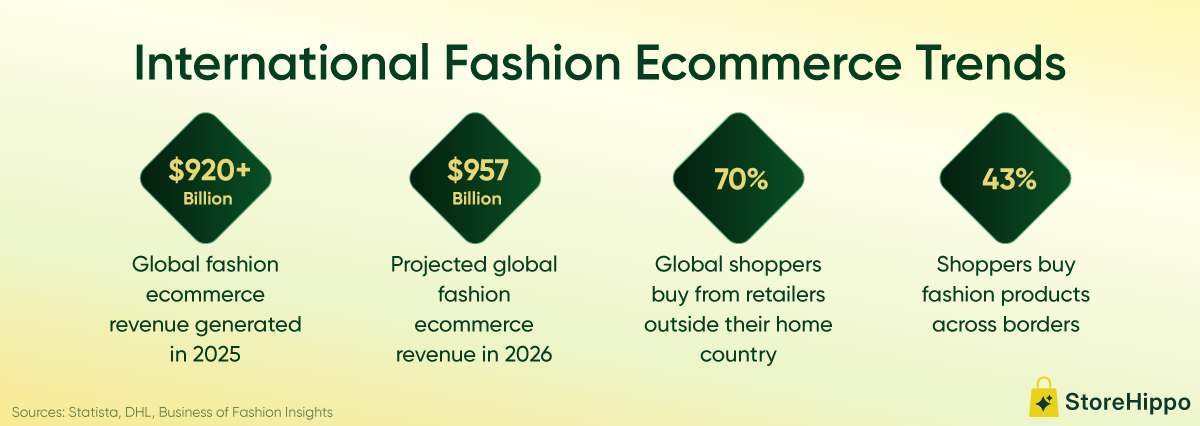
- $920 bn+ was the Global fashion ecommerce revenue generated in 2025 (Statista)
- $957.31 billion is the projected global fashion ecommerce revenue in 2026 (Statista)
- 70% of Global shoppers buy from retailers outside their home country (DHL)
- 43% of shoppers buy fashion products across borders (Business of Fashion Insights)
What it means: International fashion commerce offers room for growth, but customers need more than a large product selection. They want relevant styles, dependable product information, convenient payment options and a smooth post-purchase experience. A well-designed fashion online marketplace can bring these elements together while helping enterprises manage multiple sellers and markets through one connected platform.
What Is an International Fashion Online Marketplace?
An international fashion online marketplace is a digital platform that connects fashion sellers and buyers across countries. It brings multiple brands, designers, boutiques, retailers, wholesalers, or distributors together, enabling customers to browse and purchase products through a shared marketplace website or app.
For example, an enterprise could build a fashion online marketplace that brings Indian ethnic wear brands, Italian footwear labels, independent jewellery designers and international handbag brands together on one platform. A customer in the UK could browse these collections and discover products from different international sellers. Meanwhile, the marketplace owner could manage seller onboarding, product listings, inventory, and orders centrally, making it easier to connect diverse fashion brands with customers across global markets.
Unlike a single-brand fashion store, a multi-vendor platform supports products from multiple businesses. It can also offer different storefronts for different countries, with localised collections, currencies, languages, pricing and shipping options.
An AI-powered marketplace takes this model further by helping shoppers discover relevant products, explore outfit recommendations, find similar styles and get assistance during their shopping journey. AI can also support catalogue creation, product tagging and content optimisation, image editing, etc making it easier to manage large fashion inventories across markets.
For enterprises planning international expansion, this model offers a way to bring diverse fashion businesses together while maintaining control over the overall shopping experience.
For enterprises looking to expand their fashion brand to global markets, this model makes it easier to bring different fashion brands under one roof while keeping the shopping experience consistent for customers.
How Is an International Fashion Marketplace Different from a Regular Fashion Marketplace?
A regular fashion marketplace usually serves buyers and sellers within one country. A global marketplace has to do more. It needs to cater to shoppers in different countries, adapt to local preferences, support different currencies, and manage deliveries across borders.
Fashion makes things a little more challenging. Clothing sizes can vary from one country to another, seasonal trends differ by region, and shoppers may look for different styles, fits and product details depending on where they live. Your marketplace needs to account for these differences to make shopping easier for customers across markets.
Here are the key differences enterprises should consider.
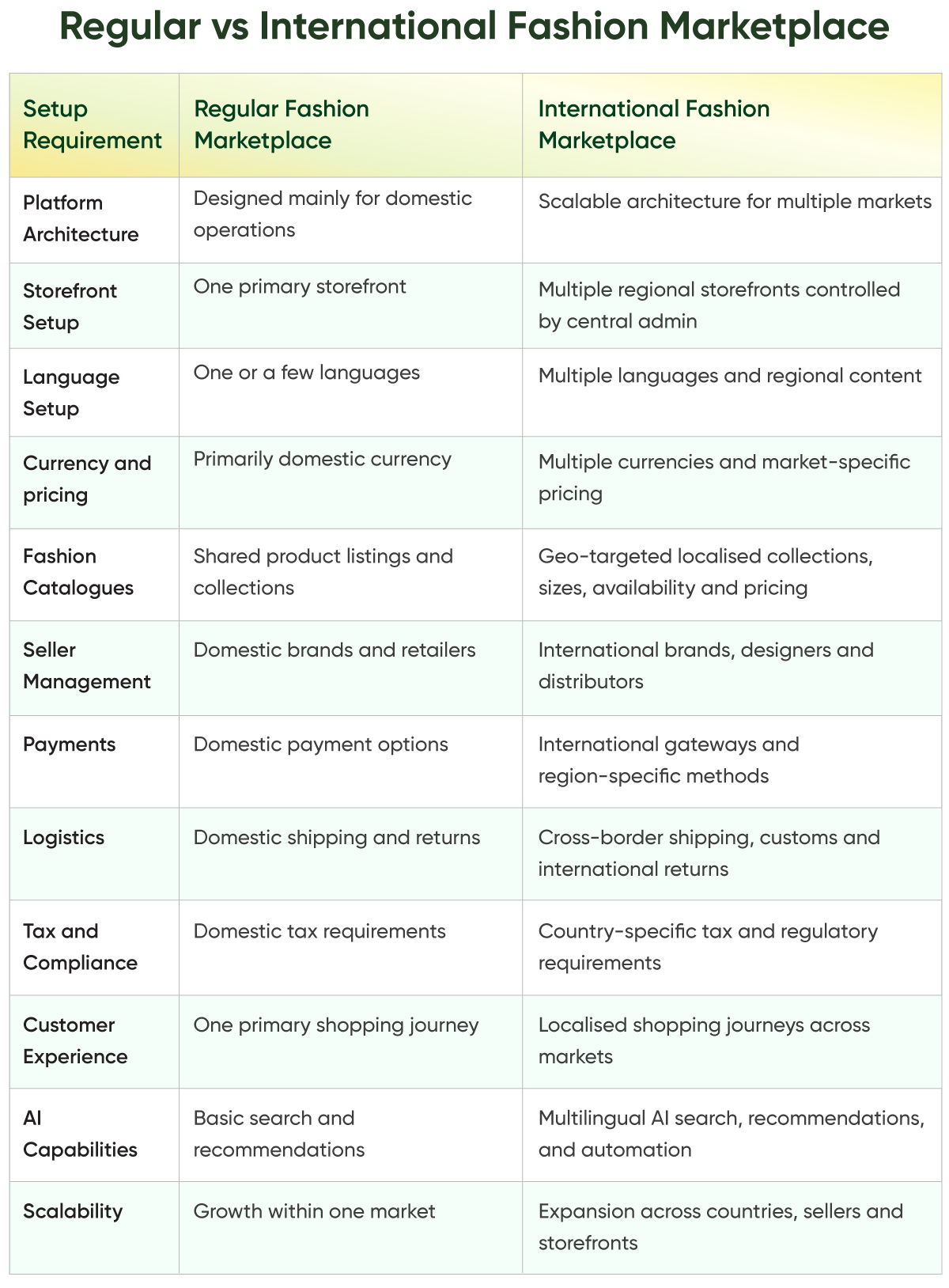
The difference is clear: Unlike a domestic marketplace, an international fashion online marketplace must adapt to different markets while keeping everyday operations connected. The right enterprise ecommerce platform helps enterprises manage sellers, inventory, product catalogues, and orders centrally while creating shopping experiences that feel relevant to customers in each country.
Step-by-Step Process to Set Up a Global Fashion Online Marketplace
Setting up an international fashion online marketplace takes more than choosing products and launching a website. You need to decide which fashion categories to offer, understand what shoppers in different countries want, and plan how to handle payments, shipping and returns. With the right strategy and global marketplace platform in place, you can create a smooth shopping experience for customers while keeping your business easier to manage as it grows.
Here are ten steps to help you get started:
1. Define Your Fashion Marketplace Business Model
Start by deciding what your fashion online marketplace will offer, who you want to sell to and how you want the business to work. For example, you could bring independent fashion brands together, showcase premium designer labels, connect wholesalers with retailers or offer everyday clothing, footwear and accessories. Having a clear focus will help you choose the right sellers, attract your target customers and plan your expansion into international markets.
You should also choose a business model that fits your goals, whether it’s B2C, B2B, B2B2C or a mix of these
Next, identify your target countries and research their fashion preferences, price expectations, popular categories, competitors, and regulatory requirements. Understanding these differences early will help you choose the right markets and build a marketplace that meets genuine customer needs.
2. Choose the Right Fashion Marketplace Platform
Choose an enterprise ecommerce platform that can grow with your business as you bring more fashion brands, designers, and retailers on board.
Look for an enterprise online marketplace platform that is easy to use, quick to launch and comes with built-in features to manage sellers, products, inventory, and orders. It should also support multiple languages, currencies, payment options, and international shipping integrations to help you expand into new markets without building a separate system for each country.
Since fashion catalogues include different sizes, colours, fabrics, and designs, make sure your marketplace website can handle product variations and stock updates easily. Choosing an AI-powered marketplace platform can further help you simplify catalogue creation, seller support and help shoppers discover relevant products and personalise their shopping experience as your fashion online marketplace grows.
3. Onboard Fashion Brands, Designers and Retailers
After choosing an ideal ecommerce platform, bring established fashion brands, independent designers, boutiques and specialist retailers onto your marketplace to offer shoppers a wider choice of styles and price points.
Keep seller onboarding simple by making it easy for vendors to register, upload products, update stock and manage orders. Set clear guidelines for product images, size charts, fabrics, colours and care instructions so customers can make informed choices. Seller verification and quality checks can also help maintain product standards and build customer trust.
4. Use AI to Improve Fashion Discovery
Fashion shoppers often search for a particular style, fit or occasion rather than an exact product name. An AI-powered marketplace can help them find relevant products through semantic search, personalised recommendations and intelligent product suggestions.
AI can also help sellers create product descriptions, organise catalogues, tag products and improve product images. For an international fashion online marketplace, these tools make it easier to manage large catalogues and help shoppers discover styles across different brands and categories.
AI shopping assistants can further guide customers, answer product questions and suggest suitable outfits, making shopping easier while reducing manual work for teams managing the marketplace website.
5. Build a Fashion Marketplace That Works Across Channels
Fashion shoppers may discover a brand on social media, browse its collection on a website, ask questions on WhatsApp and complete their purchase through a mobile app. Your marketplace website should support this kind of connected shopping journey by bringing together channels such as web stores, mobile apps, WhatsApp commerce, and partner portals.
Keep product details, prices and stock information updated across these channels so customers can shop without confusion. A connected setup also helps marketplace owners manage orders, sellers and customer interactions from one place instead of handling each channel separately.
6. Customise Your Marketplace for Different Markets
Once you have your marketplace and sales channels in place, the next step is to tailor the shopping experience to each country. Your fashion online marketplace should meet local style preferences, clothing sizes, currencies and budgets, rather than offering the same store everywhere with just a language change.
A multi-store setup can help you create regional storefronts with relevant fashion collections, localised product descriptions, size guides and market-specific offers. This lets you make shopping more relevant to local customers while keeping sellers, inventory and orders connected through one central platform.
7. Set Up International Payments and Tax Management
Make it easy for customers to understand prices and pay for their fashion purchases. Your online marketplace should support currencies, payment gateways and payment methods for the countries you serve.
Clearly show product prices, shipping charges, and any applicable taxes or customs duties before checkout. Unexpected costs can discourage shoppers from completing their orders, especially when buying from another country.
You also need a clear process for handling payments, refunds, seller payouts, and tax calculations across markets. Working with the right payment and tax partners from the start can help you manage these tasks more smoothly as your fashion online marketplace grows internationally.
8. Plan International Shipping, Returns and Exchanges
Fashion fulfilment involves more than getting orders delivered on time. Customers also want to know when their purchases will arrive, track their shipments easily and return or exchange items that don't fit.
Integrate your online fashion marketplace with multiple international logistics providers and choose shipping options based on delivery destinations, costs and service availability. You’ll also need to plan for customs documentation, duties and other cross-border shipping requirements.
Make your return and exchange policies clear, including return windows, shipping charges and refund timelines. Providing accurate product images, detailed descriptions and size charts can also help customers choose the right fit and avoid unnecessary returns, making shopping easier for everyone.
9. Create a Marketing Strategy for Every Global Market
A fashion collection that attracts attention in one country may not generate the same response elsewhere. Your marketing should reflect local shopping habits, occasions, preferences and price expectations. Localised content, seasonal offers, discounts and personalised promotions can help attract shoppers and build awareness.
Track which products attract attention, which campaigns lead to sales, and what brings customers back. These insights can help you understand local preferences and fine-tune your marketing as your fashion online marketplace expands.
10. Test, Launch and Expand Gradually
Before launching your international fashion marketplace, test the complete shopping experience for each target market.
Test everything before going live, from product listings and size options to currency conversions, payments, stock updates, shipping costs and delivery estimates. Check that returns work smoothly and your marketplace is easy to use on mobile. Make sure both customers and sellers can complete their tasks without issues, from placing an order to getting it delivered.
You don’t need to launch in every country at once. Begin with a few target markets and selected fashion categories, then see how customers respond. Use feedback, sales figures and delivery and return trends to decide where to expand next.
Use these insights to improve the shopping experience on your global fashion marketplace, simplify seller workflows and focus on the features your customers need most. Expanding gradually gives you time to fix issues and get your operations running smoothly before entering more markets.
How StoreHippo Helps You Build and Scale a Global Fashion Online Marketplace
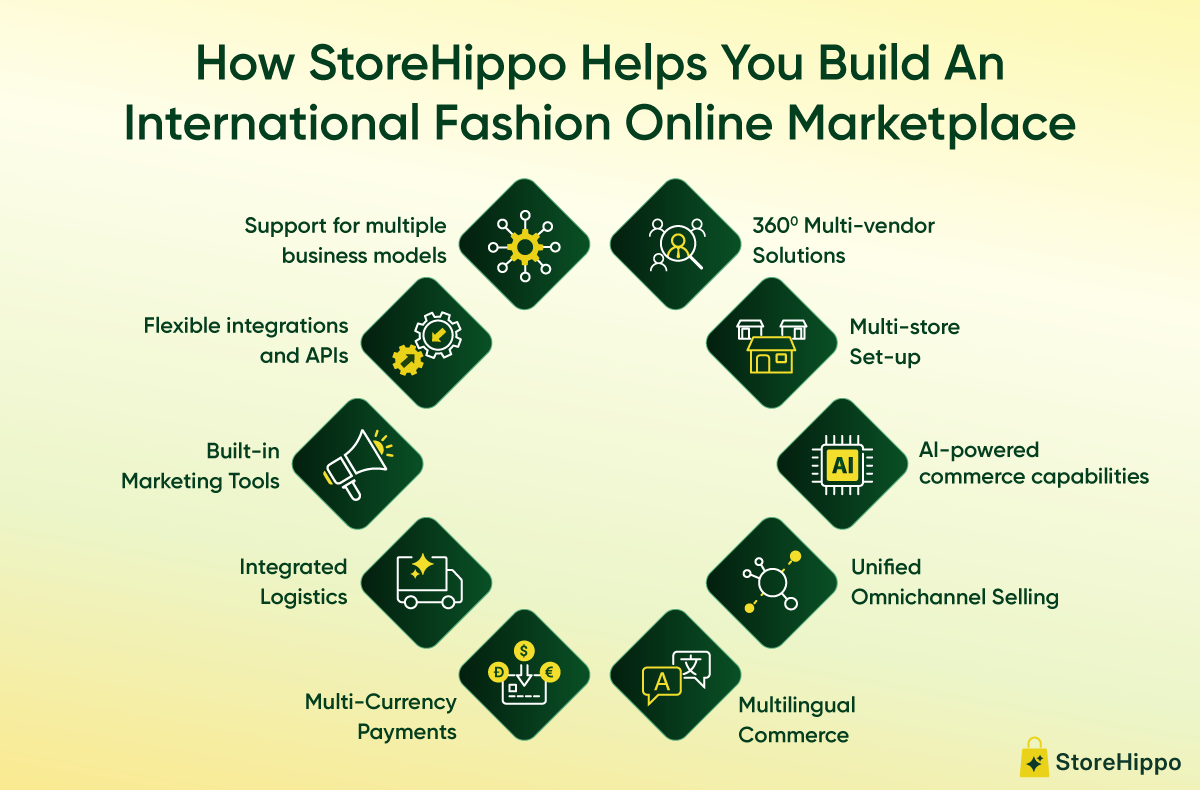
StoreHippo helps enterprises build and manage a multi-vendor fashion online marketplace with capabilities for seller management, multi-store commerce, built-in AI tools, multilingual experiences, multiple payment options, omnichannel selling, and connected business systems.
Here is how StoreHippo supports global fashion marketplace operations.
1. Built-in Multi-Vendor Marketplace Management
Bring fashion designers, boutique owners, clothing brands, footwear sellers and accessories vendors onto one online marketplace. StoreHippo’s built-in multi vendor solutions help you set up, manage, and grow a global marketplace without additional plugins. You can manage vendor onboarding, product catalogues, inventory, and orders centrally, making it easier to bring together products from multiple sellers and offer shoppers a diverse collection across markets. Each seller also gets a dedicated dashboard to manage their product listings, update inventory, track orders, and handle day-to-day marketplace activities independently.
2. Multi-Store Management for Regional Fashion Collections
Fashion trends, seasonal demand, and clothing preferences vary across countries. StoreHippo lets enterprises create multiple storefronts for different international markets and manage them from one admin dashboard, making it easier to deliver localised shopping experiences while managing global operations.
With a built-in theme library, businesses can customise storefront designs to match regional preferences, while multilingual support helps customers browse collections in their preferred language. Flexible offers and discounts allow brands to run market-specific promotions, and localised product catalogues make it easier to showcase styles suited to regional fashion trends. Integrations with multiple logistics partners also help businesses offer suitable shipping options across markets.
By bringing these capabilities together, StoreHippo helps fashion enterprises tailor their storefronts to local audiences, improve the shopping experience, and expand their global fashion online marketplace without managing each market as a separate operation.
3. AI-Powered Core for Smarter Fashion Commerce
Fashion marketplaces need to manage thousands of products while helping shoppers find the right styles without endless scrolling. StoreHippo’s AI-powered marketplace platform helps simplify catalogue creation, maintain engaging product listings, and create a more personalised shopping experience.
By automating product titles, descriptions, categories, and tags from product images, AI cataloguing reduces manual effort and helps teams manage large catalogues more efficiently. Magic Edit enhances product visuals, while semantic search and personalised recommendations help shoppers discover relevant styles based on what they are looking for and their preferences.
Going a step further, StoreHippo enables brands to build custom AI assistants to provide end-to-end guidance for sellers, resolve queries instantly, and help teams handle routine tasks more efficiently, enabling smoother marketplace operations.
Enterprises can also build custom AI shopping assistants to guide customers through collections, help them find suitable products, and answer their questions, making product discovery easier and the shopping experience more convenient.
4. Unified Omnichannel Fashion Selling
Fashion shoppers love the freedom to browse new collections, compare styles and shop wherever it suits them. StoreHippo helps enterprises bring their fashion online marketplace to customers across web stores, mobile apps, PWA stores, WhatsApp Commerce, partner portals, and emerging AI-powered and voice channels.
From new arrivals and product catalogues to inventory and orders, businesses can manage everything from one central platform while offering a consistent shopping experience across channels. This makes it easier to showcase the latest trends, reach more fashion shoppers and grow the online fashion marketplace without the hassle of managing each channel separately.
5. Multilingual and Localised Shopping Experiences
Fashion trends may travel across borders, but shopping preferences, languages and styles can vary from one market to another. StoreHippo supports multilingual commerce with built-in support for 100+ languages, including RTL languages, enabling enterprises to make their fashion collections accessible to shoppers in their native languages.
Businesses can also tailor storefronts, product catalogues, content, pricing, and promotions to suit local markets. This helps enterprises with international online fashion marketplaces connect better with local shoppers while managing their international online marketplace through a single ecommerce platform.
6. Multi-Currency Payments and Checkout
Fashion shoppers across countries have different preferences when it comes to currencies and payment methods. StoreHippo supports 60+ domestic and international payment gateways and supports multi-currency payments, helping enterprises offer a smoother checkout experience to international customers based on their target markets, available integrations, and local payment requirements.
7. Integrated Logistics for International Fulfilment
Delivering fashion orders to customers across different countries requires reliable shipping and smooth fulfilment. StoreHippo supports local, nationwide and global fulfilment through integrated logistics partners, helping enterprises manage deliveries as their fashion online marketplace expands into new markets.
With features such as real-time shipping rate calculations, shipment tracking and automated shipping assignment rules, businesses can simplify shipping operations, manage costs and keep track of orders from a centralised dashboard. This helps fashion brands handle growing order volumes and deliver a smoother shopping experience to customers across markets.
8. Built-in Marketing and Promotion Tools
From fresh seasonal styles to festive collections and designer launches, give shoppers more reasons to explore your fashion online marketplace. StoreHippo’s built-in marketing tools, including flexible discounts, coupons, personalised push notifications and abandoned-cart follow-ups, help you create timely promotions, bring shoppers back for another look and turn more browsing sessions into purchases.
9. Flexible Integrations and APIs
Running a global fashion marketplace often means juggling inventory, orders, payments, and shipping across different systems. StoreHippo’s APIs and headless architecture help enterprises connect these systems with their online marketplace, making it easier to share data, reduce manual work and keep day-to-day operations running smoothly as the business expands into new markets.
10. Support for Multiple Fashion Business Models
StoreHippo supports B2B, B2C, D2C, B2B2C and hybrid business models, giving fashion enterprises the flexibility to sell directly to consumers while serving boutiques, retailers and wholesale buyers. This makes it easier to bring different fashion sellers and buyer groups onto one marketplace, expand sales opportunities across retail and wholesale, and grow the business without being limited to a single selling model.
Conclusion
Setting up an international fashion online marketplace is about bringing the right brands, collections, customers and commerce operations together in a way that works across borders. Enterprises need to consider local fashion preferences, accurate product information, sizing, payments, shipping, returns and customer engagement before expanding into new markets.
The right platform helps make these moving parts easier to manage. With multi-vendor capabilities, regional storefronts, AI-powered discovery, multilingual commerce and connected operations, businesses can create shopping experiences that feel local while supporting growth from a central platform.
StoreHippo brings these capabilities together to help enterprises build and scale a flexible fashion marketplace with multi-vendor and omnichannel commerce tools.
Ready to build an international fashion marketplace for your business?
Book a personalised demo with StoreHippo now.
FAQs
1. How much does it cost to build an international fashion online marketplace?
The cost of building an international fashion online marketplace depends on the number of sellers, target countries, storefronts, integrations, and customisations required. Custom development typically involves separate investments in marketplace functionality, seller management, payments, and logistics. Choosing an enterprise ecommerce platform like StoreHippo, with built-in multi-vendor capabilities, Multistore® and integrated commerce tools, can reduce the need for custom development and third-party plugins.
2. Can I manage fashion marketplaces in multiple countries from one platform?
Yes, an international online marketplace can operate multiple country-specific storefronts from one central platform. Each storefront can have its own collections, languages, currencies, pricing and promotions while sharing core marketplace operations. StoreHippo's built-in Multistore® solution helps enterprises manage regional fashion storefronts, sellers, catalogues and orders through a unified admin system without maintaining separate ecommerce platforms for each market.
3. What AI features should an international fashion marketplace have?
An AI-powered marketplace should offer intelligent product search, personalised recommendations, automated catalogue creation, image enhancement and conversational shopping assistance. These capabilities are particularly useful for fashion businesses managing large collections, product variations and international sellers. StoreHippo offers built-in AI cataloguing, Magic Edit, semantic search and recommendations, along with support for custom AI shopping assistants to improve product discovery and streamline marketplace operations.
4. Can one fashion marketplace support both B2B wholesale and B2C retail?
Yes, a fashion online marketplace can support B2B wholesale, B2C retail and hybrid business models through one platform. It needs buyer-specific pricing, separate catalogues, bulk ordering workflows and retail shopping experiences. StoreHippo supports these models with built-in B2B commerce capabilities, multi-vendor management and configurable storefronts, helping fashion enterprises serve international wholesalers, boutiques, distributors and individual shoppers without running entirely separate commerce systems.
5. How do I manage international fashion sellers, commissions and inventory?
A global fashion marketplace needs centralised seller onboarding, role-based access, commission management and inventory visibility across sellers and markets. Vendors should be able to update products, stock and orders independently, while marketplace owners retain overall control. StoreHippo provides built-in multi-vendor management with dedicated seller dashboards, configurable commissions and centralised administration to support fashion brands, designers and distributors across countries.
6. How can I make my international fashion marketplace suitable for customers in different countries?
Start with regional storefronts offering local currencies, languages, sizing guides, relevant collections and payment options. Your marketplace website should also show accurate delivery information and clear return policies. StoreHippo supports multilingual commerce, including RTL languages, multi-currency capabilities and Multistore®, helping enterprises build shopping experiences tailored to different countries while managing operations centrally.
7. What should I look for when choosing a platform to build a global fashion marketplace?
Choose a global fashion marketplace platform with native multi-vendor management, regional storefronts, flexible APIs, multiple currencies, international integrations and AI-powered product discovery. It should also support expansion into new countries and business models without requiring a complete rebuild. StoreHippo combines an API-first, headless architecture with Multistore®, built-in marketplace management and AI commerce capabilities to support international fashion marketplace development.
Binny Joseph is a seasoned ecommerce leader and Senior Vice President of Sales & Alliances with extensive experience helping businesses adopt modern commerce solutions.
He shares practical insights on building and scaling multi-vendor marketplaces that enable businesses to expand globally and succeed in the evolving digital commerce landscape.