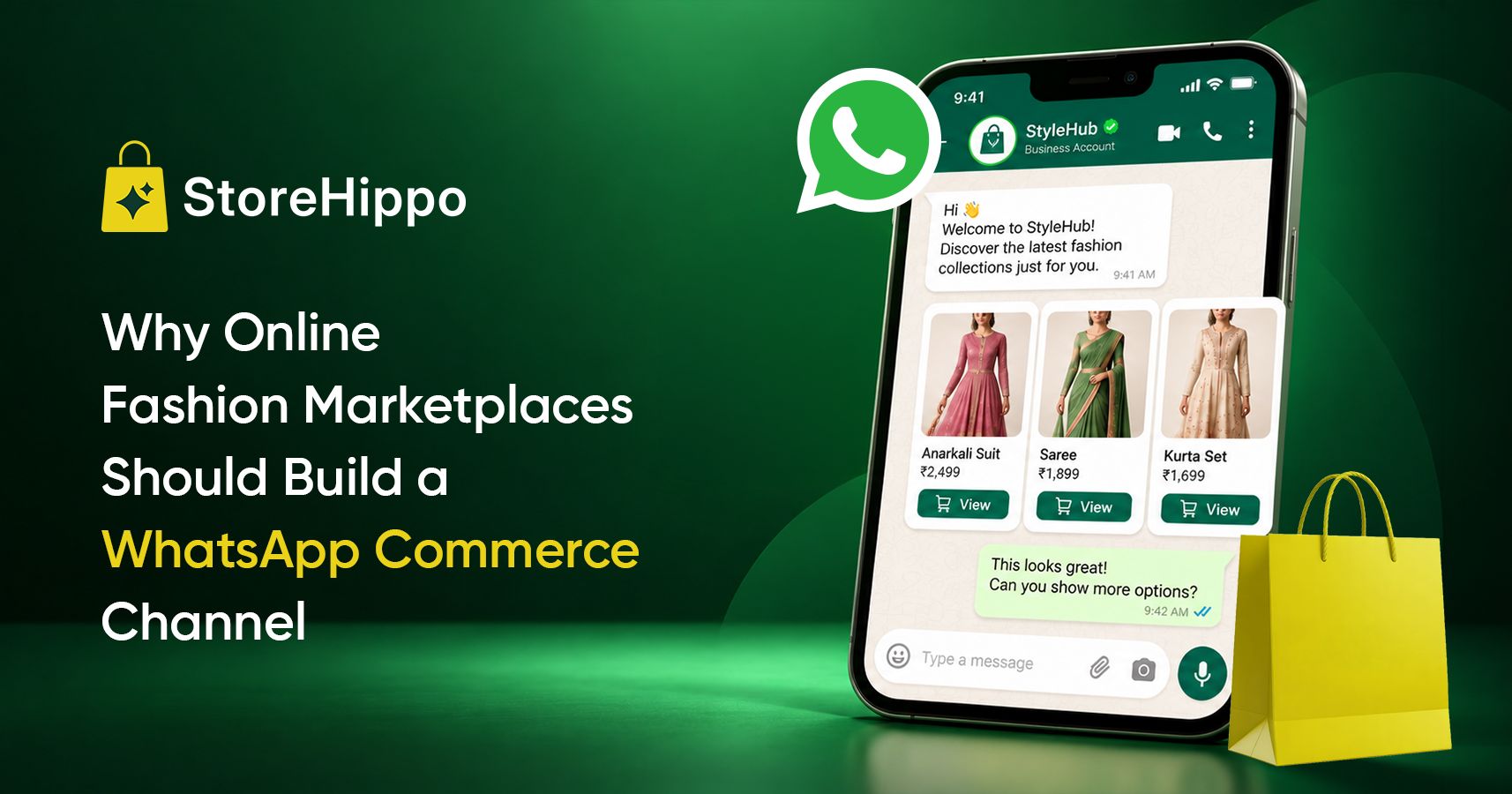



WhatsApp sales channel is emerging as a modern way for fashion businesses to reach shoppers, showcase their collections, and make online shopping more convenient. From discovering the latest trends and asking about sizes to sharing favourite outfits with friends, people already use WhatsApp to talk about fashion. By bringing product discovery closer to these everyday conversations, fashion brands can make it easier for customers to explore collections and find styles they love.
With WhatsApp commerce, fashion businesses can showcase new collections, share offers, recommend products, and keep customers updated on their orders. For an online fashion marketplace, it also creates an opportunity to reach shoppers directly, build stronger customer relationships, and encourage repeat purchases.
But how do you make this work when your marketplace has multiple sellers, hundreds of products, different sizes and colours, and inventory that keeps changing? Let's look at how to build a WhatsApp sales channel for your online fashion marketplace and the essential features you need to make it work.
Table of Contents
Why Should Online Fashion Marketplaces Sell on WhatsApp
Fashion shoppers want more than just a catalogue of products. They want to discover new styles, get quick answers to their questions, and shop without too many steps. With WhatsApp, online fashion marketplaces can bring these interactions closer together on a platform customers already use every day, making it easier to explore collections, connect with sellers, and move from browsing to buying.
Here are some key numbers that highlight its growth:
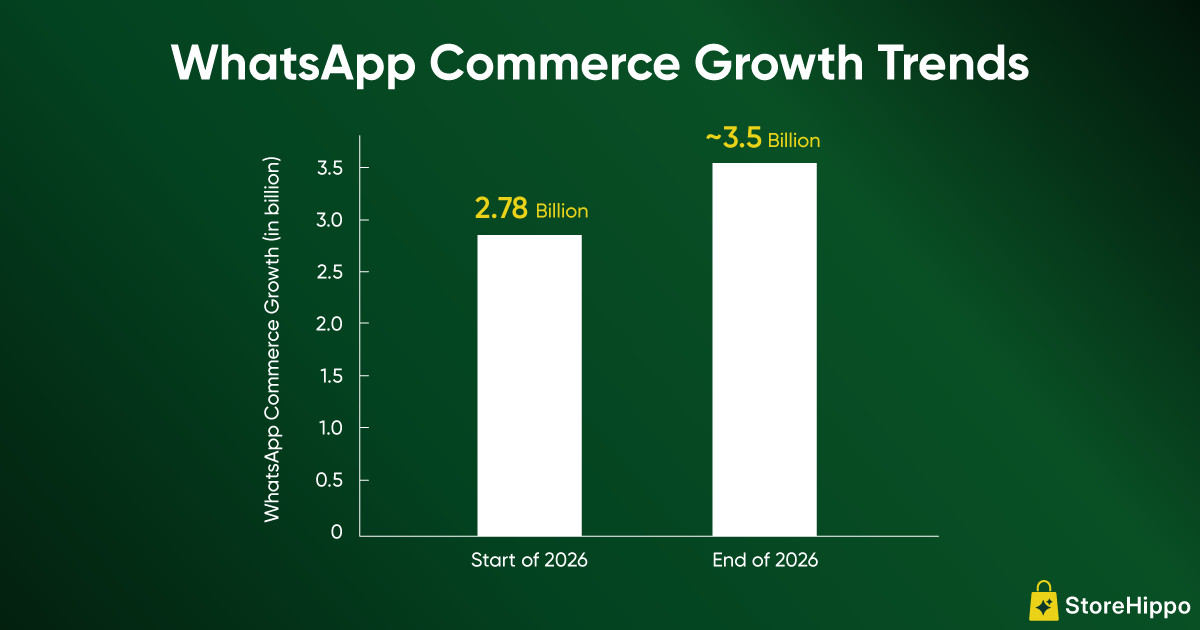
- 2.78B people used WhatsApp worldwide in 2026 start
- ~3.5B WhatsApp users expected by the end of 2026
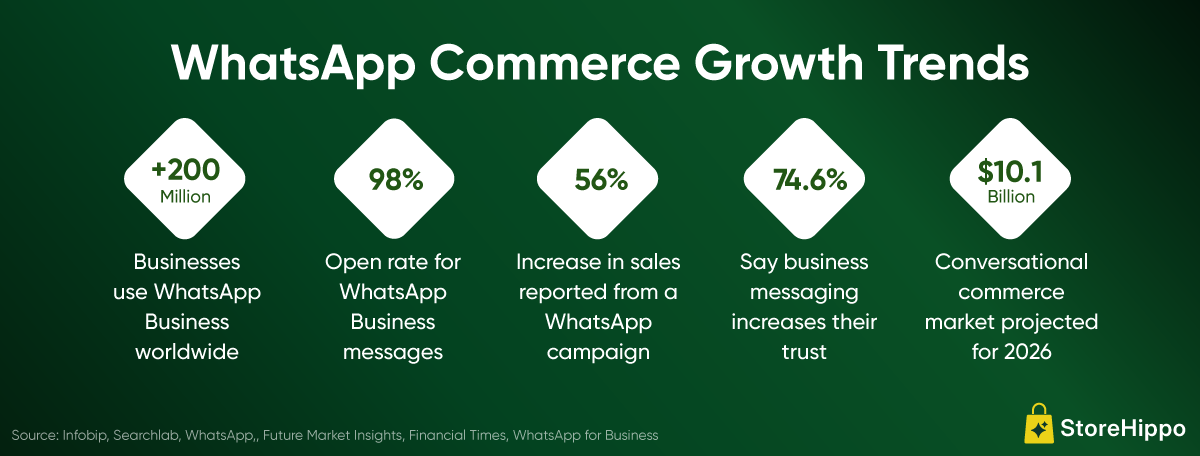
- 200M+ businesses use WhatsApp Business worldwide
- 98% open rate for WhatsApp Business messages
- 56% increase in sales reported from a WhatsApp campaign
- 74.6% say business messaging increases their trust
- $10.1B conversational commerce market projected for 2026
Source: Infobip, Searchlab, WhatsApp,, Future Market Insights, Financial Times, WhatsApp for Business
As conversational commerce continues to grow, WhatsApp is creating new opportunities for fashion marketplaces to connect with shoppers and drive sales.
However, making this channel work at scale means having the right technology to manage multiple sellers, keep product details and stock updated, and ensure orders run smoothly as customer conversations turn into sales.
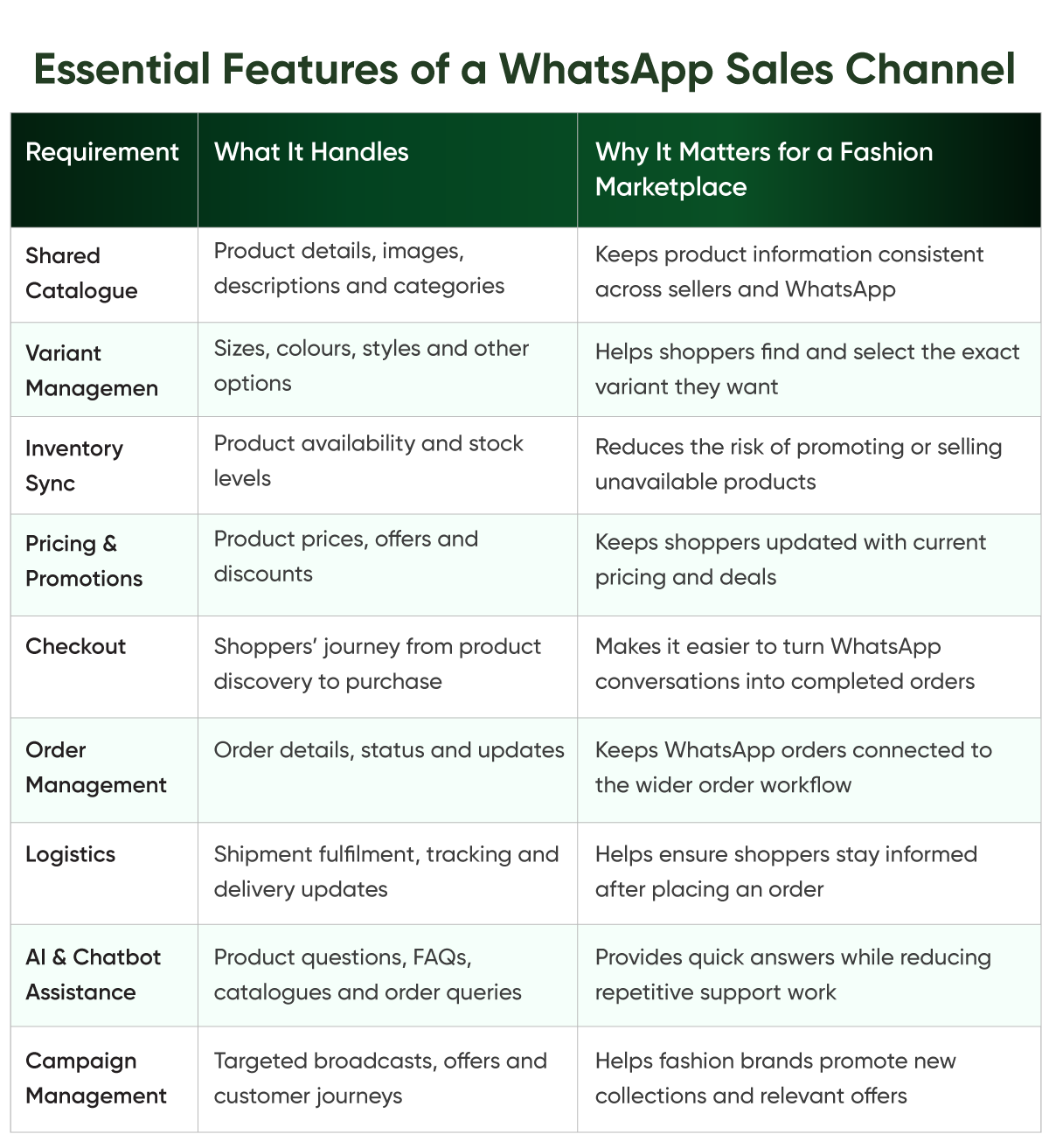
Here are the essential features to look for when building a WhatsApp sales channel for a fashion marketplace.
How to Build a WhatsApp Sales Channel for Your Online Fashion Marketplace
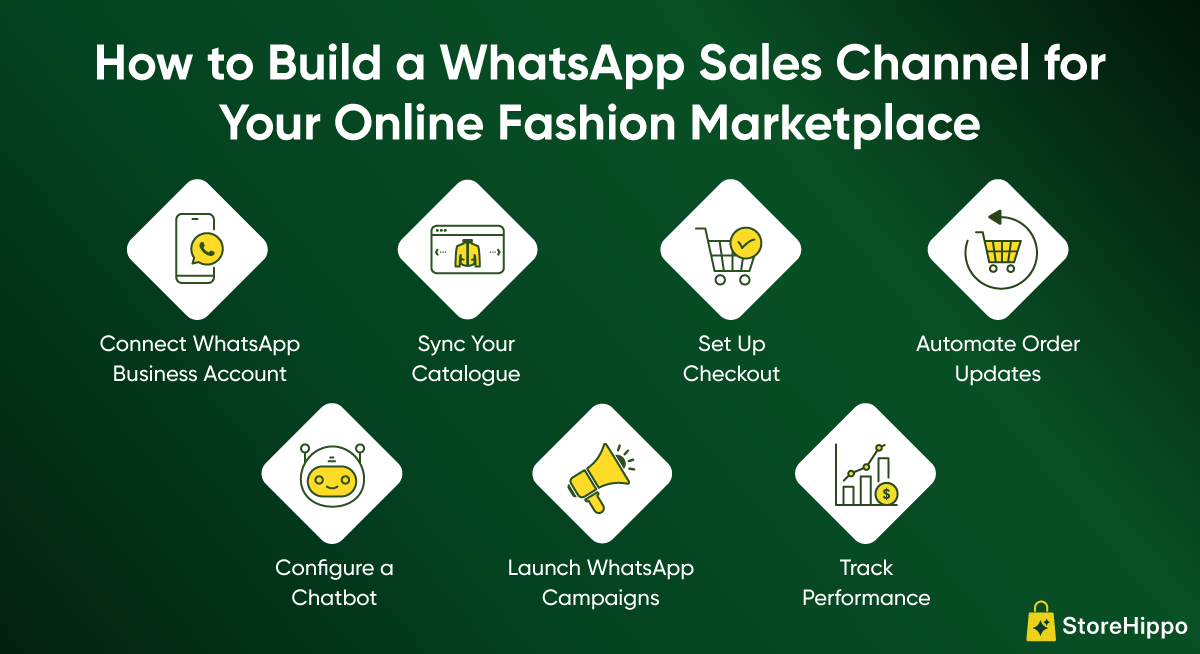
Building a WhatsApp sales channel for an online fashion marketplace is not just about sharing product links with shoppers. You need to plan how customers will discover products, compare options, complete purchases, receive updates, and get support throughout their buying journey.
A well-planned WhatsApp commerce strategy can bring these interactions together through one convenient channel while making shopping more conversational and convenient. Here are seven steps to help you build a WhatsApp sales channel that fits your fashion marketplace and supports a smoother conversational commerce experience.
Step 1: Define Your WhatsApp Commerce Strategy
Start by deciding what role WhatsApp will play in your overall sales journey. Will customers use it mainly to discover products, ask questions, receive personalised recommendations, recover abandoned carts, or complete purchases?
For an online fashion marketplace, you can also use WhatsApp to promote new collections, seasonal offers, trending styles, and repeat-purchase opportunities. Having a clear idea of these use cases from the start helps you make WhatsApp a useful part of the shopping journey rather than just another channel for sending promotional messages.
Step 2: Connect Your Product Catalogue
Make sure your WhatsApp shopping experience always shows the latest product information. Product names, images, descriptions, prices, sizes, colours, styles, and availability should match what shoppers see on your online storefront.
This matters even more when your online fashion marketplace brings together products from multiple sellers. Keeping catalogue details in sync helps shoppers find what they want without running into outdated prices, unavailable products, or missing size and colour options.
Step 3: Map Product Discovery and Checkout
Think about what the shopping journey should look like once a customer discovers a product on WhatsApp. The journey should make it easy to browse products, explore variants, check relevant details, and move to checkout without unnecessary steps.
You can also identify where conversational interactions can add value, such as helping shoppers find products based on their preferences or answering common product questions. Choosing an AI-powered marketplace platform with built-in AI tools can enable you to make product discovery more personalised and responsive. These tools can help shoppers find products based on their preferences, get personalised recommendations, and receive quick answers to common product questions, making the overall shopping journey more convenient.
Step 4: Set Up Order and Delivery Communication
The customer journey should not stop once an order is placed. Plan how shoppers will receive updates about order confirmation, payment, packing, shipping, delivery, and returns through WhatsApp.
Timely notifications can reduce uncertainty after checkout and give customers an easy way to stay informed without repeatedly contacting your support team. For a growing online fashion marketplace, this can also reduce repetitive order-status queries.
Step 5: Plan Automated Customer Support
Decide which customer queries can be handled automatically and which ones should be passed to a support team. Start with common requests such as product FAQs, catalogue help, order tracking, returns, and basic shopping assistance.
This is where conversational commerce can make a real difference. Automated conversations can quickly answer routine questions and help shoppers find the right information, while your support team can focus on queries that need a more personal response.
Step 6: Create Campaigns and Audience Segments
WhatsApp commerce can also become an important channel for promoting products and bringing shoppers back to your online marketplace. Plan campaigns around new collections, festive offers, limited-time discounts, trending products, and personalised recommendations.
Instead of sending the same message to everyone, segment shoppers based on factors such as purchase history, location, browsing behaviour, cart activity, or order value. This can make your WhatsApp commerce campaigns more relevant and help create more meaningful interactions with different customer groups.
Step 7: Track Sales and Engagement
Finally, decide which metrics you will use to evaluate your WhatsApp sales channel. Track indicators such as message delivery, replies, product clicks, conversions, abandoned carts, campaign-driven orders, and overall sales.
These insights can show which product recommendations, campaigns, and customer journeys are working and where shoppers are dropping off. Over time, you can use these learnings to refine your WhatsApp commerce strategy and create a more effective shopping experience.
How StoreHippo Helps You Build a WhatsApp Ecommerce Channel for Your Fashion Marketplace
StoreHippo AI-powered marketplace platform brings the core commerce capabilities you need to build a WhatsApp sales channel for your online fashion marketplace. From product discovery and personalised promotions to AI-powered assistance and order updates, it helps you connect WhatsApp with your existing ecommerce operations.
Here are the key StoreHippo features that help you build and manage a WhatsApp sales channel for your online fashion marketplace:
1. Connect Your WhatsApp Business Account
StoreHippo enables you to connect your WhatsApp Business Account (WABA) to your ecommerce backend, so that you can manage buyer conversations, campaigns, orders and support from one place. This makes it easier to run a WhatsApp sales channel for your online fashion marketplace without adding separate tools for everyday activities.
2. Bring Your Fashion Catalogue to WhatsApp
StoreHippo's master catalogue feature lets you manage product details, prices and stock from one place. Any updates are reflected across your ecommerce store and WhatsApp, while orders from WhatsApp sync with your existing inventory and order management system.
3. Keep Sizes, Colours and Variants in Sync
Fashion shoppers often compare sizes, colours and styles before making a purchase. StoreHippo's WhatsApp Commerce solutions make it easier to manage these product variations, along with buyer-specific pricing and MOQ rules, so shoppers can explore available options and find what works for them without confusion.
4. Take Buyers From WhatsApp to Secure Checkout
StoreHippo provides a Store Redirect feature that takes customers to your online fashion marketplace when they click the “Buy” button on your WhatsApp sales channel. This makes it easy for customers to discover products on WhatsApp and then move to your website to complete their purchase through a secure checkout, keeping the buying journey simple and seamless.
5. Launch Targeted Fashion Campaigns at Scale
StoreHippo supports high-volume WhatsApp broadcasts with product images, offers and interactive buttons. You can segment visitors on your online marketplace based on their location, purchase history, cart activity, order value and custom business rules, to share relevant offers and product recommendations that match their interests.
6. Reach Shoppers Based on Their Buying Behaviour
StoreHippo enables businesses to schedule campaigns or trigger messages based on buyer actions and events in their buying journey. This can support use cases such as re-engaging shoppers based on cart activity or communicating relevant offers at the right stage of the customer journey.
7. Track WhatsApp Campaign Performance:
StoreHippo helps you track how your WhatsApp campaigns perform, from message delivery and customer replies to clicks, conversions and sales. This helps you understand which campaigns are bringing more orders to your online fashion marketplace and where you can improve your marketing efforts.
8. Automate WhatsApp Order Notifications:
StoreHippo enables you to automate WhatsApp order notifications and keep customers updated at every step. From order confirmation and payment to shipping, delivery and returns, you can send branded messages automatically, so shoppers always know the status of their orders.
9. Build WhatsApp Chatbots Without Coding
StoreHippo provides a visual flow builder where businesses can connect triggers, conditions and actions and deploy these flows directly to WhatsApp. The chatbot can answer FAQs, share catalogues, track orders and route complex conversations to the appropriate team.
10. Give the Chatbot Access to Commerce Data
StoreHippo's chatbot can work with catalogue, pricing, inventory and order data, so businesses don't have to maintain a separate knowledge base for these core commerce details. This is particularly relevant for online fashion marketplaces where product availability, variants and order information can change frequently.
11. Hand Complex Conversations to Human Agents
When a conversation needs human assistance, StoreHippo can transfer it to the human team with the complete chat, customer history and active cart available in one view. This enables enterprises with online fashion marketplaces to combine automated WhatsApp assistance with human support instead of treating the two as separate workflows.
12. Manage WhatsApp Conversations From One Unified Dashboard
StoreHippo's unified conversation dashboard brings WhatsApp, chatbot and email conversations into one inbox, with buyer identity, cart, order history and AI assistance available in the same view. For a growing online fashion marketplace, this can make it easier for support teams to manage conversations across channels without switching between separate systems.
Conclusion
WhatsApp commerce is now an important channel for fashion businesses to connect with shoppers, showcase products and simplify the buying journey. For an online fashion marketplace, success depends on more than sending messages or sharing product links. You need the right tools to manage large catalogues, product variants, inventory, customer conversations, orders and targeted campaigns from one connected system.
StoreHippo marketplace platform brings these capabilities together with WhatsApp commerce, automated notifications, chatbot assistance, campaign tracking and a unified conversation dashboard. These features help fashion businesses create smoother shopping experiences, engage customers more effectively and manage sales operations with greater ease. By combining conversational commerce with your existing ecommerce setup, you can make WhatsApp a valuable part of your sales strategy.
Want to build a WhatsApp sales channel for your online fashion marketplace?
Book a demo with StoreHippo now.
FAQs
1. How can a WhatsApp sales channel help fashion enterprises increase customer retention?
A WhatsApp sales channel helps fashion enterprises improve customer retention by sharing personalised offers, new collection updates, styling recommendations and loyalty rewards. Regular, relevant communication keeps customers engaged, encourages repeat purchases and helps build long-term customer relationships.
2. How can WhatsApp Commerce help an online fashion marketplace grow?
WhatsApp Commerce helps an online fashion marketplace grow by making it easier to showcase new collections, share personalised offers, answer customer queries and recover abandoned carts. It also helps businesses keep shoppers updated on orders, improve customer engagement and encourage repeat purchases.
3. How can an online fashion marketplace deliver a consistent brand experience across channels?
An online fashion marketplace can deliver a consistent brand experience across channels by maintaining uniform product descriptions, pricing, visuals, promotional messages and customer support standards. Using a centralised system to manage product information and campaigns across WhatsApp, websites, and mobile apps helps customers enjoy a familiar shopping experience wherever they interact with the brand.
4. What should enterprises consider when choosing a WhatsApp commerce solution?
Enterprises should look for a WhatsApp commerce solution that offers catalogue integration, inventory sync, automated messaging, chatbot support, campaign tracking and order management. It should also integrate with existing ecommerce systems, handle growing customer volumes and support personalised communication across multiple customer segments.
5. Can an AI-powered marketplace use WhatsApp to improve product discovery?
Yes, an AI-powered marketplace can use WhatsApp to improve product discovery by helping shoppers find relevant products based on their preferences, browsing history and shopping behaviour. AI-powered chatbots can answer product queries, suggest suitable styles, share product catalogues and provide availability updates, making it easier for customers to find what they need.
6. How can an online fashion marketplace personalise WhatsApp messages for customers?
An online fashion marketplace can personalise WhatsApp messages using customer preferences, browsing history, past purchases and shopping behaviour. For example, it can share new arrivals based on favourite categories, recommend similar products or send relevant offers to interested shoppers. This makes messages more useful and encourages customers to engage with the brand.
7. How can conversational commerce support an omnichannel fashion business?
Conversational commerce helps fashion businesses connect sales channels like WhatsApp, websites and mobile apps by making it easier for customers to discover products, ask questions and get support. When integrated with the ecommerce system, it keeps product information, order updates and customer interactions connected, creating a smoother shopping experience across channels.
8. How can enterprises manage WhatsApp marketing as their customer base grows?
Businesses can manage WhatsApp marketing as they grow by segmenting customers, automating routine messages, scheduling campaigns and tracking performance. Using a centralised platform to manage customer conversations, product updates and campaign results helps teams handle larger audiences efficiently while keeping messages relevant and personalised.
Pallavee Kumar brings over 20 years of hands-on ecommerce experience, having helped enterprise brands scale through strong operations and clear storytelling.
She brings hands-on industry knowledge and a practical perspective on using WhatsApp commerce to strengthen customer engagement, simplify communication, and drive long-term business growth.