


India’s ecommerce market is growing rapidly, and multi-vendor marketplaces have become a popular shopping destination for millions of consumers. From electronics and fashion to beauty, home essentials, and groceries, these platforms bring multiple sellers and brands together, offering wider product choices, competitive pricing, and convenient shopping experiences. As consumer preferences shift towards online shopping, marketplaces are changing how India discovers and buys products.
This shift has also created new opportunities for businesses. Instead of selling only through existing platforms, brands, retailers, and enterprises are exploring ways to build their own online marketplaces to expand their reach, onboard multiple sellers, and create new revenue streams. Learning from established marketplaces can help businesses understand what it takes to attract customers, manage sellers, and grow in India's competitive ecommerce landscape.
Let's explore the top 5 most popular multi-vendor marketplaces in India, what makes them successful, and the strategies businesses can learn from their growth. Whether you want to build a niche marketplace or a large-scale marketplace to bring multiple vendors and products together on a single platform, these examples offer useful insights into creating a marketplace that meets changing customer expectations.
Table of Contents
How Multi-Vendor Marketplace Trends Are Reshaping Indian Ecommerce
Multi-vendor marketplaces are changing the way people shop online in India. Instead of visiting different stores, customers can explore products from multiple sellers on one platform. With more choice for buyers and easier marketplace management for businesses, this model is becoming an important part of India’s ecommerce growth.
Here are the numbers showing the growth of multi-vendor marketplaces in India
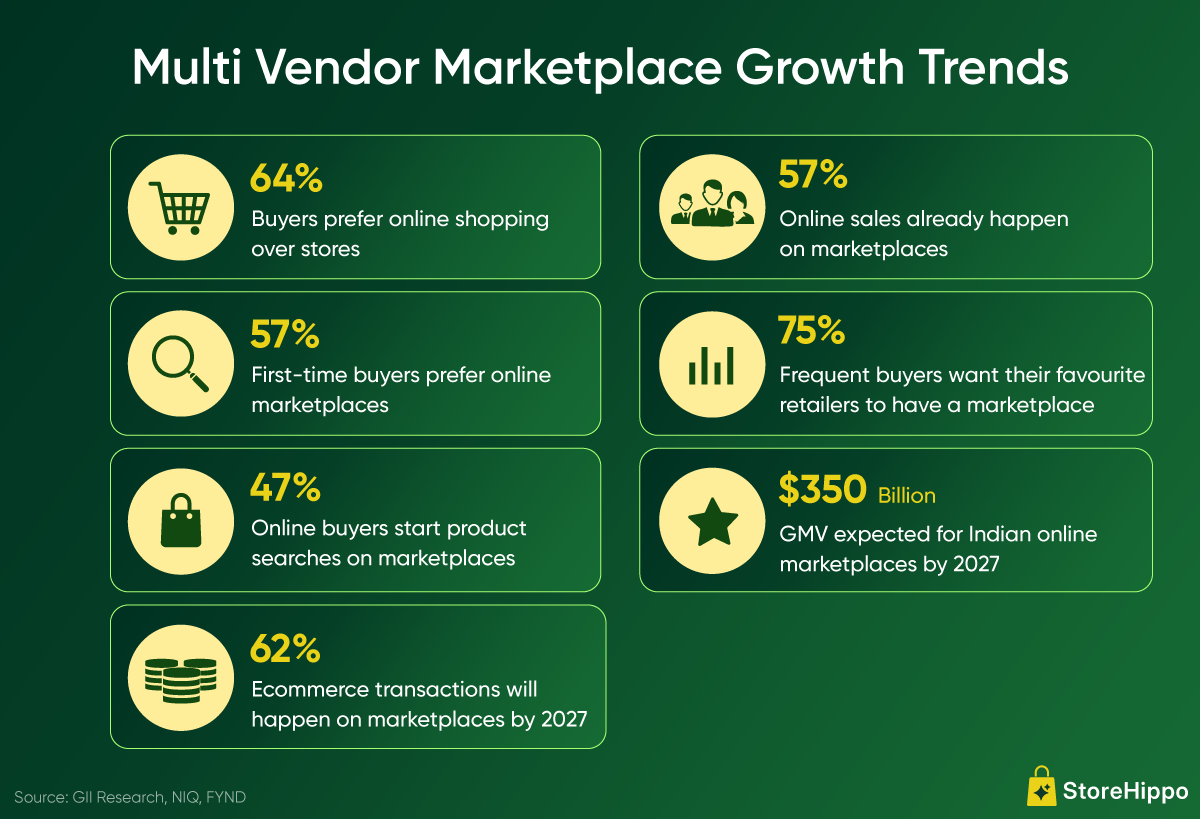
- 64% of buyers prefer online shopping over stores
- 57% of first-time buyers prefer online marketplaces
- 47% of online buyers start product searches on marketplaces
- 62% of ecommerce transactions will happen on marketplaces by 2027
- 57% of online sales already happen on marketplaces
- 75% of frequent buyers want their favourite retailers to have a marketplace
- $350B GMV expected for Indian online marketplaces by 2027
Source: Digital Commerce 360, Statista
These trends give a clear picture of how multi-vendor marketplaces are growing in India. They also show why more businesses are choosing the marketplace model to offer customers more choice, attract more sellers, and grow their online reach.
Running an online store is no longer the only way to grow an ecommerce business. AI, automation, and new platform-based models are changing how businesses manage their stores and serve customers. That’s why more businesses are exploring multi-vendor marketplaces to bring different sellers and products together.
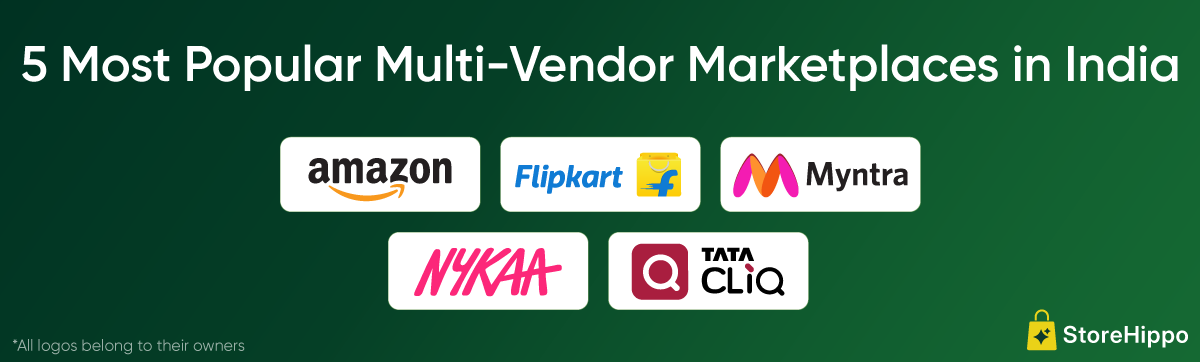
Top 5 Multi-Vendor Marketplaces in India
Here are the top 5 most popular online marketplaces in India that capture a large share of the Indian ecommerce industry.
1. Amazon India
Amazon India is one of the most recognised names in India's multi-vendor marketplace space. What started as an online shopping platform has grown into a massive ecommerce ecosystem where customers can discover products across electronics, fashion, beauty, home essentials, groceries, and more. Its large seller network, broad product selection, reliable delivery infrastructure, and convenient shopping experience have made it a major B2C marketplace in India.
Amazon India Growth Stats
- ₹30,139 crore revenue from operations reported in FY25
- 1.6 million+ sellers on Amazon India
- 12.5 crore+ products available across the marketplace
- 70% of new Prime members during Prime Day 2025 came from Tier-II and Tier-III cities
- 52% of online shoppers start their product search on Amazon
Source: Economic Times, Reuters, Amazon News
What Makes Amazon India Successful
- Wide seller and product network: Millions of sellers and a huge product catalogue give customers plenty of choice.
- AI-powered shopping: Features such as Rufus, visual search and personalised recommendations make product discovery easier.
- Strong logistics: A large fulfilment and delivery network supports fast and reliable deliveries.
- Mobile and voice commerce: Its app, voice search and multilingual capabilities make shopping convenient across devices.
- Personalised experience: Recommendations, reviews and shopping suggestions help customers find relevant products quickly.
- Seller-focused tools: Technology and AI tools help sellers create listings, promote products and manage their marketplace presence.
2. Flipkart
Flipkart is one of India's best-known online marketplaces, serving millions of customers across a wide range of categories. From electronics and smartphones to fashion, appliances, beauty, and everyday essentials, the platform brings products from a large network of sellers under one roof. Its strong presence across Indian cities, extensive product assortment, and focus on value-driven shopping have helped Flipkart build a strong position in India's multi-vendor ecommerce landscape.
Flipkart Growth Stats
- 500 million+ registered users
- 1.4 million+ sellers, including sellers on Shopsy
- 500 million+ products across 150+ categories
- ₹20,493 crore revenue reported by Flipkart Internet in FY25
- 606 million visits in the first 48 hours of The Big Billion Days 2025
Source: Wikipedia, Economic Times, Fortune India
What Makes Flipkart Successful
- Large seller ecosystem: A wide network of sellers brings products across hundreds of categories to customers.
- AI-powered discovery: Generative AI, conversational shopping, and personalised recommendations make product discovery easier.
- Visual shopping features: Tools such as virtual try-ons and visual search help customers make purchase decisions online.
- Mobile-first shopping: Its app brings product discovery, offers, payments, order tracking and personalised experiences together.
- Strong logistics network: Its fulfilment and delivery infrastructure helps serve customers across metros and smaller cities.
- Connected ecosystem: Flipkart's wider ecosystem across shopping, fashion and quick commerce creates multiple customer touchpoints.
3. Myntra
Myntra has built its identity around fashion and has grown into one of India's leading B2C online marketplaces for fashion and lifestyle products. The platform brings together thousands of brands and sellers across clothing, footwear, accessories, beauty, personal care, and home categories. With its fashion-focused shopping experience, personalised recommendations, frequent sales, and strong brand portfolio, Myntra has created a distinct space within India's online marketplace industry.
Myntra Growth Stats
- ₹6,043 crore revenue from operations in FY25
- 70 million+ monthly active users
- 3.8 million+ styles from 9,700+ brands
- 30% growth in first-time shoppers during EORS 2026
Source: Money Control, Economic Times
What Makes Myntra Successful
- Fashion-focused marketplace: Its specialised focus helps customers discover fashion and lifestyle products more easily.
- Personalised recommendations: Data-led recommendations help shoppers find products based on their interests and shopping behaviour.
- Mobile-first experience: The app brings personalised feeds, search, offers, payments and order tracking together.
- Visual and engaging discovery: Styling content, rich product visuals and interactive shopping features make fashion discovery more engaging.
- Large brand ecosystem: Thousands of brands give shoppers a wide selection across fashion, beauty and lifestyle.
- Strong sale-led engagement: Events such as EORS attract new shoppers and encourage repeat purchases.
4. Nykaa
Nykaa has established itself as a prominent multi-vendor marketplace focused on beauty, personal care, and lifestyle products. Shoppers can discover cosmetics, skincare, haircare, fragrances, wellness products, and beauty accessories from a wide range of brands on its platform. Its combination of online shopping, curated product selection, beauty content, and offline stores has helped Nykaa build a strong presence in India's B2C ecommerce marketplace segment.
Nykaa Growth Stats
- ₹7,950+ crore revenue from operations in FY25
- 42 million+ total customers
- 8,600+ brands and 7.2 million+ SKUs
- 40%+ of orders come from Tier-II, Tier-III, and Tier-IV cities
Source : Nykaa
What Makes Nykaa Successful
- Strong beauty marketplace: A large selection of beauty, personal care and lifestyle brands gives customers extensive choice.
- AI-powered personalisation: AI is increasingly being used to improve product discovery and recommendations.
- Smart beauty experiences: Features such as AI-powered skin analysis help customers find products suited to their needs.
- Content-led shopping: Tutorials, reviews, guides and expert advice help customers make informed buying decisions.
- Omnichannel presence: Its website, app and physical stores create a connected shopping experience.
- Strong mobile commerce: Customers can browse products, discover content, access offers and complete purchases through the app.
- Owned brands: Its portfolio of private-label brands adds more choice while strengthening its overall beauty ecosystem.
Nykaa's combination of beauty expertise, technology, content and omnichannel retail has helped it build a strong B2C ecommerce marketplace.
5. Tata CLiQ
Tata CLiQ is a B2C online marketplace that brings products from multiple brands and sellers across fashion, beauty, footwear, electronics, luxury, and lifestyle categories. Backed by the Tata Group, the platform combines a curated online shopping experience with a broad brand portfolio and an omnichannel approach. Its focus on established brands and premium shopping experiences has helped it carve out a distinct position in India's competitive multi-vendor marketplace landscape.
Tata CLiQ Growth Stats
- ₹354.4 crore FY26 revenue, up 20.4% YoY.
- 20% of Tata CLiQ Luxury shoppers were Gen Z in FY26.
- 15% of Tata CLiQ Luxury revenue came from Gen Z shoppers in FY26.
- 1,500+ brands are available on Tata CLiQ Luxury.
Source: Livemint
What Makes Tata CLiQ Successful
- Strong brand portfolio: Customers can shop from established brands across fashion, beauty, electronics and lifestyle.
- Omnichannel approach: Tata CLiQ connects online shopping with the wider Tata retail ecosystem.
- Mobile commerce: Its digital platforms make product discovery, shopping, offers and order management convenient on smartphones.
- Curated product discovery: The platform focuses on organised, brand-led shopping rather than competing only on catalogue size.
- Luxury marketplace: Tata CLiQ Luxury gives customers a dedicated destination for premium and luxury brands.
- Personalised shopping: Recommendations and customer insights help make product discovery more relevant.
What Can Businesses Learn From the Top 5 Multi-Vendor Marketplaces in India?
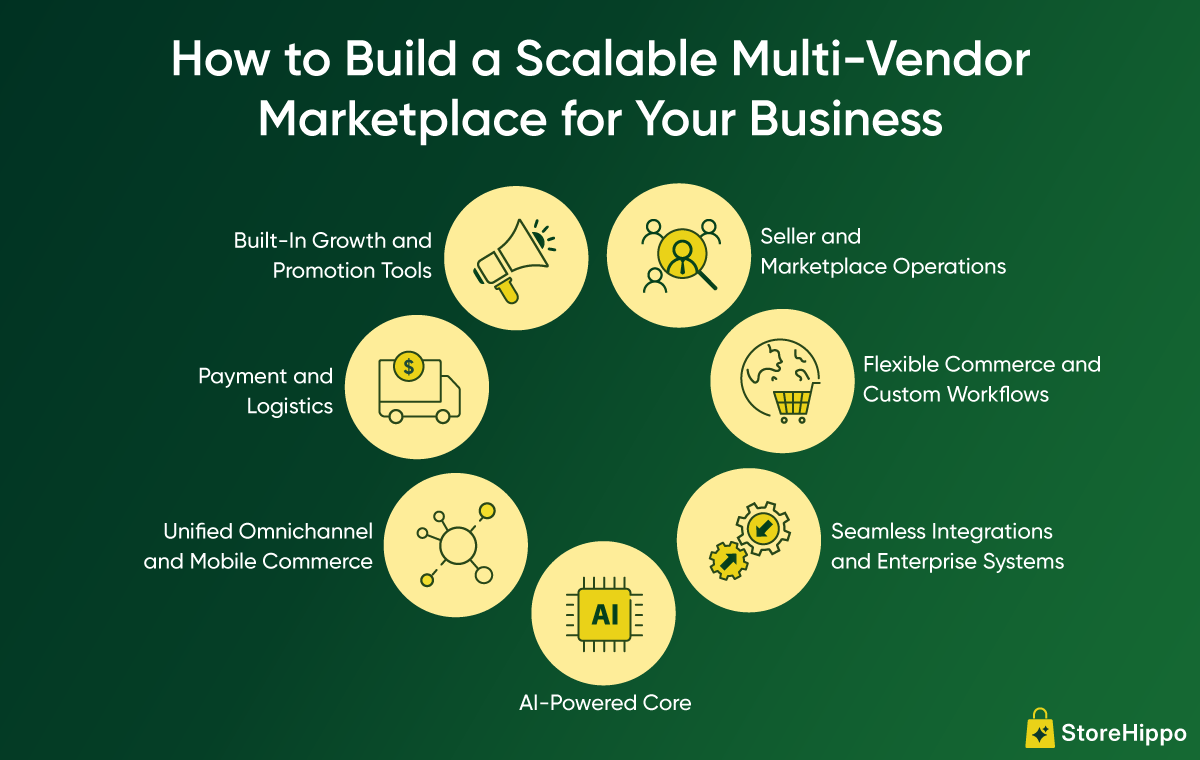
The success of the top five marketplaces in India shows that building a large seller network is only one part of the equation. Modern multi vendor marketplace businesses also need the technology to manage sellers, personalise discovery, support multiple channels and handle growing transaction volumes.
A scalable marketplace platform should bring these capabilities together rather than requiring businesses to manage disconnected systems.
1. Seller and Marketplace Operations
Manage sellers, products, orders, inventory and approvals on your multi-vendor marketplace from one central admin while giving sellers dedicated dashboards for their own operations.
Bulk uploads, catalogue approvals and seller-level controls help marketplace teams manage a growing vendor network while maintaining operational visibility.
2. Flexible Commerce and Custom Workflows
Different marketplace models require different business rules. A B2C marketplace may need seller-specific pricing, commissions, fulfilment rules, approval workflows and customised checkout journeys.
StoreHippo, the best marketplace builder, enables enterprises to customise storefronts, seller workflows, pricing logic, fulfilment rules and other marketplace processes around their business model. Its composable, API-first architecture also makes it easier to add new capabilities without being restricted by rigid templates.
3. Seamless Integrations and Enterprise Systems
A growing online marketplace rarely operates as a standalone system. Orders, payments, inventory, customer data and fulfilment often move between several business systems.
With StoreHippo, enterprises can connect payment gateways, logistics providers, ERP, CRM, accounting systems and other enterprise tools through APIs and pre-built integrations. This keeps important commerce workflows connected as the marketplace grows.
4. AI-Powered Core
A large marketplace catalogue can become difficult to manage and navigate as the number of products and sellers increases.
StoreHippo's AI-powered marketplace platform offers AI-powered cataloguing and AI image editing tool, Magic Edit, to help marketplace teams create and optimise product listings faster.
It also offers semantic search, personalised recommendations and enables enterprises to build custom AI shopping assistants to help customers find relevant products faster. For example, shoppers can search for a “camera phone under ₹30,000 with good battery life” instead of relying only on exact product names or filters.
StoreHippo's agentic commerce capabilities also enable enterprises to build custom AI agents around business data and workflows to automate tasks, answer queries and support ecommerce operations.
5. Unified Omnichannel and Mobile Commerce
Customers no longer shop through just one channel. An online marketplace may need to support websites, mobile apps, WhatsApp, PWA, voice and other emerging commerce touchpoints.
StoreHippo is built on unified omnichannel architecture that enables enterprises to launch ai-powered marketplace, webstores, Android and iOS apps, PWA, WhatsApp commerce, voice commerce and custom AI interfaces from the same connected backend.
Product, pricing, inventory, order and customer data remain unified across these touchpoints, helping businesses deliver a more consistent shopping experience.
6. Built-In Growth and Promotion Tools
Once the multi-vendor marketplace is live, businesses need tools to attract customers, improve conversions and encourage repeat purchases.
StoreHippo, the best marketplace builder, provides native tools for seller-specific promotions, category offers, quantity discounts and seasonal campaigns through its built-in discount engine. Enterprises can also use abandoned cart recovery, SEO tools, a native blog engine and personalised recommendations to support marketplace growth.
7. Payment and Logistics
Smooth payments and reliable fulfilment are essential for any multi vendor marketplace.
StoreHippo supports 60+ pre-integrated payment gateways, including UPI, wallets, net banking and COD. It also integrates with 30+ logistics providers, including hyperlocal shipping partners.
These integrations help marketplace businesses assign orders to suitable sellers or logistics partners while real-time tracking keeps sellers and buyers updated.
Together, these capabilities give enterprises the infrastructure they need to launch, customise and scale an AI-powered marketplace while keeping their commerce operations connected as the business evolves.
Conclusion
The success of leading multi-vendor marketplaces in India shows that scale alone is not enough. Businesses also need the right technology to manage sellers, streamline operations, deliver personalised shopping experiences and expand across multiple channels.
If you want to build a scalable multi vendor marketplace with AI-powered capabilities, flexible workflows, seamless integrations and built-in tools for growth, StoreHippo provides the technology to bring it all together on one platform.
Want to build your own multi-vendor marketplace?
Explore how you can launch, customise and scale your marketplace with ease by booking your free demo with StoreHippo now.
FAQs
1. What should businesses consider before choosing a multi-vendor marketplace model?
Businesses should consider their target audience, marketplace niche, seller profile, revenue model, and expected order volume before choosing a multi-vendor marketplace model. They should also assess how easily the platform can support seller onboarding, commissions, catalogue management, payments, fulfilment, and future expansion. Choosing the right model early helps create a marketplace that can scale without making operations unnecessarily hard to manage.
2. What revenue models work best for multi-vendor marketplaces?
The right revenue model depends on the marketplace’s category, sellers, and business goals. Common options include seller commissions, subscription plans, listing fees, transaction charges, advertising, and premium seller services. Many marketplaces combine two or more models to create diversified revenue streams. The key is to choose a model that remains attractive to sellers while generating sustainable revenue as the marketplace grows.
3. How can an online marketplace build customer trust?
An online marketplace can build customer trust by providing accurate product information, transparent pricing, secure payment options, reliable delivery, and clear return policies. Seller ratings and customer reviews can also help shoppers make informed decisions. Responsive customer support and consistent marketplace policies further reassure buyers, especially when they are purchasing from sellers they may not have interacted with before.
4. How can an AI-powered marketplace improve the shopping experience?
An AI-powered marketplace can improve product discovery, recommendations, and customer engagement by understanding shopper intent and behaviour. AI-powered search can help customers find relevant products using natural-language queries, while personalised recommendations and AI shopping assistants can make product discovery faster. For marketplace businesses, AI can also support catalogue management and automate repetitive tasks as the platform grows.
5. Why is unified omnichannel important for a multi-vendor marketplace?
Unified omnichannel helps a multi-vendor marketplace connect its website, mobile apps, WhatsApp, PWA, voice commerce, and other customer touchpoints through a common backend. Keeping product, pricing, inventory, order, and customer data unified across channels helps businesses provide a consistent shopping experience while making marketplace operations easier to manage.
6. How is a multi-vendor marketplace different from a regular ecommerce store?
A regular ecommerce store typically sells products from one business, while a multi-vendor marketplace brings multiple independent sellers together on one platform. This means a marketplace needs to manage seller onboarding, commissions, product listings, seller policies, and marketplace-level operations in addition to customer orders. An ecommerce store generally has fewer stakeholders and simpler operational workflows because the business controls the entire product and selling process.
7. How can a growing online marketplace help shoppers find the right products faster?
A growing online marketplace can make product discovery easier through relevant search, smart filters, clear categories, personalised recommendations, and accurate product information. As the catalogue expands, shoppers should be able to find suitable products without browsing through hundreds of listings. AI-powered search can further understand customer intent and deliver more relevant results, making the shopping journey faster and more convenient.
8. Can a multi-vendor marketplace support different pricing rules for different sellers?
Yes, a multi-vendor marketplace can support different pricing rules for different sellers, depending on the platform’s flexibility. Businesses can define seller-specific pricing, commissions, discounts, minimum order values, or fulfilment rules based on their marketplace model. This flexibility is particularly useful when sellers operate with different margins, product categories, customer segments, or commercial agreements within the same marketplace.
9. How should businesses evaluate the best marketplace builder for long-term growth?
Businesses should evaluate a marketplace builder based on its ability to support their current operations and future growth. Key factors include customisation, scalability, seller management, integrations, AI capabilities, mobile and omnichannel support, payments, logistics, and workflow flexibility. The best marketplace builder should make it easier to expand the marketplace without requiring businesses to replace their technology as their needs evolve.
10. What should businesses focus on when scaling a multi-vendor marketplace?
Businesses should focus on maintaining marketplace performance, seller quality, customer experience, and operational efficiency as they scale. It is important to monitor seller performance, catalogue quality, order volumes, customer retention, and fulfilment efficiency while keeping the platform flexible enough for future expansion. A scalable multi-vendor marketplace should balance seller growth with customer demand and sustainable business economics.
Binny Joseph is a seasoned ecommerce leader and Senior Vice President of Sales & Alliances with extensive experience helping businesses adopt modern commerce solutions.
He shares practical insights on building and scaling multi vendor marketplaces that drive growth in India's evolving digital commerce landscape.