


The checkout process is the final frontier in the buyer’s journey on any B2B marketplace app or marketplace.
You’ve done the hard work, offering great products, providing a seamless browsing experience, and guiding buyers through a well-structured sales funnel.
But, no matter how great your products are or how smooth the user experience feels up to that point, a clunky or complicated checkout can lead to abandoned carts and lost sales.
So, what’s the secret to designing a B2B ecommerce checkout that not only gets buyers across the finish line but also maximises conversions?
The key is simplicity, making the process intuitive and user-friendly while addressing the unique needs of B2B buyers.
Think of streamlined payment options, easy invoice management, and customised checkout flows tailored to bulk orders or frequent buyers.
Wondering which features and strategies can transform your checkout into a conversion powerhouse?
Table of Contents
- Crafting a Seamless and Conversion-Oriented B2B Ecommerce Checkout
- How to Design a B2B Marketplace Checkout to Maximise Conversions
- 1. Simplified and IntuitiveUser Interface
- 2. Support for Bulk Orders
- 3. Flexible Payment Options
- 4. Personalised Pricing and Discounts
- 5. Seamless Integration with Shipping and Logistics
- 6. Transparent Taxation
- 7. Optimised for Mobile Mobile Optimised
- 8. Security and Trust Features
- 9. Clear Order Summary and Cost Breakdown
- 10. Post-Purchase Communication
- How AI powered B2B Ecommerce Platform Can Accelerate Growth for Wholesale Enterprises
- How StoreHippo Helps Design a B2B Marketplace Checkout To Maximise Conversions
- Conclusion
- FAQs
Crafting a Seamless and Conversion-Oriented B2B Ecommerce Checkout
Before we dive into the essentials of how to build a B2B marketplace that offers a seamless, high-converting checkout experience, it’s important to understand how checkout experience and payment flexibility directly influence buyer behaviour and sales outcomes.
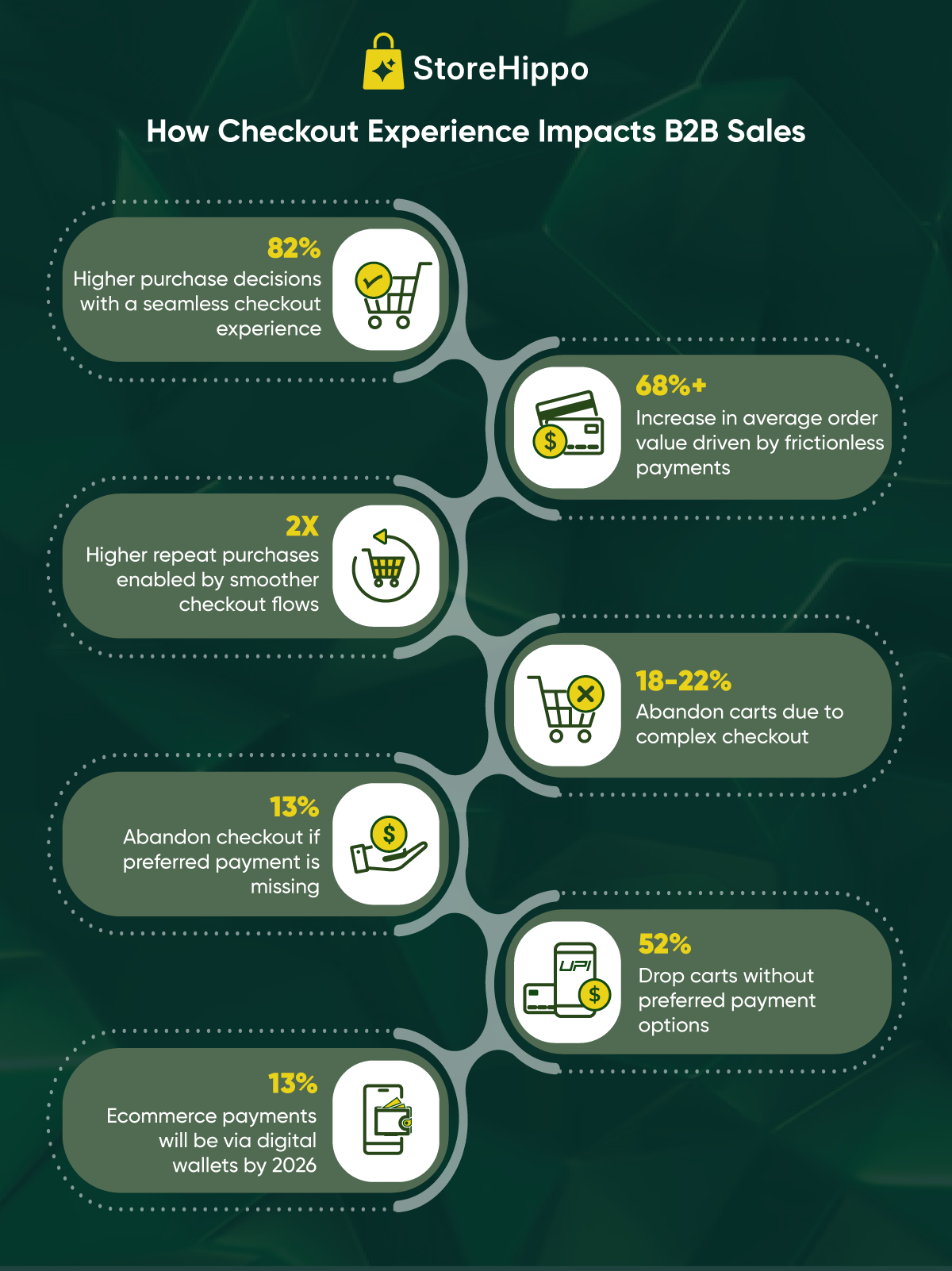
- 82% higher purchase decisions with a seamless checkout experience
- 68%+ increase in average order value driven by frictionless payments
- 2× higher repeat purchases enabled by smoother checkout flows
- 18-22% abandon carts due to complex checkout
- 13% abandon checkout if preferred payment is missing
- 28% drop carts without preferred payment options
- 52% of ecommerce payments will be via digital wallets by 2026
Source: Kriya, Baymard, Cashfree, PayPal, ResultFirst, Seller Rocket
Nearly one in four buyers abandon purchases due to slow delivery timelines or complicated checkout flows. Missing or inflexible payment options further increase drop-offs. For B2B businesses, where order values are higher and buying journeys are more complex, a seamless, intuitive checkout is critical to conversion success.
By simplifying checkout steps, offering preferred payment methods, and tailoring checkout flows to B2B buying needs, enterprises can significantly reduce cart abandonment, increase average order value, and build long-term buyer loyalty.
How to Design a B2B Marketplace Checkout to Maximise Conversions
Designing an effective B2B marketplace checkout is essential for driving conversions and ensuring a smooth purchasing experience. A smooth B2B ecommerce checkout needs more than just simplicity. By tailoring the checkout to the specific demands of B2B buyers, you can reduce cart abandonment and foster long-term loyalty.
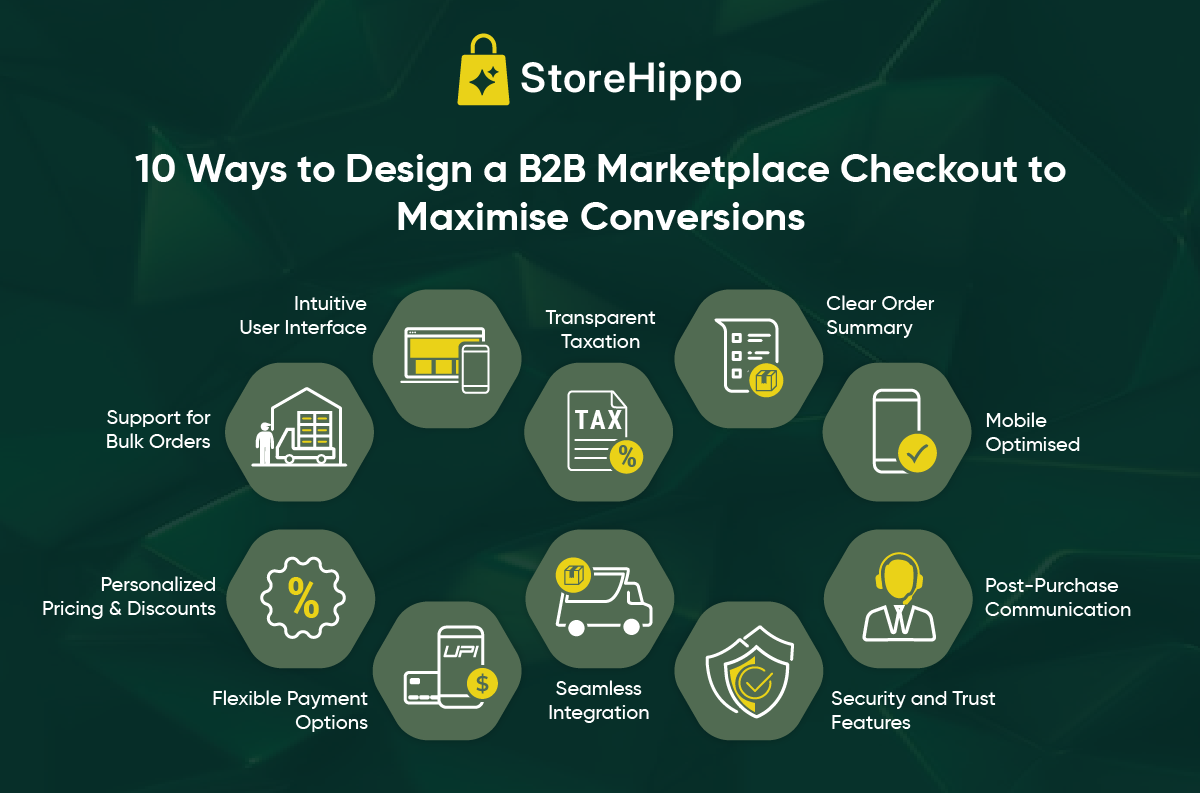
Let’s build a B2B marketplace that leads to higher conversions and a better overall buying experience for your B2B marketplace.
1. Simplified and IntuitiveUser Interface
A simplified and intuitive user interface is crucial for maximising conversions in a B2B ecommerce checkout. By minimizing the number of steps in the checkout process, B2B marketplace apps can reduce friction and make purchasing easier for buyers. A streamlined designwith clear labels, minimal clutter, and a well-structured layout guides users effortlessly through the checkout process on B2B sales apps and marketplaces. You can also add a progress indicator that shows buyers where they are in the checkout journey. This transparency helps improve the overall efficiency of the B2B checkout process. AI-powered discovery and recommendation engines further enhance checkout usability by surfacing relevant products, bundles, or add-ons based on buyer intent and past behaviour. Instead of navigating large catalogues manually, buyers are intelligently guided toward faster, more confident purchase decisions.
2. Support for Bulk Orders
B2B buyers often make bulk purchases, so supporting this functionality is key when you build a B2B marketplace. With the bulk buying feature B2B buyers can seamlessly order in bulk quantities, making the buying process smoother. Reordering options further enhance the user experience by allowing frequent B2B buyers to quickly reorder their past purchases or select from their commonly purchased items. When you cater to the typical order behaviour of businesses, these features help streamline the B2B checkout experience, making it easy to convert buyers.
3. Flexible Payment Options
Offering flexible payment options is a powerful way to boost conversions on your B2B marketplace app and website. Many B2B clients look for customisable payment terms, such as credit, purchase orders, or bank transfers. By providing multiple payment methods, like invoicing or installment payments, you can cater to a variety of buyer preferences. Automated invoicing provides a detailed breakdown of orders, taxes, and shipping immediately after purchase, improving transparency for your buyers. This flexibility makes the checkout process conversion-friendly and encourages your B2B clients to complete their purchases.
4. Personalised Pricing and Discounts
Personalised pricing and discounts can greatly enhance the B2B ecommerce checkout experience on your marketplace. You can seamlessly create dynamic pricing based on customer type, order volume, or contract terms, ensuring that your B2B buyers see relevant and tailored offers. You can also offer negotiated prices to your specific buyer groups that create a sense of exclusivity and convenience. You can also offer loyalty programs that display redeemable points or rewards during checkout to encourage repeat business and drive long-term customer retention on your B2B marketplace.
5. Seamless Integration with Shipping and Logistics
To maximise conversions, choose a B2B ecommerce platform that helps seamlessly integrate with multiple shipping and logistics providers. When you offer transparency by displaying accurate shipping costs based on order size, weight, and destination and offer multiple shipping options, such as express delivery or freight shipping, you can seamlessly create a loyal customer base for yourB2B marketplace app. Additionally, enabling shipments to multiple addresses from a single checkout is particularly useful in B2B transactions, where orders may be sent to different warehouses or stores. These features ensure a smooth checkout process, reducing cart abandonment.
6. Transparent Taxation
Transparent taxation plays a critical role in B2B ecommerce checkouts. Buyers need a clear breakdown of taxes, including GST for Indian buyers or region-specific taxes for global customers. Displaying this information upfront fosters trust and helps buyers accurately calculate the total cost, preventing surprises that could lead to cart abandonment. In a B2B marketplace, where corporate procurement processes require compliance with specific tax regulations, this transparency is even more important. Providing detailed tax information ensures smooth transactions and reinforces the credibility of your B2B marketplace.
7. Optimised for Mobile Mobile Optimised
With more and more B2B buyers making purchases on the go, optimising the checkout for mobile is essential when you build a B2B marketplace. A mobile-responsive design ensures that users can easily navigate on the marketplace from any device. Offering mobile wallet options, such as UPI or other digital payment methods, further enhances convenience, especially in markets like India. A seamless mobile experience can significantly reduce cart abandonment and encourage more mobile transactions, making it a critical feature for any B2B business looking to maximise conversions.
8. Security and Trust Features
Security is paramount in any online checkout set-up. Implementing SSL encryption and prominently displaying security badges reassures buyers that their personal and financial data is safe. Multi-factor authentication adds an extra layer of protection, particularly for largeB2B marketplace apps handling sensitive business transactions. These trust features not only safeguard the checkout process but also build confidence in your buyers. By emphasizing security, businesses can reduce cart abandonment caused by concerns over data safety and establish long-term buyer trust.
9. Clear Order Summary and Cost Breakdown
A clear order summary and cost breakdown are essential elements of an optimised checkout. Offer a detailed review that includes product details, quantities, taxes, shipping fees, and applicable discounts to your buyers before finalizing the order. This transparency allows your B2B clients to confirm their purchases with confidence. Providing an editable order summary gives buyers the flexibility to adjust quantities or make changes without restarting the entire checkout process. Offering these features when you build a B2B marketplace reduces friction and increases the likelihood of conversion on your marketplace.
10. Post-Purchase Communication
Effective post-purchase communication can solidify a positive customer experience. Choose a B2B ecommerce platform that offers automated order confirmation, and tracking details and reassures buyers that their purchase was successful by keeping them informed of the order status. You can also direct them to their account dashboard after checkout and provide a centralised space for managing orders, viewing invoices, and accessing customer support. These post-purchase touchpoints enhance customer satisfaction and build trust, encouraging repeat business and increasing long-term conversions. Custom agentic AI support assistants can support buyers post-checkout by answering order-related queries, guiding invoice access, and resolving operational questions, reducing dependency on support teams while improving buyer satisfaction.
How AI powered B2B Ecommerce Platform Can Accelerate Growth for Wholesale Enterprises
As wholesale B2B marketplaces scale, AI-powered ecommerce platforms are becoming essential growth drivers rather than optional enhancements. By embedding AI across checkout, pricing, fulfilment, and post-purchase workflows, enterprises can create faster, more intelligent, and buyer-aware purchasing experiences. AI enables assisted buying through chat interfaces, intent-based recommendations at checkout, automated pricing and payment decisions, and real-time operational guidance, reducing friction across complex, high-value transactions while improving conversion efficiency.
What the data shows:
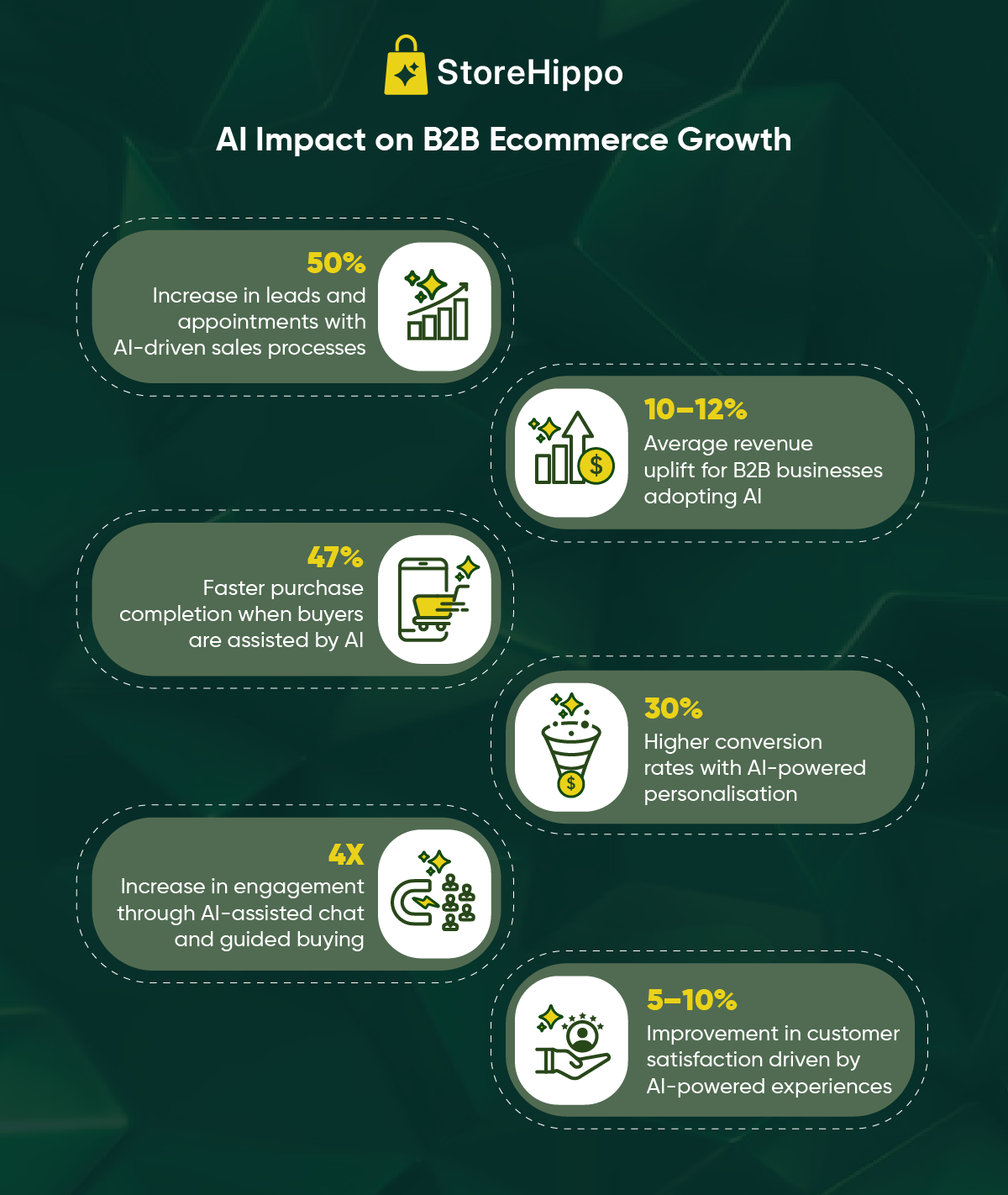
- 50% increase in leads and appointments with AI-driven sales processes
- 10–12% average revenue uplift for B2B businesses adopting AI
- 47% faster purchase completion when buyers are assisted by AI
- 30% higher conversion rates with AI-powered personalisation
- 4× increase in engagement through AI-assisted chat and guided buying
- 5–10% improvement in customer satisfaction driven by AI-powered experiences
Source: McKinsey, Hello Rep, Bloomreach, Persana AI
These data-backed insights highlight that AI is no longer just an efficiency layer, it is a core enabler of scalable growth in B2B ecommerce. By turning buyer intent, behavioural data, and operational signals into real-time action, AI-powered B2B ecommerce platforms help wholesale enterprises increase conversions, accelerate decision-making, and build long-term buyer loyalty in an increasingly competitive B2B ecommerce landscape.
As AI becomes a foundational layer for high-performing B2B ecommerce platforms, the real differentiator lies in how seamlessly this intelligence is embedded across checkout and operational workflows. Let's look at how StoreHippo helps design a B2B marketplace checkout to remove friction and improve conversion rates.
How StoreHippo Helps Design a B2B Marketplace Checkout To Maximise Conversions
StoreHippo is a SaaS-based ecommerce platform that is designed to help build out-of-the-box solutions for enterprise businesses. StoreHippo B2B ecommerce platform comes with 150+ built-in integrations and 300+ enterprise-grade features. You can seamlessly design a B2B marketplace checkout that maximises conversions with StoreHippo. Here are a few B2B features by StoreHippo that make it a popular choice for businesses aiming to expand their ecommerce operations.
- StoreHippo’s B2B ecommerce platform is built with AI at its core, not as an add-on. Its AI-native commerce engine acts as a shared intelligence layer across catalogue, pricing, checkout, fulfilment, and support, ensuring every checkout interaction is informed by real-time buyer context and operational data.
- StoreHippo offers multi-tier categories to easily arrange products under different categories and subcategories for easy search and seamless shopping. With intuitive navigation from StoreHippo, your buyers can seamlessly move on your B2B marketplace app and enjoy a seamless checkout process.
- StoreHippo offers an RFQfeature to help buyers request quotes from vendors, get pricing, and approve or reject quotes. The B2B vendors can use a 3-way admin-buyer-vendor chat solution to answer queries and close negotiations in real-time.
- StoreHippo comes with 60+ pre-integrated domestic and international payment gateways to help you create a frictionless payment process. StoreHippo supports a variety of digital and COD payment methods, including credit/store wallets, net banking, cards, mobile banking, etc.
- StoreHippo helps you to seamlessly create multiple B2B marketplace apps right from your admin dashboard without any coding and at zero additional costs. When you build your marketplace with StoreHippo, you automatically get a marketplace that is PWA, which means these ecommerce websites work, look, and feel like mobile apps.
- StoreHippo B2B solutions have tiered pricing and discount engine features that enable you to display tiered pricing to your buyers. You can display tiered pricing based on order volume and implement MOQ on your business-to-business marketplace.
- StoreHippo offers 30+ pre-integrated domestic and international logistics partners to streamline bulk fulfillment. StoreHippo also comes with built-in delivery boy management software that helps manage vendors’ fleet of delivery agents to ensure faster hyperlocal deliveries.
- With StoreHippo’s built-in tax engine, you can simplify taxation and adhere to compliance requirements. StoreHippo B2B marketplace platform also offers provisions for grouped taxes, tax-based rules, and tax-inclusive and tax-exclusive pricing. With complete support for GST, CGST, SGST, and IGST, you can easily manage taxes on your marketplace.
- The PCI-DSS and ISO-compliant StoreHippo B2B ecommerce platform ensures multi-level security for buyers and sellers. You can seamlessly gain customer trust with StoreHippo’s free SSL certificate. The PCI-DSS-compliant payment gateways help secure one-way encryption and payment processing.
- The built-in invoicing software from StoreHippo helps automate and simplify invoicing. StoreHippo comes with GST-complaint, custom, and bulk invoicing features to help streamline taxes on your marketplace.
- StoreHippo helps seamlessly integrate with a variety of customer support tools, live chat, and chatbots to offer multi channel support to your customers. Your customers can seamlessly track their orders, see order summaries, etc. with StoreHippo. You can also use the unified notifications (SMS, push and emails) feature to connect with buyers during different stages of the buying journey.
- StoreHippo helps you build better product catalogues using AI-powered cataloguing and the Magic Edit image enhancer. With SEO-rich product descriptions, intelligent tagging, categorisation, and image optimisation, buyers get clear and standardised product information, enabling faster decisions and smoother checkout.
- StoreHippo enables custom AI-powered assistants to guide buyers across discovery, RFQs, pricing, order validation, checkout, and post-purchase support. By resolving queries in real time, these assistants reduce friction and improve checkout conversions.
StoreHippo helps build a B2B marketplace that engages and attracts audience. The host of features from StoreHippo help design a seamless online checkout process. You can create a thriving ecosystem of buyers and sellers with StoreHippo.
Conclusion
The checkout process is the make-or-break moment for any B2B marketplace. But in 2026, conversion-focused checkout design goes beyond UI and payment options. It requires intelligence that understands buyer intent, pricing complexity, fulfilment constraints, and post-order workflows in real time.
With StoreHippo’s AI-native B2B ecommerce platform, enterprises can design checkout experiences that are not only seamless but also adaptive, scalable, and operationally efficient. By embedding AI across discovery, pricing, checkout, and support, StoreHippo helps businesses close deals faster, reduce friction, and enable them create out-of-box solutions.
Ready to design a B2B ecommerce checkout that maximises conversions with AI at its core? Book your personalised demo with StoreHippo now.
FAQs
1. Why is a tailored B2B marketplace checkout important for conversions?
Even if a marketplace offers great products and a smooth browsing experience, a complicated checkout can lead to abandoned carts. B2B buyers have unique requirements like bulk orders, invoicing, and flexible payment terms.
StoreHippo B2B ecommerce platform enables businesses to build customised checkouts with intuitive interfaces, bulk order support, and automated workflows, helping maximise conversions and minimise cart abandonment.
2. How can the checkout process be simplified for B2B buyers?
Lengthy forms, unclear steps, and unnecessary friction can discourage buyers from completing purchases. B2B checkouts need a streamlined interface and a clear progress flow.
StoreHippo offers a simplified, intuitive checkout UI with step-by-step guidance, editable order summaries, and reordering features, ensuring buyers complete their purchases quickly and confidently.
3. What role do bulk orders play in optimising a B2B checkout?
B2B buyers frequently purchase in large quantities. Without support for bulk ordering and easy reordering, marketplaces risk losing high-value transactions.
StoreHippo supports bulk orders, volume-based tiered pricing, and quick reorder options, enabling bulk buyers to manage large transactions efficiently while improving conversion rates.
4. How can flexible payment options increase buyer trust and conversions?
B2B buyers often prefer credit terms, purchase orders, or installment options. Limiting payment methods can frustrate buyers and increase cart abandonment.
With StoreHippo, B2B marketplaces can integrate 60+ domestic and international payment gateways, offer multiple payment methods, and automate invoicing, ensuring a frictionless checkout experience that aligns with diverse buyer needs.
5. Can personalised pricing and discounts impact repeat purchases?
Generic pricing fails to capture the nuances of B2B relationships. Buyers expect contract-specific or volume-based pricing, as well as loyalty rewards.
StoreHippo’s tiered pricing and discount engine enable dynamic pricing based on buyer type, order volume, or negotiated contracts, encouraging repeat business and fostering long-term customer loyalty.
6. How does integration with shipping and logistics enhance checkout efficiency?
Complex B2B orders often involve multiple shipments, destinations, or freight options. Without seamless integration, fulfillment delays can reduce conversions.
StoreHippo integrates with 30+ domestic and international logistics partners, supports multi-address shipping, and offers delivery boy management solutions, ensuring fast, accurate, and scalable fulfilment directly from the checkout.
7. Why is transparent taxation critical in a B2B marketplace checkout?
B2B buyers need clarity on taxes like GST or regional tax rules to comply with procurement processes. Hidden or unclear taxes can lead to abandoned carts.
StoreHippo provides a built-in tax engine with support for GST, CGST, SGST, IGST, tax-inclusive/exclusive pricing, and grouped tax rules, ensuring accurate calculations and buyer trust at checkout.
8. How can mobile optimisation improve conversions on B2B marketplaces?
With more B2B buyers using mobile devices, a non-optimised checkout can frustrate users and lead to drop-offs.
StoreHippo provides PWA-enabled marketplaces and mobile-responsive checkouts with credit wallet and digital wallet support, allowing buyers to complete purchases seamlessly on any device, anytime.
9. How important are security and trust features in a B2B checkout?
Large-scale B2B transactions involve sensitive data. Without proper security, buyers may hesitate to complete purchases.
StoreHippo’s PCI-DSS and ISO-compliant platform provides SSL encryption, secure payment gateways, and multi-factor authentication, giving buyers confidence while reducing cart abandonment.
10. How can post-purchase communication enhance customer experience?
Checkout doesn’t end at payment. Lack of order confirmation or tracking can reduce buyer satisfaction and repeat purchases.
StoreHippo enables automated order confirmations, tracking updates, and centralised dashboards for buyers to manage orders, view invoices, and access support, reinforcing trust and encouraging loyalty.