


D2C ecommerce has become one of the fastest-growing retail models of the last decade, with many D2C brands scaling at sustained double-digit growth rates and building direct relationships that customers now prefer. From digital-native startups to legacy brands going direct-to-consumer, retail companies have rewritten how products are launched, marketed, and sold.
But what worked until now is being stress-tested.
By 2026, rising acquisition costs, fragmented channels, faster delivery expectations, and changing customer expectations are exposing the limits of the early D2C playbook. Growth is no longer just about owning the customer; it’s about how intelligently your systems operate behind the scenes.
The ecommerce trends of 2026 suggest that the D2C model is entering a more demanding phase. As brands grow larger and more complex, the foundations of D2C operations and growth are being tested, bringing new attention to how effectively brands can grow in the years ahead.
Watch the complete video explanation
Table of Contents
- D2C Ecommerce Growth Trends 2026 And Beyond
- How Can D2C Brands Prepare For Festive Season 2026
- The Market Opportunity Continues To Expand
- Festive Ecommerce Is Breaking New Records
- Tier-2 And Tier-3 Cities Are Driving Growth
- Quick Commerce Beyond Groceries
- Operations Are Becoming A Bigger D2C Brand Differentiator Than Discounts
- Payments Are No Longer The Bottleneck
- What Should D2C Brands Be Doing Right Now?
- D2C Ecommerce Trends for 2026 and Beyond: A Practical Guide for Brands
- 1. AI-Powered Core for Speed and Automation
- 2. AI-Driven Hyper-Personalisation at Scale
- 3. Mobile-First and App-Driven Growth
- 4. AI-Assisted Buyer Journeys
- 5. Unified Omnichannel Commerce
- 6. Quick Commerce and Fast Deliveries
- 7. Subscription and Recurring Revenue Models
- 8. Unified Inventory and Fulfilment Visibility
- 9. Checkout and Fulfilment Transparency
- 10. Support Becomes Faster and Smarter with AI
- Conclusion
- FAQs
D2C Ecommerce Growth Trends 2026 And Beyond
Direct-to-consumer ecommerce growth over the last decade has fundamentally changed how buyers interact with brands. As scale increases, customer expectations are no longer shaped by individual brands but by the best experiences while shopping online.
The data below reflects how changing buyer behaviour is reshaping ecommerce and direct-to-consumer brands:
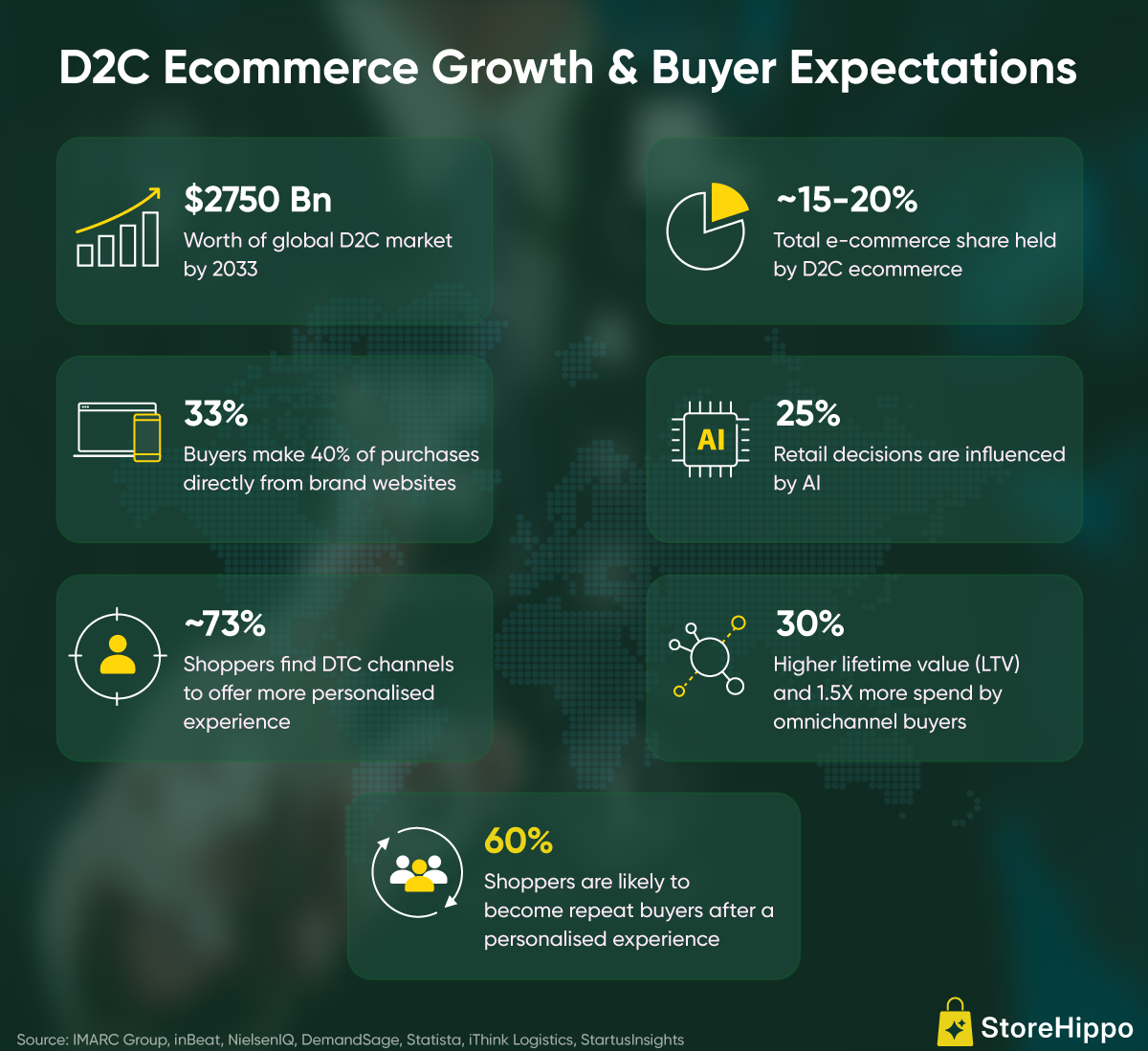
- $2750 billion worth of the global D2C market by 2033 (IMARC Group)
- ~ 15–20% of total e-commerce share held by D2C ecommerce (inBeat)
- 33% buyers make 40% of purchases directly from brand websites (Statista)
- ~73 % of shoppers find DTC channels to offer more personalised experience (NielsenIQ)
- 25% of retail decisions are influenced by AI (iThink Logistics)
- 30% higher lifetime value (LTV) and 1.5X more spend by omnichannel buyers (StartusInsights)
- 60% of shoppers are likely to become repeat buyers after a personalised experience (DemandSage)
Together, these signals point to a maturing D2C market where growth is driven less by reach and more by relevance, consistency, and experience. For D2C ecommerce companies, meeting rising buyer expectations is no longer a competitive advantage, it’s the baseline for sustaining growth in the years ahead.
How Can D2C Brands Prepare For Festive Season 2026
With India's festive shopping season only a couple of months away, this is just the right time for direct-to-customer ecommerce companies to start preparing for the trends and the forecasted scale of how the market will behave.
Here are some key forecasts from industry best data and reporting agencies:
The Market Opportunity Continues To Expand
The Indian D2C market is growing at a remarkable pace:
- $108.76 billion market size in 2026
- 24.3% CAGR projected through 2031
- More brands are competing for the same festive demand than ever before
(Source: Mordor Intelligence's India D2C E-commerce Market Analysis)
For D2C brands, this means festive growth opportunities remain strong, but standing out and delivering consistently is becoming harder.
Festive Ecommerce Is Breaking New Records
Last festive season delivered record-breaking numbers:
- ₹1.2 lakh crore ($13.9 billion) in online festive sales
- 27% year-on-year growth
(Source: RedSeer Strategy Consultants, Exchange4Media)
The biggest winners were not necessarily the brands offering the deepest discounts. They were the brands that entered the season with inventory, logistics, and operations already aligned.
Tier-2 And Tier-3 Cities Are Driving Growth
The next wave of D2C growth is increasingly coming from non-metro markets:
- 66% of new D2C orders originated from Tier-2 and Tier-3 cities
- Smartphone-led commerce now contributes a significant share of ecommerce growth
(Source: Brand Equity, The Economic Times)
For brands, this creates new requirements like faster regional fulfilment, mobile-first experiences, multilingual communication, reliable delivery across wider geographies.
Quick Commerce Beyond Groceries
Consumer expectations around delivery speed continue to evolve:
- 60-70% increase in festival-week demand on quick commerce platforms
- 20-25% of Q-commerce GMV now comes from non-grocery categories
- Beauty, gifting, personal care, and electronics are seeing strong adoption
- Quick commerce now contributes an estimated 12-15% of festive ecommerce sales
(Source: RedSeer, Indian Retailer)
For many D2C brands, fast fulfilment is no longer a competitive advantage. It is becoming a customer expectation.
Operations Are Becoming A Bigger D2C Brand Differentiator Than Discounts
According to Fynd's Festive Season Report:
- 65% of festive orders came from Tier-2 and Tier-3 cities
- Hyperlocal fulfilment networks performed on par with traditional warehouses
- Brands with distributed inventory and intelligent order routing delivered better customer experiences during peak demand
The lesson is simple: buyers may arrive because of marketing, but fulfilment determines whether they come back.
Payments Are No Longer The Bottleneck
India's digital payment ecosystem continues to mature:
- 20+ billion UPI transactions processed every month
(Source: NPCI, IBEF)
Today, most festive season friction comes from: stockouts, delivery delays, poor mobile experiences and inconsistent customer journeys, not from payment adoption.
What Should D2C Brands Be Doing Right Now?
The B2B companies that perform best during the festive season usually start preparing weeks before demand spikes.
Here is a list of activities to prioritise before the festive season 2026 sales:
- Position inventory across locations so orders are shipped rapidly
- Set up multiple logistics and hyperlocal fulfilment capabilities to meet growing expectations for faster deliveries
- Offer hyper-personalised discounts based on region, buyer segments and purchase frequency
- Optimise mobile experiences to ensure smooth browsing, checkout, and order tracking across devices
- Prepare customer support teams, workflows, and automation to handle festive traffic spikes efficiently
D2C Ecommerce Trends for 2026 and Beyond: A Practical Guide for Brands
As D2C commerce enters its next phase, brands are moving beyond rapid expansion to more disciplined, experience-driven growth. The next chapter of direct-to-customer ecommerce will be defined by how well brands adapt to rising complexity, use of AI in ecommerce and customer expectations.
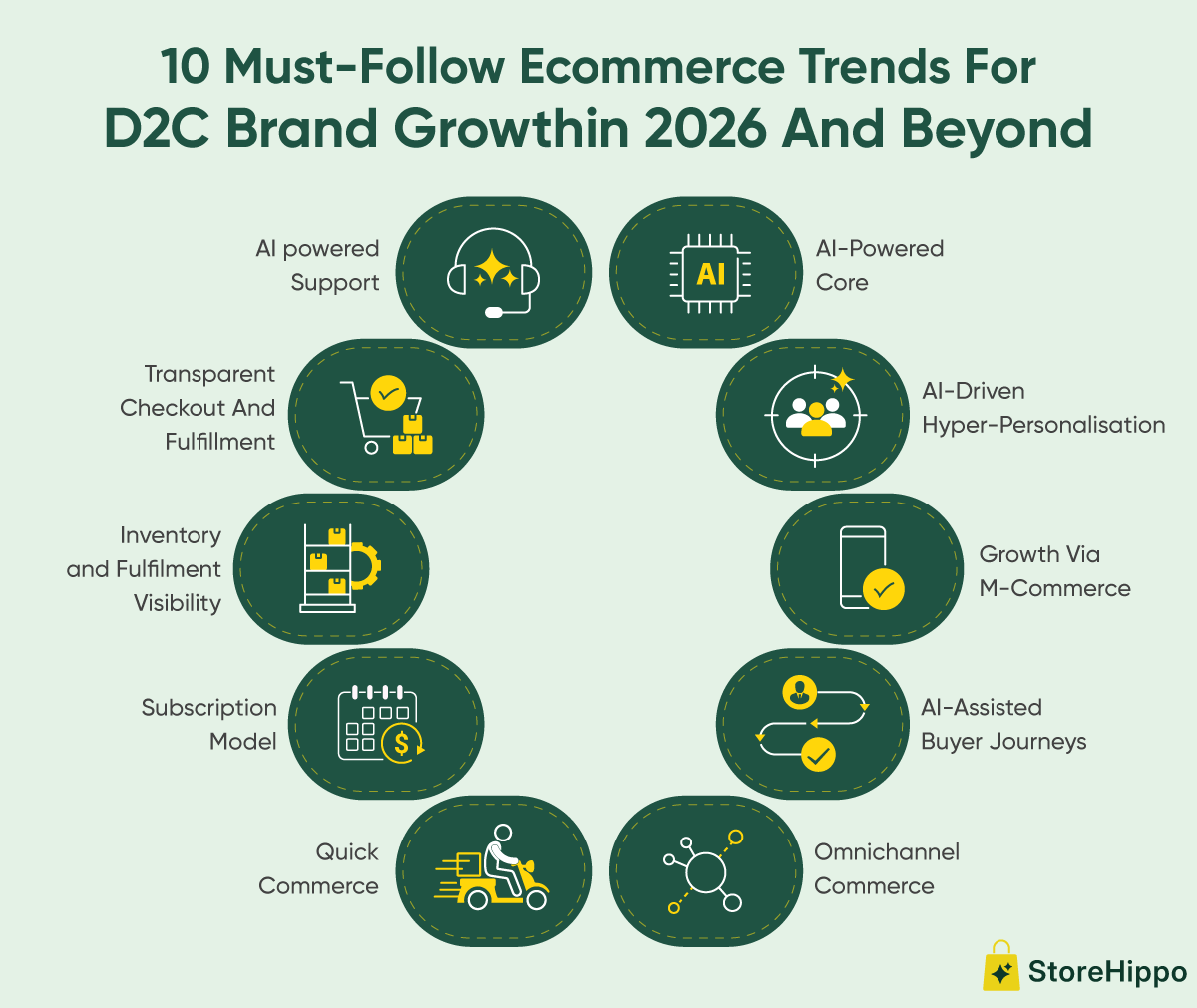
These 10 trends outline the practical changes D2C ecommerce companies must prepare for as the market matures.
1. AI-Powered Core for Speed and Automation
The trend:
By 2026, the most successful D2C ecommerce brands won’t be “adding AI” to their tech stack; they’ll be running on it. Instead of relying on traditional ecommerce setups and layering intelligence on top, brands will use AI-native platforms where AI works quietly at the core, taking care of core activities from catalogue structuring, image enhancements, and product data consistency to buyer journeys and support. Tasks that once needed large teams and long turnaround times will be handled in the background, allowing D2C stores to launch faster, update more often, and scale with far less friction.
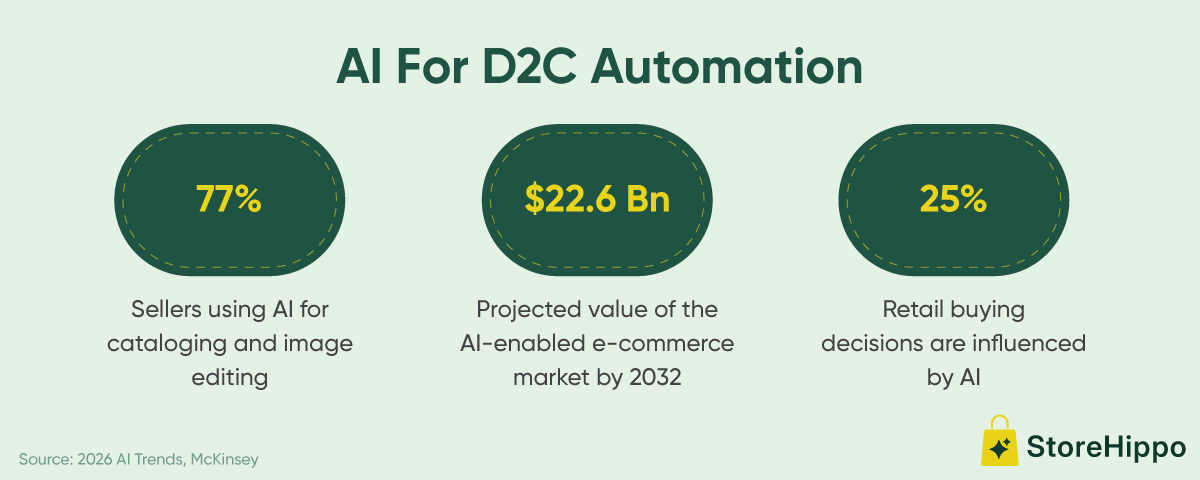
- 77% - sellers using AI for cataloging and image editing
- $22.6 Billion- projected value of the AI-enabled e-commerce market by 2032
- 25% of retail buying decisions are influenced by AI
Source: 2026 AI Trends, McKinsey
Data Pointers: AI Automation as D2C Infrastructure
- 77% of D2C sellers are already using AI for cataloging and image editing, AI is not an experiment for most fast-moving brands; it is the default operational workflow
- The AI-enabled ecommerce market is projected to reach $22.6B by 2032, platform-native AI will shift from a differentiator to a baseline selection criterion
- 25% of retail buying decisions are influenced by AI, the intelligence built into the platform is now directly shaping revenue, not just back-office efficiency
Source: 2026 AI Trends, McKinsey
What D2C brands need to do:
Brands need to rethink where effort is being spent. Instead of scaling teams to manage catalogues, creatives, and daily updates and support, retail ecommerce companies must design systems that automate these tasks by default. The focus shifts from “how fast can my team upload” to “how quickly can my platform adapt” as product volumes, channels, and markets grow.
How StoreHippo helps:
StoreHippo brings this shift to life by embedding AI directly into the ecommerce platform and offer AI powered storefronts. Capabilities like AI-assisted cataloguing and image editing via Magic Edit reduce dependency on manual workflows and third-party tools. As a result, D2C ecommerce brands can move faster, maintain consistency across channels, and operate at scale without operational drag especially as they expand product ranges or launch new D2C retail experiences.
2. AI-Driven Hyper-Personalisation at Scale
The trend:
By 2026, personalisation in ecommerce goes far beyond showing a few recommended products. It becomes something customers feel as they move through the store. What shoppers see, how products are presented, and even how the journey unfolds adapts in real time, based on their behaviour, preferences, language, location, and intent. For D2C ecommerce brands, this means no two shoppers experience the store in exactly the same way, whether they’re browsing on mobile, an app, or another touchpoint.
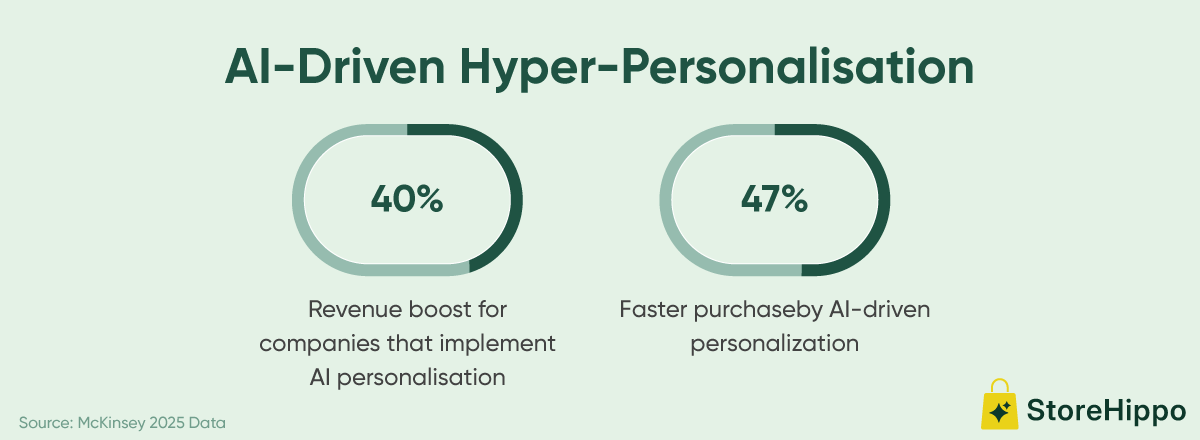
- 40% revenue boost for companies that implement AI personalisation
- 47% faster purchaseby AI-driven personalization
Source: McKinsey 2025 Data
What D2C brands need to do:
Brands need to treat personalisation as a system capability, not a campaign tactic. This requires unifying first-party data and applying AI to segment users dynamically, personalise journeys in real time, and support personalised discounts, multilingual experiences and recommendations based on buyer behaviour. Without this, D2C stores risk feeling generic, especially as customers grow used to personalised interactions elsewhere.
How StoreHippo helps:
StoreHippo helps D2C brands deliver more personalised shopping experiences without adding operational complexity. With AI-powered search and product recommendations built on Google Gemini and MongoDB Atlas, brands can guide buyers to relevant products, create more intuitive buying journeys, and support multilingual experiences from a single platform. Built-in capabilities such as an advanced discount engine, multilingual support, multi-store management, and unified notifications make it easier to tailor experiences for different customer segments. As a result, D2C ecommerce companies can deliver consistent personalisation across web, mobile, and emerging channels while keeping operations streamlined and manageable.
3. Mobile-First and App-Driven Growth
The trend:
By 2026, D2C ecommerce platforms will not just need to be mobile-friendly; the complete D2C journey is shaped by mobile behaviour. Customers don’t just browse on their phones anymore; they discover, return, reorder, and track purchases there. For retail customer facing brands, mobile apps and PWAs have started to become the primary sales channel, not an add-on. The ecommerce trends 2026 require direct-to-consumer brands to align their business and operations around m-commerce for speed, continuity, and everyday customer convenience.
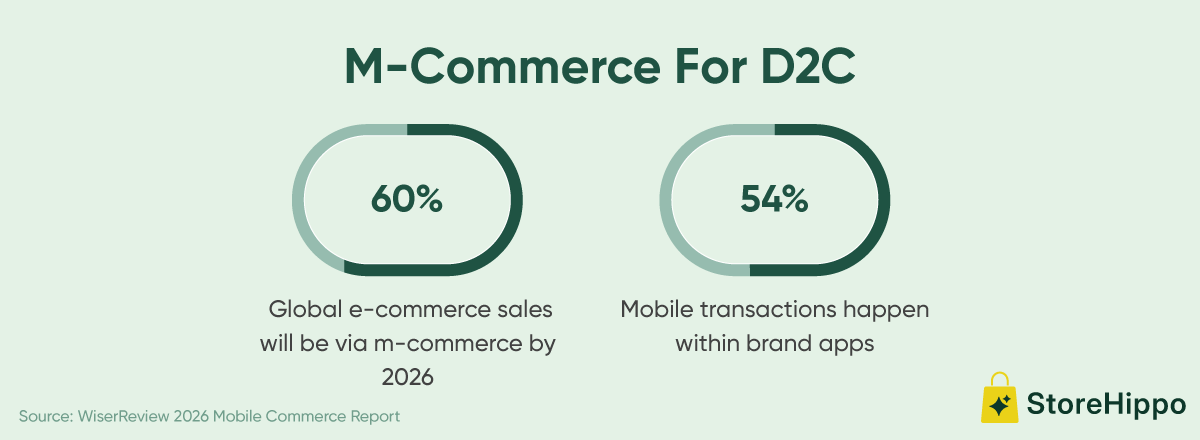
- 60% of global e-commerce sales will be via m-commerce by 2026
- 54% mobile transactions happen within brand apps
Source: WiserReview 2026 Mobile Commerce Report
What D2C brands need to do:
D2C brands must design experiences assuming mobile is the first and most frequent touchpoint. This means faster load times, easy navigation, personalised notifications, and seamless logins, not desktop experiences compressed onto smaller screens. Brands that rely only on mobile web will struggle to retain users in an app-first buying world.
How StoreHippo helps:
StoreHippo supports mobile-first D2C stores with a built-in mobile app builder for Android and iOS. Every store built on StoreHippo is also a PWA (Progressive Web App), helping brands reach customers even in regions with slower internet connectivity. The web store, mobile apps, and PWAs all run on the same backend and AI-powered core, so products, orders, inventory, and customer data stay in sync automatically. Brands can manage everything from a single dashboard while delivering a consistent experience across every touchpoint. This makes it easier for D2C ecommerce companies to increase engagement, drive repeat purchases, and expand their mobile presence without building and maintaining separate systems.
4. AI-Assisted Buyer Journeys
The trend:
By 2026, D2C ecommerce journeys no longer follow a straight path. Buyers expect help as they browse, compare, pay, and track orders without jumping between pages or waiting for support to step in. Emerging ecommerce trends 2026 are bringing industry-specific AI agents into focus that guide customers through discovery, recommendations, checkout, and even post-purchase tracking and support in one continuous conversation interface.
The experience feels less like using a website and more like being guided in real time through the buying process. For brands, it reduces friction across the journey and makes complex buying decisions easier, without adding more steps or screens.
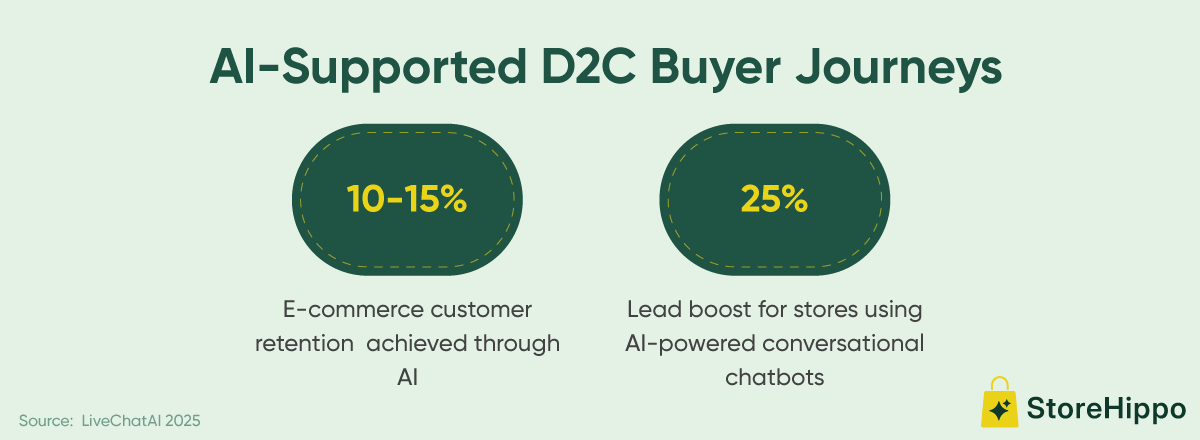
- 10% to 15% e-commerce customer retention achieved through AI
- 25% lead boost for stores using AI-powered conversational chatbots
Source: LiveChatAI 2025
What D2C brands need to do:
D2C ecommerce brands need to rethink how buyers navigate their stores. Instead of relying only on menus, filters, and FAQs, brands must offer guided, intent-based journeys that adapt in real time. This is especially important for niche and complex categories where buyers need reassurance, comparison, or quick answers before purchasing.
How StoreHippo helps:
StoreHippo enables D2C ecommerce brands to build custom AI-assisted bots that act as an additional customer touchpoint alongside their online stores. These conversational voice and chat-based assistants can help shoppers discover products, compare options, complete purchases, and track orders through a simple, natural interaction. By making it easier for customers to get what they need, brands can reduce drop-offs, improve conversions, and offer more responsive support without significantly increasing operational effort. A good example is Mystore Genie, powered by StoreHippo's agentic AI solutions, which showcases how conversational and agentic assistants can help guide customers throughout their shopping journey.
5. Unified Omnichannel Commerce
The trend:
Ecommerce trends 2026, make omnichannel go far beyond selling through a website and an app. D2C ecommerce now has new-age touchpoints like chat, messaging platforms, AI agents, and even physical touchpoints, often within the same buyer journey. Customers might start with a question on chat, continue browsing elsewhere, and complete the purchase later, expecting everything to stay in sync.
For brands, this means the journey doesn’t belong to a single channel anymore. Context needs to travel with the customer, so interactions feel continuous rather than reset each time they switch touchpoints.
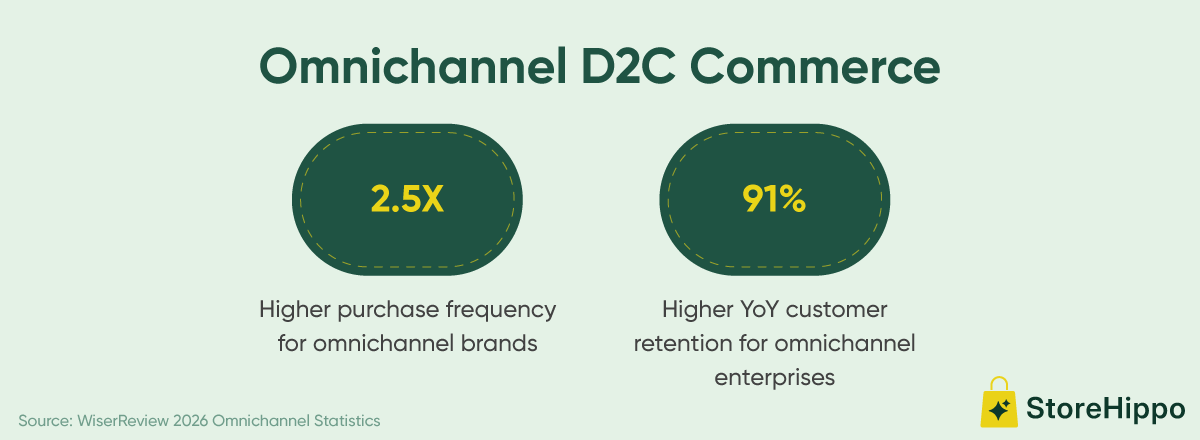
- 2.5x higher purchase frequency for omnichannel brands
- 91% higher YoY customer retention for omnichannel enterprises
Source:WiserReview 2026 Omnichannel Statistics
What D2C brands need to do:
D2C brands must stop treating channels as separate silos. Inventory, pricing, customer data, and order history need to stay connected across every interaction point. Brands that manage each channel independently risk inconsistent experiences, delayed fulfilment, and broken journeys that frustrate modern D2C buyers.
How StoreHippo helps:
StoreHippo offers D2C brands a unified backend to run and manage every sales channel from a central control thus delivering a connected omnichannel experience. Its headless architecture gives D2C ecommerce companies the flexibility to launch new customer touchpoints, including custom AI assistants, without rebuilding core systems. Whether customers shop through a website, mobile app, AI-powered assistant, or messaging platforms like WhatsApp, all interactions flow through the same platform. This keeps product, inventory, order, and customer data aligned across channels, helping D2C ecommerce brands deliver consistent experiences while maintaining better visibility and control over operations.
6. Quick Commerce and Fast Deliveries
The trend:
Ecommerce trends 2026 highlight the importance of quick deliveries further. For D2C ecommerce brands, fast delivery is no longer a differentiator, it’s becoming part of the baseline experience customers expect. In 2026, D2C brands need to position inventory closer to buyers to facilitate same-day and near-instant deliveries. D2C companies need to rethink speed along with consistency and reliability associated with their brand.
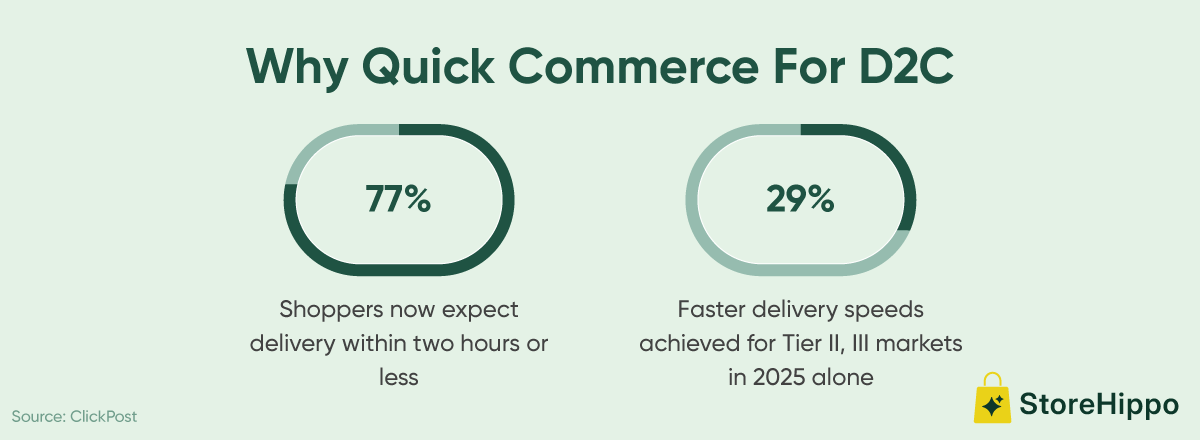
- 77% shoppers now expect delivery within two hours or less
- 29% faster delivery speeds achieved for Tier II, III markets in 2025 alone
Source: ClickPost
What D2C brands need to do:
D2C ecommerce brands need to rethink how products move, not just how they sell. This means leveraging local stores, partners, or micro-warehouses as fulfilment points. Without real-time visibility and routing logic, fast delivery promises quickly turn into operational stress and customer dissatisfaction.
How StoreHippo helps:
StoreHippo helps D2C ecommerce companies launch and scale quick commerce operations with native quick commerce capabilities and integrations with 30+ logistics partners. Brands can onboard dealers, franchises, stores, or fulfilment partners as vendors and fulfil orders from multiple locations through a single backend. With built-in multi-store management, orders can be automatically routed to the nearest fulfilment location, helping reduce delivery times while maintaining a consistent customer experience. This distributed fulfilment approach not only enables faster deliveries but also helps optimise shipping costs and improve operational efficiency as the business grows.
7. Subscription and Recurring Revenue Models
The trend:
A defining ecommerce trend 2026 for D2C growth is the move toward strengthening repeat relationships rather than relying solely on first-time conversions. Subscription, refill, and membership-based buying are becoming a natural extension of how customers interact with brands, especially in categories where replenishment or routine matters.
From consumables to curated assortments, customers increasingly expect convenience and continuity from D2C brands. When done well, subscriptions feel helpful and flexible, not restrictive and they quietly strengthen long-term customer value.
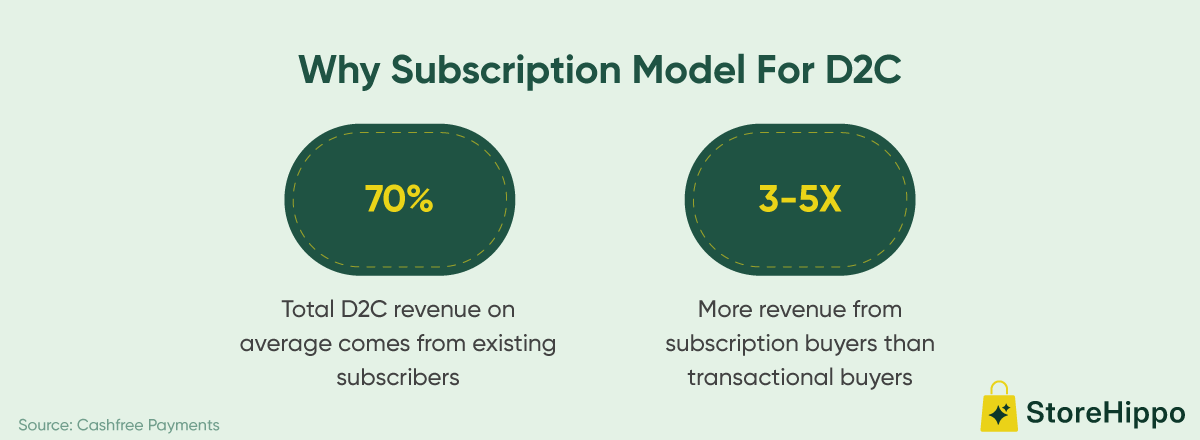
- 70% total D2C revenue on average comes from existing subscribers
- 3-5x more revenue from subscription buyers than transactional buyers
Source: Cashfree Payments
What D2C brands need to do:
D2C ecommerce companies need to design subscriptions as part of the buying experience not as an afterthought. This includes flexible delivery cycles, easy pauses or modifications, transparent billing, and clear communication. Brands that make subscriptions rigid or confusing risk higher churn, even if the product itself is strong.
How StoreHippo helps:
StoreHippo enables D2C ecommerce brands to run subscription and recurring order models from the same platform they use to manage their online business. Brands can offer scheduled deliveries, repeat purchases, and flexible subscription plans without relying on multiple external tools. Customers get a simpler buying experience with fewer steps to reorder products they use regularly, while operations teams can manage everything from a single system. This helps D2C ecommerce companies build stronger customer retention, increase lifetime value, and create more predictable revenue streams.
8. Unified Inventory and Fulfilment Visibility
The trend:
As D2C ecommerce brands grow across channels and delivery models, inventory fragmentation quietly becomes one of the biggest sources of friction. The brands that scale smoothly are the ones with a clear, real-time view of stock, orders, and fulfilment, no matter where inventory is stored or where the order comes from. For customers, this shows up as reliable delivery timelines and fewer surprises.
For brands this is not just keeping with ecommerce trends 2026, it means fewer stockouts, less manual reconciliation, and better control as operations become more distributed.
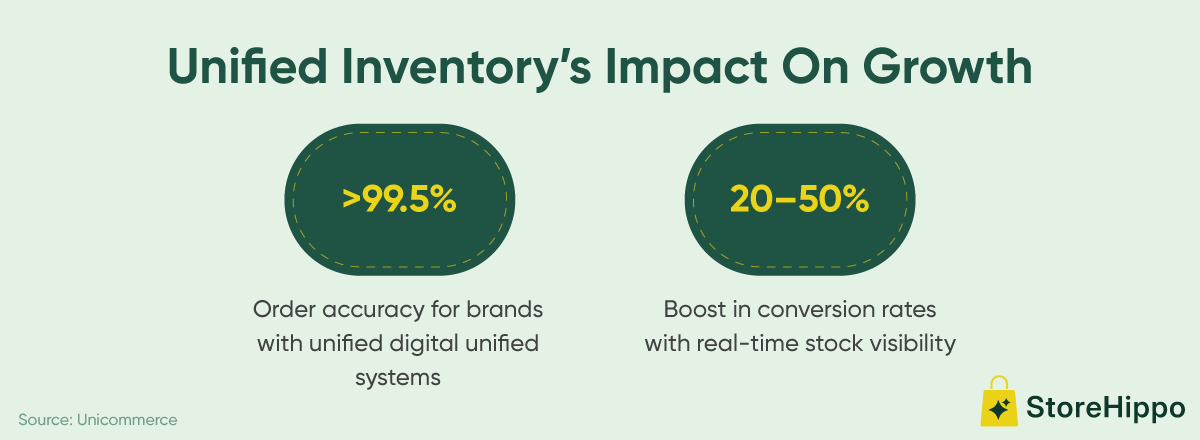
- >99.5% order accuracy for brands with unified digital unified systems
- 20–50% boost in conversion rates with real-time stock visibility
Source: Unicommerce
What D2C brands need to do:
D2C ecommerce companies must move away from isolated stock pools and manual reconciliations. Inventory needs to update instantly across D2C stores, apps, marketplaces, and quick commerce nodes. Without a unified view, brands risk overselling, delayed shipments, and poor customer experiences, especially during peak demand.
How StoreHippo helps:
StoreHippo gives D2C brands a unified view of inventory, fulfilment, and operations through its AI-powered core, centralised admin, master catalog, and multi-store management capabilities. Brands can track inventory in real time, manage stock across multiple fulfilment locations, handle out-of-stock scenarios efficiently, and route orders to the most appropriate fulfilment source automatically. With complete visibility and control across channels, D2C ecommerce brands can scale confidently while keeping inventory and fulfilment operations organised and efficient.
9. Checkout and Fulfilment Transparency
The trend:
This one is not just another ecommerce trend 2026; it reflects a basic expectation shaped by years of digital buying. D2C ecommerce customers expect clarity at every step of the buying process. Anything that feels unclear, extra charges at checkout, uncertain delivery timelines, or silence after the order is placed, quickly erodes trust. Transparency around pricing, order status, and returns is no longer something brands can differentiate on; it’s simply what customers assume will be there.
For D2C brands, this shifts the focus from optimising just the checkout flow to designing the entire post-purchase experience with visibility and communication in mind.
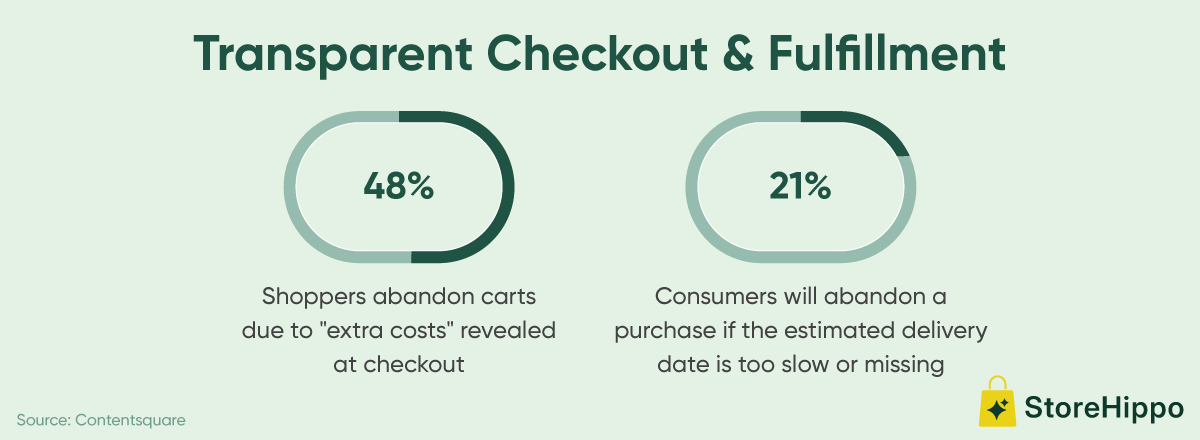
- 48% of shoppers abandon carts due to "extra costs" revealed at checkout
- 21% consumers will abandon a purchase if the estimated delivery date is too slow or missing
Source:Contentsquare
What D2C brands need to do:
D2C ecommerce brands need to simplify checkout flows and communicate clearly before and after the sale. This includes reducing steps at checkout, showing accurate delivery timelines, enabling real-time tracking, and making return policies easy to understand. Friction at this stage directly impacts conversions and repeat purchases.
How StoreHippo helps:
StoreHippo supports streamlined checkout experiences by offering 60+ payment gateways and seamless integrations with multiple payment options. It also offers tax-inclusive or exclusive invoices, full GST support and support for multi tier taxes to keep pricing and purchase transparent for buyers. With real-time order tracking and clear fulfilment workflows built into the platform, internal teams as well as buyers have a clear idea of how the orders are moving. D2C ecommerce brands can provide consistent, transparent updates across channels, helping customers feel informed and confident throughout the buying journey without adding operational complexity.
10. Support Becomes Faster and Smarter with AI
The trend:
The ecommerce trends 2026 will completely change the ticket-based customer support models in D2C ecommerce. Most routine questions like order updates, delivery status, returns, and basic product queries will be handled instantly by AI, without customers having to wait or switch channels.
What changes isn’t just response time, but expectation. Customers assume help will be available the moment they need it, in the same place they’re already shopping or tracking an order. For D2C stores, AI-led support will reduce pressure on teams while making service feel more responsive and consistent across the entire journey.
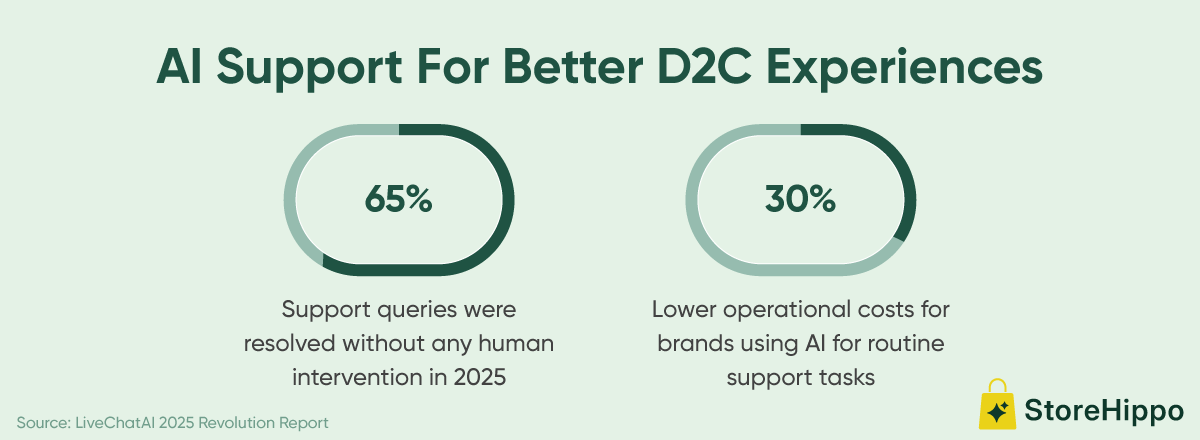
- 65% of all support queries were resolved without any human intervention in 2025
- 30% lower operational costs for brands using AI for routine support tasks
Source: LiveChatAI 2025 Revolution Report
What D2C brands need to do:
D2C ecommerce brands need to rethink support as part of the buying experience, not a separate function. This means enabling AI to handle high-volume, low-complexity queries while human teams focus on exceptions and relationship-building. Brands that rely only on manual support struggle to scale without rising costs.
How StoreHippo helps:
StoreHippo enables D2C ecommerce companies to build custom AI-powered support agents that can handle the majority of common customer queries without human intervention. These agents work across web, apps, and messaging channels, helping D2C brands deliver faster responses, reduce support load, and maintain high service standards as volumes grow. StoreHippo also offers unified conversation dashboard that enables teams to monitor, manage and answer all support responses across channels from one dashboard without losing the context.
Conclusion
The D2C brands that will be able to survive the intense competition and changing buyer expectations in the next three years won't necessarily be the ones with the most channels or the largest marketing budgets. They'll be the ones who have the right tech core to absorb complexity, penetrate new markets, implement new fulfilment models, and leverage new AI capabilities faster than competitors. The question worth pondering isn't "which of these trends applies to us?" It's “Can our current ecommerce solution handle the changes needed for the AI era of ecommerce?"
If you want to see how StoreHippo is built to answer that question in practice, book a demo with our team.
FAQs
1. What should D2C ecommerce companies prioritise to stay competitive in the ecommerce trends for 2026 and beyond?
D2C ecommerce companies should prioritise automation, unified operations, and AI-assisted workflows and customer journeys. In 2026 and beyond, direct-to-customers model’s success will depend less on adding new channels and more on how efficiently core systems handle cataloguing, inventory, fulfilment, and buyer experiences at scale.
2. How can a D2C ecommerce platform support growth without increasing operational complexity?
A modern D2C ecommerce platform should unify products, orders, inventory, customers, and sales channels on a single platform. With an AI-powered core that automates routine tasks, streamlines workflows, and reduces dependence on disconnected tools and plugins, D2C brands can scale faster without adding operational overhead. This enables teams to deliver consistent customer experiences, improve efficiency, and maintain greater control across all D2C stores and touchpoints.
3. Are AI-led journeys becoming essential for D2C ecommerce brands?
Yes. AI-led journeys are quickly becoming essential for D2C ecommerce brands, especially in categories where buyers need guidance, comparison, or reassurance. AI assistants help streamline discovery, checkout, and post-purchase interactions, improving conversion and reducing support load at the same time.
4. How does unified inventory improve performance for D2C retail brands?
For D2C retail brands, unified inventory ensures real-time stock visibility across all channels and fulfilment locations. This reduces overselling, improves delivery accuracy, and supports faster fulfilment, key expectations as D2C ecommerce continues to grow in complexity.
5. When should a growing D2C ecommerce brand consider re-evaluating its current setup?
A D2C ecommerce brand should reassess its setup when manual work increases, integrations start breaking, or customer experience becomes inconsistent across channels. These are often early signals that the existing D2C ecommerce platform may not be designed for the scale and expectations of 2026 and beyond.