


Buying shoes online has become second nature for Indian shoppers, but the real shift is in how they discover and compare them. Instead of visiting individual brand stores, buyers increasingly prefer a multi vendor marketplace where they can browse different brands, styles, price points and categories in one place.
That makes footwear an attractive category for businesses looking to build an online marketplace. The opportunity goes well beyond listing products. A strong online footwear marketplace has to manage large catalogues, size and colour variants, seller onboarding, inventory, payments, shipping, returns and increasingly, smarter product discovery.
This is also where an AI-powered marketplace can add real value, helping buyers find relevant products faster while making catalogue and seller operations easier to manage. In this article, we look at five leading shoes and footwear marketplaces in India and what businesses can learn from the way they operate.
Before we explore the leading footwear online marketplaces in India and what makes them successful, let’s first look at the trends shaping the online shoes and footwear market.
Table of Contents
- How Online Shoes and Footwear Multi Vendor Marketplaces Are Growing in India
- Top 5 Shoes and Footwear Multi Vendor Marketplaces in India
- Key Insights from Leading Shoes and Footwear Multi Vendor Marketplaces in India
- Top Features to Run and Grow Your Shoes and Footwear Multi Vendor Marketplace
- 1. Make Mobile Shopping Easy
- 2. Use AI-Powered Personalisation
- 3. Enable AI-Assisted Conversational Shopping
- 4. Bring Every Selling Channel Together
- 5. Help Customers Discover and Buy More
- 6. Manage Sellers, Products and Inventory From One Place
- 7. Make Checkout Simple and Payments Flexible
- 8. Keep Orders Moving With Better Supply Chain Management
- 9. Make Returns and Refunds Simple and Fast
- 10. Turn Marketplace Data Into Actionable Insights
- How StoreHippo Helps You Build a Shoes and Footwear Multi-Vendor Marketplace
- Conclusion
- FAQs
How Online Shoes and Footwear Multi Vendor Marketplaces Are Growing in India
The growing demand for online shoes and footwear is creating new opportunities for businesses to build and scale shoes and footwear multi vendor marketplaces. As more consumers now prefer online platforms to discover and purchase footwear, marketplaces can bring multiple brands and sellers together while giving customers a wider choice across styles, categories, and price points.
The shift is also extending beyond major cities, with Tier 2 and Tier 3 markets contributing significantly to online footwear demand. These trends show why the online shoes and footwear market is becoming a growing space for marketplace businesses.
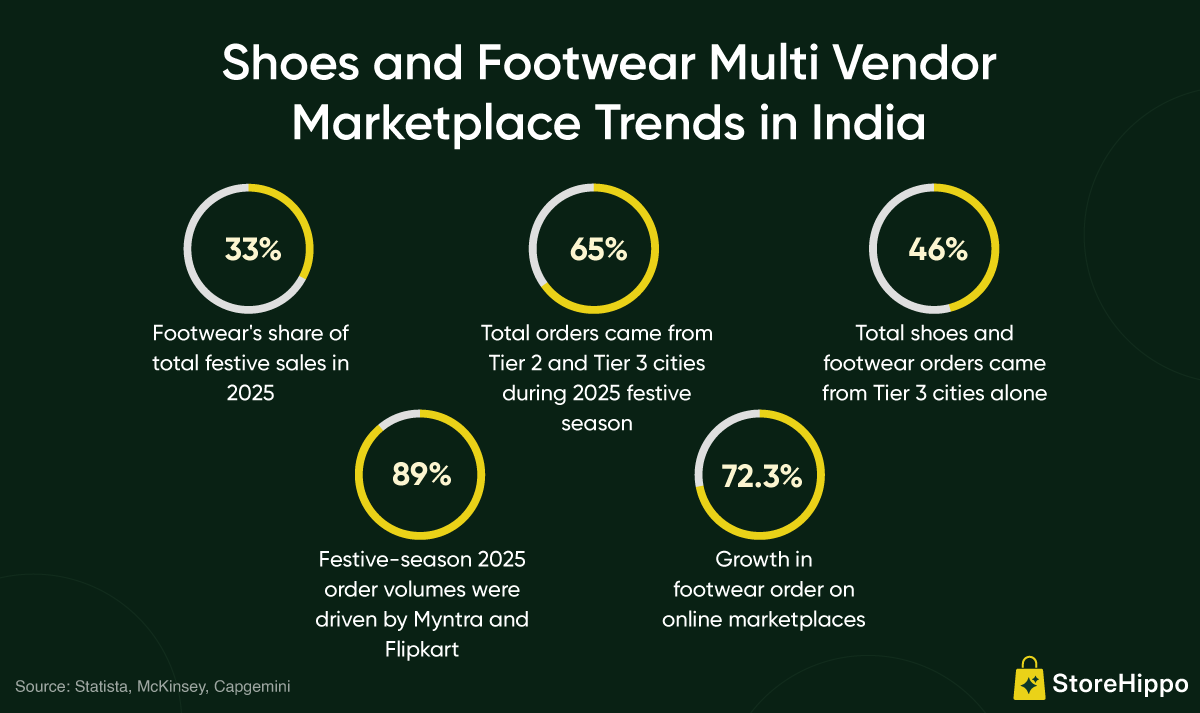
- 33% was footwear's share of total festive sales in 2025
- 65% of total orders came from Tier 2 and Tier 3 cities during 2025 festive season
- 46% of total shoes and footwear orders came from Tier 3 cities alone
- 89% of festive-season 2025 order volumes were driven by Myntra and Flipkart
- 72.3% growth in footwear orders on online marketplaces
Source: Fynd, Economic Times
These numbers point to a clear opportunity for businesses to serve footwear shoppers beyond major cities and offer a wider selection of shoes and footwear through specialised online marketplaces. With marketplace orders growing strongly and Tier 2 and Tier 3 cities emerging as important demand centres, businesses can bring multiple footwear sellers together and enable customers to discover more products in one place.
Top 5 Shoes and Footwear Multi Vendor Marketplaces in India
India’s online footwear market has evolved rapidly, with marketplaces catering to different customer needs and shopping preferences.
Let’s look at five leading online shoes and footwear multi vendor marketplaces and what makes them successful:
1. Myntra
Myntra is one of India’s leading fashion and lifestyle multi vendor marketplaces, and footwear is a major part of what it offers. Shoppers can find a wide range of casual, sports, formal and occasion footwear for men, women and kids, making it easy to explore different footwear styles in one place.
Core Specialty and Target Segment: Fashion, Lifestyle & Branded Footwear
Product Categories:
Sneakers, sports shoes, casual shoes, formal shoes, sandals, heels, flats, boots, flip-flops, loafers, running shoes and kids' footwear.
Key Features:
- AI-powered footwear recommendations, personalised search and product discovery
- Mobile-first shopping for sneakers, sports, casual, formal and occasion footwear
- M-Now enables faster delivery of selected footwear and fashion products
- Size, brand, style, colour, price and occasion filters simplify footwear discovery
- Trendy sneaker collections and curated footwear edits for fashion-conscious shoppers
- AI-assisted catalogue creation and product content help footwear sellers list products faster
- Wide selection of Indian and international footwear brands across men, women and kids.
Core differentiator: Fashion-based footwear + AI personalisation + fast delivery
2. AJIO
AJIO has established a strong position in India's fashion ecommerce market by bringing together Indian, international and exclusive brands. Its footwear range includes everyday options along with sneakers, sports shoes and stylish footwear for special occasions.
Core Specialty and Target Segment: Trend-Focused Fashion and Branded Footwear
Product Categories:
Sneakers, sports shoes, casual shoes, sandals, heels, boots, flats, slippers, formal shoes, loafers and other men's and women's footwear.
Key Features:
- AI helps manage footwear selection, demand planning and fulfilment.
- Mobile-friendly shopping for sneakers, sports, casual, formal and occasion footwear.
- AJIO Rush offers faster delivery for selected products across 600+ towns.
- A wide mix of Indian, international, exclusive and own footwear brands.
- Easy filters for size, brand, colour, style and price.
- AJIO Commerce helps sellers manage products, orders, payments and delivery.
- Fresh footwear collections built around changing trends and customer preferences.
Core differentiator: Trend-focused footwear + exclusive brands + fast fulfilment
3. Amazon India
Amazon India brings footwear into one of the country's largest multi vendor marketplaces, giving customers access to products from a wide network of brands and sellers. Shoppers can browse everything from everyday shoes and sandals to sports and occasion footwear, with plenty of options across categories and price ranges.
Core Specialty and Target Segment: Everyday, Utility and Sports Footwear
Product Categories:
Sports shoes, running shoes, casual shoes, formal shoes, sandals, slippers, sneakers, boots, school shoes and other footwear for men, women and kids.
Key Features:
- AI-powered footwear discovery through Rufus, recommendations and AI-generated review summaries.
- Mobile shopping across sports, running, casual, formal, school and everyday footwear.
- AI tools help footwear sellers create listings and manage pricing, inventory and operations.
- Seller Central brings footwear listings, orders, inventory, advertising and performance into one dashboard.
- Amazon Now supports faster delivery of selected fashion and footwear products.
- Extensive multi-seller footwear catalogue across brands, categories and price points.
- Customer ratings and reviews help shoppers compare footwear before buying.
Core differentiator: Huge footwear assortment + AI shopping assistance + seller automation
4. Flipkart
Flipkart remains a strong destination for shoppers looking for affordable and everyday shoes and footwear. Its footwear catalogue includes sports, running, walking, training and casual shoes along with sandals, slippers and other footwear categories.
Core Specialty and Target Segment: Value, Everyday & Athletic Footwear
Product Categories:
Sports shoes, running shoes, walking shoes, training shoes, casual shoes, sneakers, sandals, slippers, formal shoes and footwear for men, women and kids.
Key Features:
- AI-powered footwear discovery through personalised recommendations, search and Flippi.
- Mobile-first shopping across sports, running, casual, sneakers, sandals and everyday footwear.
- Seller Hub centralises footwear listings, orders, inventory, payments and business insights.
- Seller Lens helps footwear sellers understand demand, pricing, product performance and trends.
- Flipkart Minutes enables faster delivery of selected products in supported locations.
- Wide footwear assortment across value, branded, sports and everyday categories.
- Ratings, reviews, discounts and product filters support footwear comparison and purchase decisions.
Core differentiator: Value-focused footwear + AI discovery + seller intelligence
5. Tata CLiQ
Tata CLiQ offers a more curated, brand-focused shopping experience for fashion and lifestyle products. Its shoes and footwear collection makes it relevant for shoppers looking for recognised brands, premium styles and occasion-led footwear.
Core Specialty and Target Segment: Branded, Premium & Fashion Footwear
Product Categories:
Sneakers, sports shoes, casual shoes, formal footwear, sandals, heels, boots, flats, loafers and premium lifestyle footwear.
- TARA provides conversational AI assistance for personalised footwear and fashion discovery.
- Mobile-first shopping across sneakers, formal shoes, sandals, heels, boots and premium footwear.
- Curated footwear selection featuring recognised, premium and lifestyle brands.
- Personalised recommendations and brand-led collections support footwear discovery.
- Seller portal helps footwear brands manage marketplace listings and operations.
- Online-to-offline options, including store-based returns for supported brands.
- Premium shopping experience focused on branded, fashion and occasion-led footwear.
Core differentiator: Premium footwear + conversational AI + curated brand experience
Key Insights from Leading Shoes and Footwear Multi Vendor Marketplaces in India
While each shoes and footwear multi vendor marketplace targets a different customer segment, the leading online platforms share a few winning strategies: strong footwear catalogues, AI-powered discovery, mobile shopping, personalised experiences, efficient fulfilment and seller management.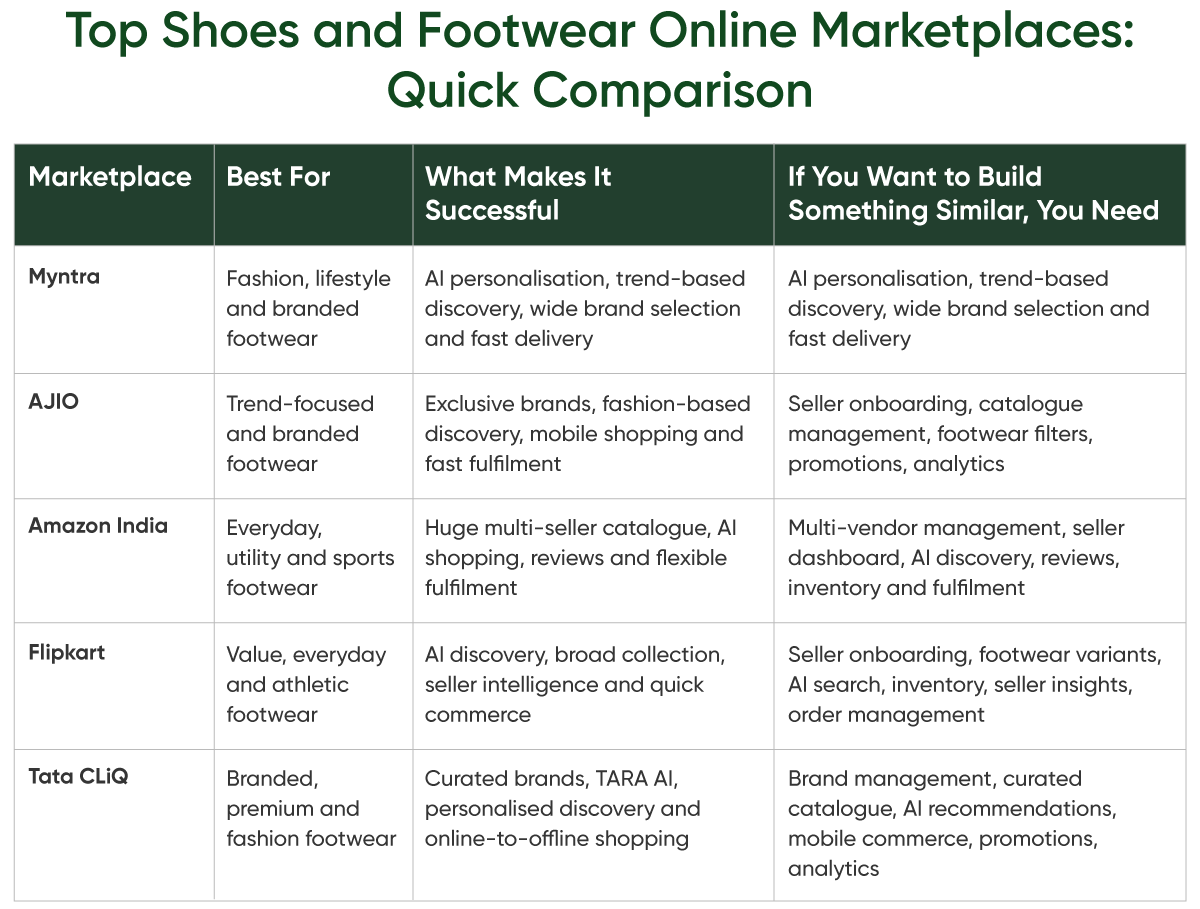
The comparison shows that successful online footwear marketplaces do more than offer a large product range. They make it easy for shoppers to find the right products while helping sellers manage inventory, sizes, variants, orders and promotions smoothly. As the marketplace grows, these features become essential for keeping the shopping experience simple and efficient.
Businesses looking to build an online marketplace like these need a platform that brings all these capabilities together, without requiring them to develop every function from scratch.
Top Features to Run and Grow Your Shoes and Footwear Multi Vendor Marketplace
Here are the must-have features to build and grow a successful online footwear marketplace:
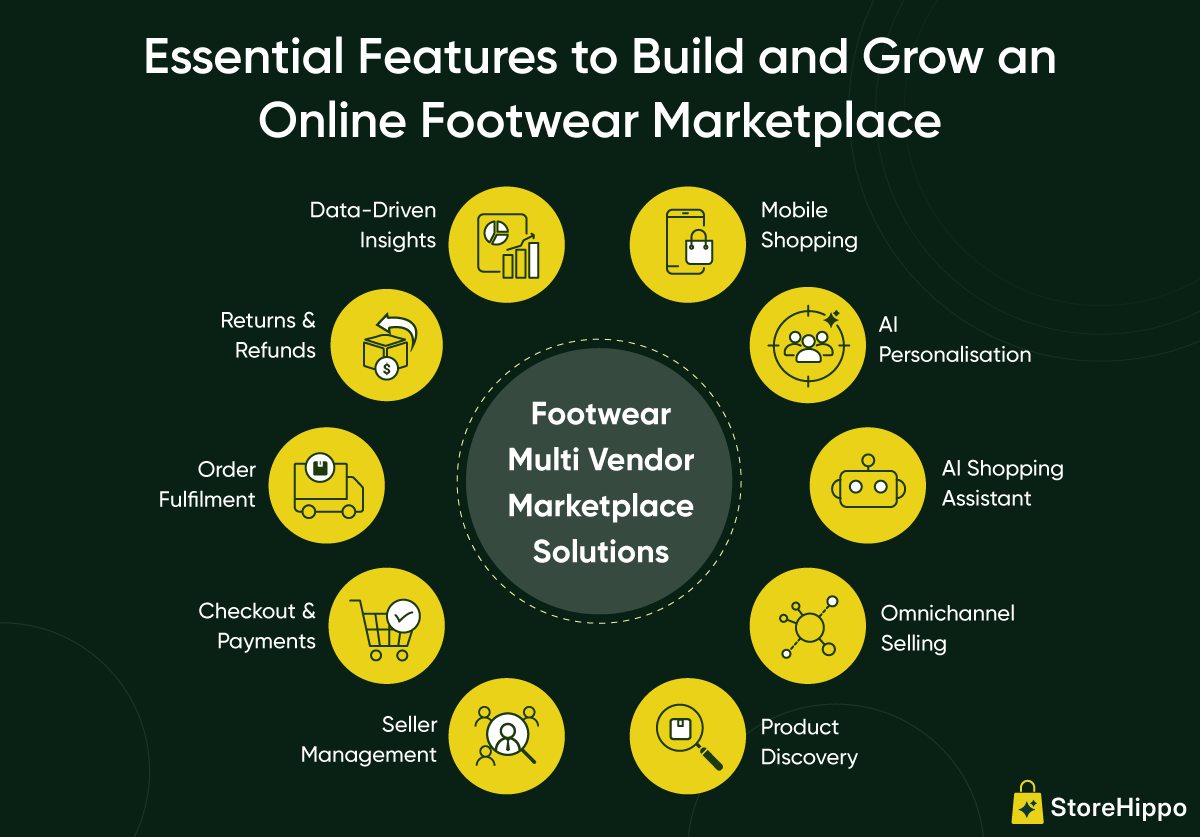
1. Make Mobile Shopping Easy
Modern customers shop across multiple devices, but mobile remains one of the most accessible ways to browse and buy online. This makes a mobile-first experience important for any modern shoes and footwear multi vendor marketplace. Your marketplace should work smoothly across different screen sizes and devices, making it easy for shoppers to browse footwear, check sizes, compare products and complete purchases. You can also build a PWA that looks, feels and works like a mobile app, giving customers a faster and more convenient way to shop from anywhere.
2. Use AI-Powered Personalisation
With thousands of shoes, brands, styles, sizes and price points available, customers can easily spend too much time looking for the right product. AI-powered personalisation can make this journey more relevant by understanding customer behaviour, preferences and buying intent. An AI-powered marketplace can recommend products based on what customers browse or buy, show relevant alternatives and personalise product discovery for different shoppers.
3. Enable AI-Assisted Conversational Shopping
Not every customer knows exactly what product they want when they begin shopping. Some may need help choosing the right footwear for running, office wear, travel or a particular occasion. AI-assisted conversational shopping can help customers describe what they need in their own words, discover suitable products, compare options and move towards checkout without having to navigate through multiple categories and filters. A tailored AI shopping assistant can also answer product-related questions and recommend relevant products during the buying journey.
4. Bring Every Selling Channel Together
Customers may discover a product on your website, check it through a mobile app, ask a question on WhatsApp and complete the purchase through another touchpoint. When these channels operate separately, it can create gaps in the customer journey. An omnichannel selling setup brings them together so that products, inventory, orders and customer interactions stay in sync. Your multi vendor marketplace can sell through web stores, mobile apps, PWA, WhatsApp, voice and partner platforms while managing operations through a unified backend.
5. Help Customers Discover and Buy More
Even if you have the right range of footwear, customers need to discover those products before they can buy them. This is where built-in marketing and SEO tools can make a difference. Features such as email and SMS marketing, location- or segment-based discounts, personalised offers, push notifications, abandoned-cart recovery and retargeting can help you reach customers at relevant moments. With these tools built into the marketplace, you can run targeted campaigns without managing every activity manually.
6. Manage Sellers, Products and Inventory From One Place
As your online marketplace grows, managing sellers individually can become difficult. Different vendors may have their own products, prices, inventory levels and order volumes, making centralised control important. A good multi vendor marketplace solution should allow you to onboard sellers, manage their catalogues, monitor inventory and track orders through individual seller dashboards. At the same time, the marketplace admin should have central control over sellers, products and overall operations.
7. Make Checkout Simple and Payments Flexible
An insecure payment experience can make customers abandon their purchases at the final stage. When you build an online marketplace for footwear, a smooth checkout with multiple payment options can remove unnecessary friction from the buying journey. Your ecommerce platform should support cards, UPI, net banking, wallets and cash on delivery, along with secure payment processing. This becomes even more important in a multi-vendor marketplace, where customers may purchase products from different sellers during the same shopping journey.
8. Keep Orders Moving With Better Supply Chain Management
Once a customer places an order, the experience does not end at checkout. They also expect their footwear to arrive on time and want clear visibility into the shipment along the way. Your marketplace platform should integrate with multiple logistics partners and support automated shipping, order tracking, delivery rules and fulfilment workflows. This helps marketplace owners and sellers handle growing order volumes while keeping delivery reliable and transparent for customers.
9. Make Returns and Refunds Simple and Fast
Returns are particularly important in the footwear category because customers may find that the size, fit, colour or style does not meet their expectations. If the return process is difficult, even a good shopping experience can quickly turn into customer dissatisfaction. A multi-vendor marketplace should therefore provide simple return and refund workflows for both customers and sellers. Seller dashboards can allow vendors to manage their own returns while marketplace administrators maintain overall visibility and control.
10. Turn Marketplace Data Into Actionable Insights
Running a growing online footwear marketplace requires more than knowing your total sales. You also need to understand which products and sellers are performing well, which footwear sizes are in demand, where customers are dropping off and which campaigns are generating results. Built-in analytics can help you track product performance, seller sales, customer behaviour, inventory movement, order trends and campaign performance. These insights can help you make better decisions around pricing, promotions, product range and inventory.
How StoreHippo Helps You Build a Shoes and Footwear Multi-Vendor Marketplace
Building a shoes and footwear multi-vendor marketplace requires more than a storefront where sellers can list their products. You need a platform that can handle multiple sellers, large product catalogues, size and colour variants, inventory, orders, payments and customer experiences from one place.
StoreHippo provides a ready-to-use ecommerce infrastructure that brings these capabilities together, helping businesses build an online marketplace without developing every feature from scratch.
1. AI-Powered Commerce for Smarter Footwear Shopping
StoreHippo's AI-native commerce engine brings intelligence into the core of the marketplace rather than treating AI as an add-on. It supports automated catalogue creation, AI-powered image enhancement with Magic Edit, intelligent discovery and recommendations, conversational buying journeys and enable enterprise to build custom agentic AI assistants.
For an online footwear marketplace, these capabilities can help sellers manage large catalogues while giving shoppers more relevant product discovery and personalised buying experiences.
2. Powerful Multi-Vendor Marketplace Management
Managing multiple footwear brands and sellers becomes easier with centralised seller management. StoreHippo offers end-to-end vendor management solutions, enabling marketplace owners to onboard vendors, manage seller operations, control catalogues and monitor marketplace activities from a unified backend.
Sellers can also manage their own products, inventory and orders through dedicated dashboards, giving them operational independence while the marketplace owner retains central control.
3. Built for Unified Omnichannel Footwear Commerce
StoreHippo offers unified omnichannel ecommerce solutions by enabling footwear enterprises to sell across their online stores, mobile apps, PWAs, WhatsApp, partner portals and other commerce touchpoints. This allows businesses with footwear online marketplaces to expand their reach without creating disconnected systems for every channel.
All these channels stay connected through a unified backend, keeping product, inventory, order and customer data in sync. This helps businesses deliver a consistent shopping experience as they add new channels.
4. Manage Large Footwear Catalogues with Ease
Footwear comes with hundreds of combinations of sizes, colours, styles and product attributes. StoreHippo’s Master Catalogue helps bring product information from multiple sellers into one central catalogue, making it easier to manage products, variants and listings across the marketplace.
Its AI-powered catalogue capabilities can further reduce manual work by helping businesses create, organise and optimise product content as the footwear catalogue grows. Its AI image editing tool, Magic Edit helps transform raw product images into polished, market-ready visuals without requiring separate design tools, while AI-powered cataloguing helps businesses create product titles, descriptions, categories, tags and other product information at scale. Together, these capabilities make it easier to standardise product details, improve catalogue quality and keep footwear listings accurate and consistent as new sizes, colours, styles and variants are added.
5. Integrated Payments, Logistics and Marketing
StoreHippo brings essential commerce operations together within the same platform. It is pre-integrated with multiple payment and logistics solutions, giving customers the flexibility to pay using their preferred payment method while helping shoes and footwear businesses manage shipping and deliveries more easily. StoreHippo also offers built-in marketing tools to create discounts and promotions, optimise storefronts for search and engage customers.
6. Built to Scale Your Footwear Marketplace
Whether you’re starting with a small footwear range or bringing multiple brands and sellers onto your marketplace, you need technology that can grow with your business from day one.
StoreHippo brings AI-powered commerce, multi-vendor management, omnichannel selling, catalogue tools, marketing, payments and logistics together in one platform. This makes it easier to launch your online footwear marketplace and keep growing as your sellers, products and customers increase.
Conclusion
The growing demand for shoes and footwear online is creating new opportunities for businesses to build multi-vendor marketplaces that bring multiple brands and sellers together. But a successful marketplace needs more than a large product catalogue. It needs the right technology to deliver personalised shopping, efficient seller management, connected commerce and smooth operations as the business grows.
Whether you are planning to take an existing footwear business online or build an online marketplace from scratch, choosing a scalable ecommerce platform can give you the right foundation from day one.
With StoreHippo, you get the tools and infrastructure to build and manage a modern AI-powered marketplace with multi-vendor management, AI-powered discovery and personalisation, omnichannel commerce, catalogue and inventory management, marketing, payments and logistics, all from one platform.
Ready to build your shoes and footwear multi vendor marketplace?
Book a free demo with StoreHippo today.
FAQs
1. What should enterprises evaluate before choosing a platform to build an online footwear marketplace?
Enterprises should evaluate AI capabilities, scalability, multi-vendor management, catalogue flexibility, integrations, analytics, security and omnichannel support. The platform should also use AI for personalised discovery, recommendations and smarter customer journeys while supporting growing sellers, products and transactions.
2. How can businesses attract the right sellers to their online footwear marketplace?
Businesses can attract the right sellers by offering simple onboarding, seller-friendly dashboards, easy catalogue management, AI-powered tools, transparent operations and access to a wider customer base. A strong seller proposition makes it easier for footwear brands and retailers to join, manage their shoes catalogue and grow sales on the marketplace.
3. How can enterprises use AI to make their footwear multi vendor marketplace more effective?
Enterprises can use AI to personalise product discovery, recommend relevant footwear, understand customer intent and deliver conversational shopping experiences. This can make the online footwear marketplace more relevant for shoppers while helping enterprises improve engagement, conversions and customer retention.
4. How can a footwear multi vendor marketplace manage different seller commissions and pricing models?
A footwear multi vendor marketplace can manage different seller commissions and pricing models by setting flexible rules based on seller, product category, order value or business terms. This helps enterprises maintain control over marketplace margins while giving sellers pricing flexibility suited to their products and commercial agreements.
5. How can enterprises create a unified omnichannel experience for shoes and footwear shoppers?
Enterprises can create a unified omnichannel experience by keeping products, inventory, orders and customer data connected across websites, mobile apps, PWAs, WhatsApp and other channels. This helps shoppers move between touchpoints smoothly while giving enterprises centralised control over their shoes and footwear business.
6. Why should businesses choose StoreHippo to build a footwear multi vendor marketplace?
StoreHippo helps businesses build a scalable footwear marketplace with AI-powered commerce, multi-vendor management, unified omnichannel selling, catalogue management, marketing tools, payments and logistics. These capabilities give enterprises the infrastructure to manage multiple sellers and grow their marketplace from one platform.
Binny Joseph is a seasoned ecommerce and enterprise growth leader, serving as Senior Vice President of Sales & Alliances with deep experience helping global brands adopt modern commerce solutions.
He shares practical insights and strategies to help businesses build an online marketplace and create a smooth experience for sellers and customers.