


The way customers discover, evaluate, and buy products has changed dramatically. Today, mobile drives the majority of ecommerce interactions, making a mobile ecommerce website far more than just another sales channel. It has become the primary touchpoint that shapes the entire buying experience.
At the same time, customer expectations have evolved. A mobile-friendly website is no longer enough. Buyers expect fast page loads, intuitive navigation, intelligent search, personalised recommendations, and a frictionless journey from product discovery to checkout. These expectations are redefining what great mobile commerce looks like.
For enterprises, this means mobile strategy can no longer be treated as a design exercise. It requires a mobile-first ecommerce platform that can deliver fast, personalised, and scalable experiences while adapting to changing customer behaviour and business growth.
Simply having a mobile presence is no longer a competitive advantage. In 2027, the brands that stand out will be the ones that make every mobile interaction faster, smarter, and easier for their customers.
Table of Contents
Why Mobile Commerce Is the Biggest Growth Driver for Online Marketplaces
As smartphone adoption continues to grow, mobile has become the preferred shopping channel for millions of consumers. The convenience of browsing, comparing, and purchasing products anytime and from anywhere has made smartphones the primary driver of ecommerce growth across markets.
This shift is changing not only where customers shop, but also how they discover products, make purchase decisions, and engage with brands. To understand why mobile commerce has become such a powerful growth engine, let's look at some key trends and data that are shaping the future of ecommerce.
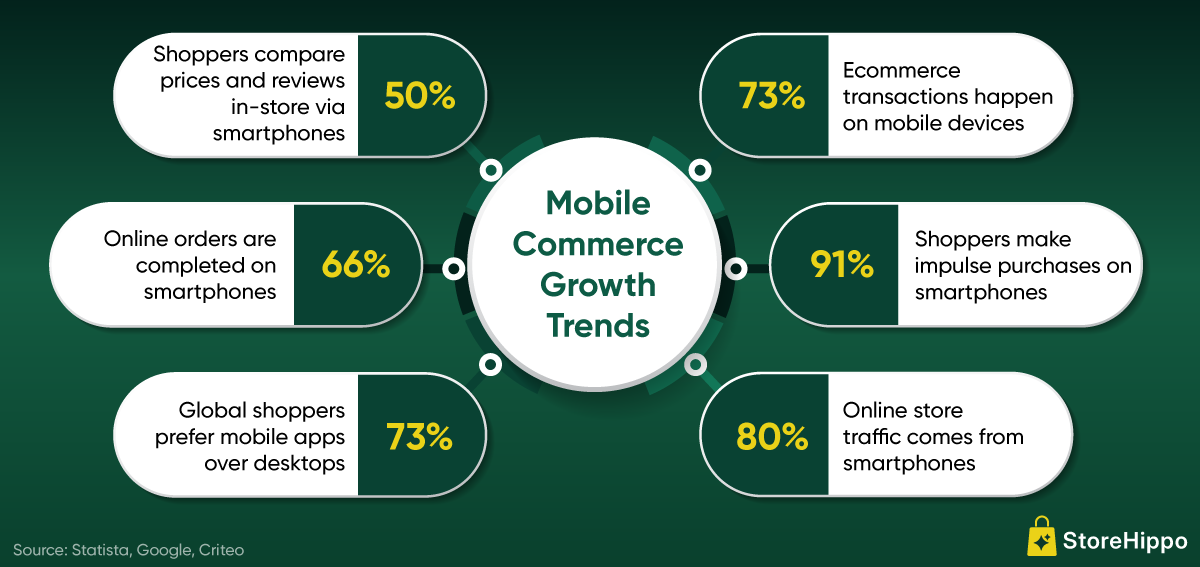
- 73% of ecommerce transactions happen on mobile devices
- 91% of shoppers make impulse purchases on smartphones
- 80% of online store traffic comes from smartphones
- 73% of global shoppers prefer mobile apps over desktops
- 66% of online orders are completed on smartphones
- 50% of shoppers compare prices and reviews in-store via smartphones
Source: Statista, Google, Criteo
Key takeaway: Customers are spending more time shopping on smartphones than on any other device. Online marketplaces that deliver seamless mobile experiences are better positioned to attract traffic, increase conversions, and drive repeat purchases.
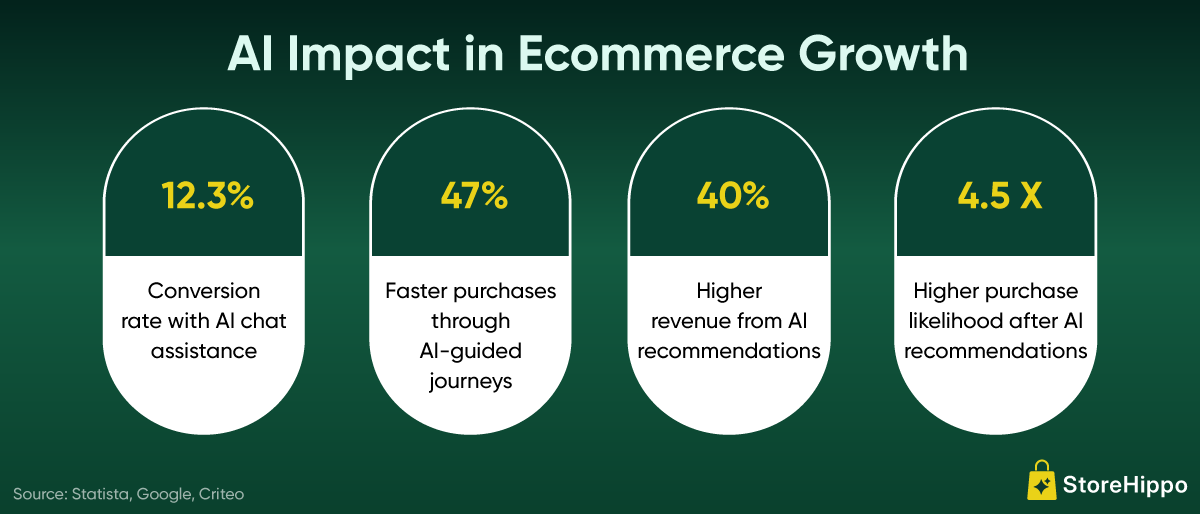
- 12.3% conversion rate with AI chat assistance
- 47% faster purchases through AI-guided journeys
- 40% higher revenue from AI recommendations
- 4.5x higher purchase likelihood after AI recommendations
Source: Rep AI, Cube AI, McKinsey
Key takeaway: AI is helping marketplaces turn mobile traffic into revenue more efficiently. From personalised recommendations to instant assistance, AI removes friction and helps customers find and buy products faster.
The numbers tell a clear story: customers now prefer mobile to shop online. From discovering new products and comparing prices to completing purchases, mobile phones now drive most customer interactions and purchase decisions, making mobile commerce the primary engine of marketplace growth
As customer expectations continue to rise, convenience alone is no longer enough. Shoppers expect every interaction to feel fast, relevant, and effortless. By combining the convenience of mobile commerce with AI-driven capabilities like personalised recommendations, smart search, and automated assistance, marketplaces can create better shopping experiences while driving higher engagement, conversions, and growth.
What Features Should a Mobile Ecommerce Website Must Have
A mobile ecommerce website needs more than just a responsive design to meet modern customer expectations. The right features help shoppers find products quickly, complete purchases easily, and enjoy a seamless experience across every touchpoint.
Here are the most essential features every mobile friendly ecommerce website should have:
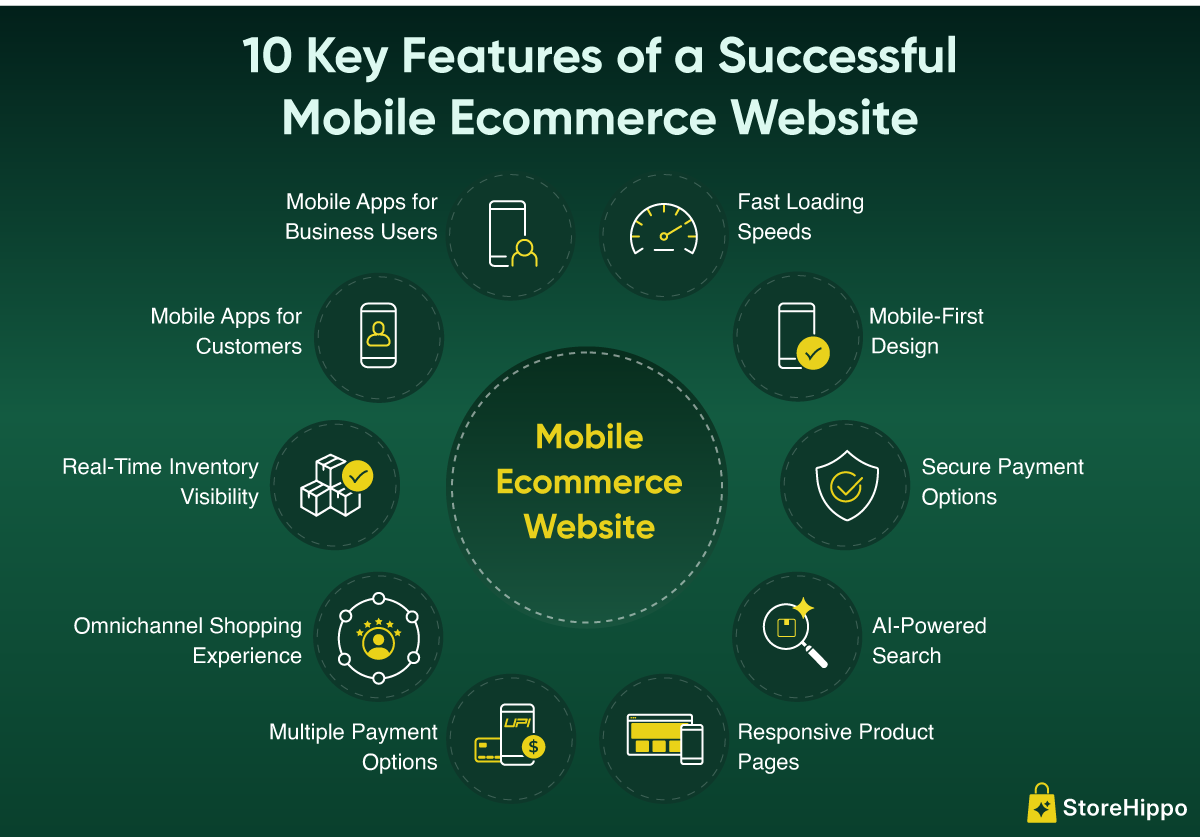
1. Fast Loading Speeds
Customers expect websites to load instantly. Even a small delay can lead to abandoned sessions and lost sales. Fast-loading pages keep shoppers engaged and create a smoother buying experience.
2. Mobile-First Design
A great mobile ecommerce website is built for smartphone users from the start. Simple navigation, touch-friendly interactions, and intuitive layouts make it easier for customers to browse and buy on smaller screens.
3. Secure Payment Options
Trust plays a critical role in online purchases. Offering secure payment methods such as UPI, cards, wallets, COD, and net banking helps customers complete transactions with confidence.
4. AI-Powered Search
Customers want to find products quickly without navigating endless menus. AI-powered search helps them discover relevant products faster through smarter queries, recommendations, and intent-based results.
5. Responsive Product Pages
Product pages should look and perform well across all screen sizes. Clear product information, high-quality images, and visible calls to action help customers make purchase decisions more easily.
6. Multiple Payment Options
Different customers prefer different payment methods. Offering a variety of payment choices on a mobile friendly ecommerce website can make checkout more convenient and help reduce cart abandonment.
7. Omnichannel Shopping Experience
Customers often interact with brands across multiple channels. A seamless experience across websites, mobile apps, social commerce, and physical stores helps create a more connected buying journey.
8. Real-Time Inventory Visibility
Nothing frustrates customers more than discovering a product is unavailable after they decide to buy. Real-time inventory updates help shoppers make informed decisions and improve trust.
9. Mobile Apps for Customers
Dedicated mobile apps for customers can offer faster performance, personalised experiences, and direct engagement opportunities that encourage repeat purchases and long-term loyalty.
10. Mobile Apps for Business Users
Ecommerce apps are equally important for business operations. Mobile apps for admins, vendors, sales teams, and delivery personnel help businesses manage orders, inventory, and customer interactions from anywhere.
7 Experiences That Separate Great Mobile Ecommerce From Average Mobile Commerce
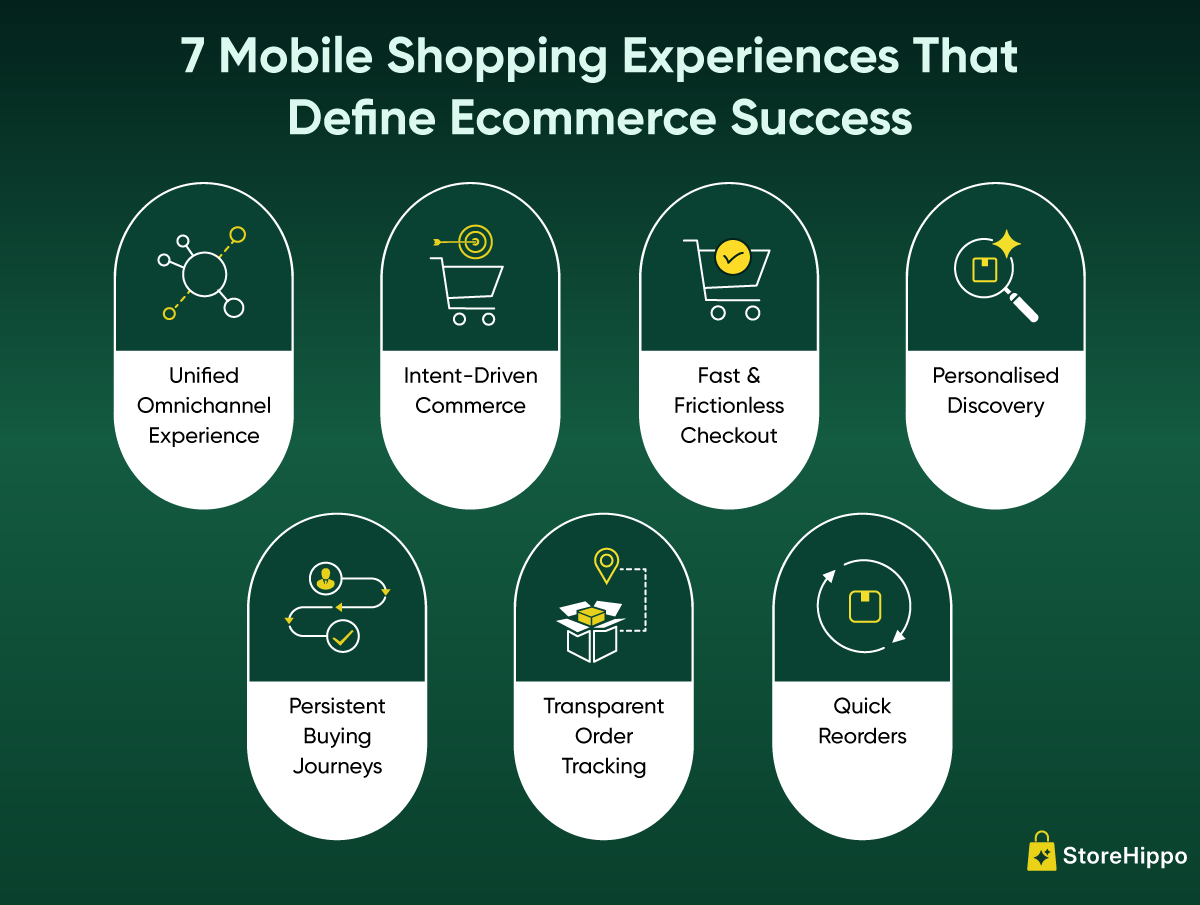
A great mobile ecommerce website in 2027 delivers connected, intelligent, and frictionless experiences that seamlessly guide customers from discovery to purchase and beyond.
Here are seven mobile commerce experiences that separate industry leaders from average mobile friendly ecommerce websites and shape how modern buyers expect to shop.
1. Unified Omnichannel Shopping Experience
Customers expect their shopping journey to continue smoothly, no matter how they interact with a brand. Whether they start on a mobile website, browse through an app, or connect through chat, the experience should feel connected.
The best mobile commerce experiences are those where customers never have to start over. Their cart, preferences, browsing history, and saved products move with them across every touchpoint.
For example, a customer may discover a product on your mobile ecommerce website, ask a question later through WhatsApp, and complete the purchase through your ecommerce app. At no point should they have to repeat information, search again, or rebuild their cart. The journey simply continues from where they left off.
This continuity removes friction and makes shopping feel effortless. Customers enjoy a smoother buying experience, while businesses benefit from higher engagement, conversions, and loyalty.
With built-in omnichannel capabilities, StoreHippo helps you create seamless customer journeys across websites, mobile apps, WhatsApp, and AI chat interfaces, delivering a consistent shopping experience at every touchpoint.
2. Commerce That Understands Buyer Intent
Customers do not always know exactly what product they want. Sometimes they are exploring options, comparing alternatives, looking for the best deals, or simply researching before making a decision. The best mobile commerce experiences understand these signals and help buyers move forward more easily.
Traditional mobile friendly ecommerce websites often rely on categories, filters, and keyword searches. Great mobile commerce platforms go beyond this. They analyse browsing behaviour, search patterns, purchase history, and real-time interactions to understand why customers are shopping and what they are most likely to need next.
For example, a customer searching for running shoes may have different needs and preferences. Rather than displaying endless product listings, the platform can recommend suitable products, related accessories, and helpful suggestions that make it easier for the customer to find the right choice.
This makes shopping faster, more relevant, and less overwhelming. Customers spend less time navigating through endless options and more time discovering products that genuinely meet their needs.
With StoreHippo's AI-native ecommerce platform, you can deliver intelligent product discovery, personalised recommendations, contextual search, and behaviour-driven buying journeys. By understanding customer intent in real time, StoreHippo helps you create more relevant shopping experiences on your mobile ecommerce website that drive engagement, conversions, and customer satisfaction.
3. Smooth and Fast Shopping and Checkouts
Mobile ecommerce speed is not just about page load times; it goes far beyond that.
Modern customers not only expect a fast website; they expect a smooth and predictable buying experience. They want to know whether a product is in stock, when it will be delivered, whether their payment was successful, and what happens after they place an order. The best mobile ecommerce experiences remove these uncertainties before they become frustrations.
For example, imagine a customer is ready to buy a product on your mobile commerce website. Before adding it to the cart, they can instantly see stock availability, delivery timelines, shipping charges, and applicable offers. Once they complete the payment, they receive immediate confirmation along with clear order updates. There is no guessing, no waiting, and no wondering whether the order actually went through.
This combination of speed, transparency, and instant feedback builds trust throughout the buying journey. Customers feel confident in their decisions, complete purchases faster, and are far more likely to return for future orders.
StoreHippo helps you deliver this level of seamless mobile shopping experiences on your commerce website with real-time inventory visibility, fast checkout flows, instant order confirmations, and integrated order management capabilities. By reducing uncertainty at every stage, StoreHippo helps brands create faster, smoother, and more conversion-focused mobile commerce journeys.
4. Personalised Discovery
Mobile screens are small. Customer attention spans are even smaller.
In such a scenario, the smartest brands don't try to show customers everything. They focus on helping shoppers discover the most relevant products quickly and effortlessly.
Modern customers expect shopping experiences that feel tailored to their needs. Showing the same products to every visitor often leads to decision fatigue and missed opportunities. The best mobile ecommerce platforms use AI to analyse customer behaviour, purchase patterns, browsing activity, and real-time interactions to surface the products most relevant to each shopper.
For example, when a customer who frequently shops for skincare products returns, the platform can instantly recommend relevant products, highlight trending items in their preferred category, suggest complementary products, and surface personalised offers. This helps customers find products that match their interests and shopping behaviour without having to browse through hundreds of options.
This is where the real shift happens.
When customers find relevant products faster, shopping becomes easier and more enjoyable. They spend less time evaluating endless options, make purchase decisions more confidently, and are more likely to complete their purchases. The result is higher engagement, better conversions, and stronger customer loyalty.
With StoreHippo's AI-native commerce engine, you can deliver intelligent product discovery through smart search, personalised offers, behaviour-based experiences, and AI-powered recommendations. By continuously learning from customer interactions, StoreHippo helps your customers discover the right products faster while helping you maximise conversions and customer lifetime value.
5. Capturing Undecided Buyers Early
Not every customer is ready to buy the moment they discover a product.
Customers often compare options, seek recommendations, or simply take time before making a decision. The best mobile commerce experiences recognise that buying journeys are rarely linear and give shoppers the flexibility to continue whenever they are ready.
For example, a customer may discover a product during a quick browsing session but decide to revisit it later. A great mobile commerce website makes this effortless through wishlists, persistent carts, save-for-later options, and seamless cross-device experiences that allow shoppers to pick up exactly where they left off.
Modern mobile ecommerce platforms can also use AI to intelligently re-engage customers with personalised reminders, contextual offers, relevant recommendations, or proactive assistance when they are most likely to continue their purchase journey.
When customers can buy on their own timeline, they remain engaged for longer and are more likely to return when they are ready to make a decision. The result is higher purchase intent, better retention, and improved conversions.
When you choose StoreHippo mobile-first ecommerce platform, you can give shoppers the flexibility to continue their buying journey whenever they are ready through wishlists, persistent carts, conversational engagement, and AI-powered customer experiences.
6. Transparent Order Tracking
The buying journey does not end when a customer clicks "Place Order." In many cases, that is when expectations become even higher.
Customers no longer want to track orders. They expect the platform to keep them informed automatically.
They want to know when an order is confirmed, when it is packed, when it has been shipped, whether there is a delay, and exactly when it is expected to arrive. The best mobile commerce experiences provide this information proactively, eliminating the need to search for updates or contact support.
For example, a customer places an order through your mobile ecommerce website. Within seconds, they receive an order confirmation. As the order moves through processing, shipping, and delivery, real-time notifications keep them informed at every stage. If there is a delay or change in delivery status, they are notified immediately and can access the latest information without leaving the mobile experience.
Leading mobile commerce platforms also empower customers with self-service capabilities such as checking delivery status, updating delivery preferences, or managing post-purchase requests directly from their mobile device.
This proactive visibility builds trust and confidence throughout the post-purchase journey. Customers feel informed and in control, while businesses benefit from fewer support queries and higher customer satisfaction.
With StoreHippo, you can deliver proactive post-purchase visibility through real-time shipment tracking, automated notifications, integrated logistics providers, and complete order visibility across channels. By keeping customers informed at every stage, you can create a more reliable and stress-free mobile commerce experience.
7. Quick Reorders And Bundled Purchases
Online Customers have become accustomed to convenience.
They order groceries in seconds, renew subscriptions automatically, and expect every digital experience to remember what they need. In such a scenario if your mobile commerce experiences still make repeat buyers search for the same products, rebuild carts, and recreate orders from scratch, they will go to your competitors, where ordering is easier.
The best mobile ecommerce experiences recognise that repeat purchases should feel different from first-time purchases. If a customer has bought a set of products before, they should be able to reorder them instantly. If certain products are frequently purchased together, the platform should proactively suggest them as a bundle instead of making customers search for each item individually.
For example, a customer who regularly orders inventory, office supplies, spare parts, or packaged goods should be able to repeat an entire order in a few taps. Similarly, when a buyer adds one product to the cart, the platform should intelligently surface complementary products that are commonly purchased together.
The goal is simple: reduce effort and accelerate decision-making.
When customers can reorder faster and discover relevant add-on products effortlessly, buying becomes more convenient. Businesses benefit from higher repeat purchase rates, larger cart values, and stronger customer retention.
StoreHippo helps you simplify repeat and bundled purchases with one-click reordering, product bundles, personalised recommendations, saved buying preferences, etc. By removing unnecessary steps, StoreHippo helps turn routine purchases into fast, frictionless mobile commerce experiences.
Conclusion
Mobile ecommerce is evolving from responsive shopping experiences to intelligent buying ecosystems. In 2027, the brands that win will be those that understand intent, personalise every interaction, remove friction from every step, and unify experiences across channels.
StoreHippo helps enterprises achieve this through AI and mobile-first architecture and a built-in mobile app builder where catalogues, discovery, and buying journeys work together seamlessly. It helps businesses scale faster and stay ahead in a mobile-first world.
Ready to win the mobile commerce advantage?
Explore how StoreHippo’s advanced features and built-in mobile app builder can take your brand ahead of the competition.
Book your personalised demo today.
FAQs
1. Why is mobile-first design important for ecommerce?
Mobile-first design is important for ecommerce because most online shopping journeys now begin and happen on smartphones. It helps businesses deliver faster, easier, and more convenient shopping experiences, improving engagement, conversions, and customer retention while ensuring consistent performance across devices and diverse network conditions.
2. What is the difference between a responsive website and a PWA?
A responsive website adjusts its layout to fit different screen sizes, while a Progressive Web App (PWA) delivers an app-like experience with faster loading, offline access, push notifications, and smoother interactions. PWAs help improve engagement and conversions by combining the reach of the web with the convenience of mobile apps.
3. Do ecommerce brands still need mobile apps?
Yes, ecommerce brands still need mobile apps because apps help drive higher engagement, repeat purchases, and customer loyalty than web-only experiences. Mobile apps offer faster performance, personalised experiences, push notifications, and easier access, making them an important channel for brands looking to scale customer retention and lifetime value.
4. How does AI improve the mobile shopping experience?
AI improves the mobile shopping experience by making product discovery, recommendations, and customer interactions more relevant and personalised. It helps shoppers find products faster, receive tailored suggestions, get instant assistance, and enjoy smoother buying journeys, leading to higher engagement, satisfaction, and conversion rates.
5. What payment options should a mobile ecommerce website support?
A mobile ecommerce website should support multiple payment options, including UPI, credit and debit cards, net banking, digital wallets, COD, and international payment methods where relevant. Mobile ecommerce websites should offer flexible payment choices to reduce checkout friction, improve convenience, and help increase conversion rates across diverse customer segments.
6. How can businesses reduce cart abandonment on mobile devices?
Businesses can reduce cart abandonment on mobile devices by simplifying the checkout process, offering fast-loading pages, enabling guest checkout, providing multiple payment options, and minimising unnecessary form fields. A seamless mobile experience reduces friction during purchase, helping improve conversions and increase completed transactions.
7. Can one mobile-first ecommerce platform manage websites, mobile apps and WhatsApp commerce?
Yes, one mobile-first ecommerce platform can manage websites, mobile apps, and WhatsApp commerce by centralising products, inventory, orders, customer data, and business operations in a single system. This ensures a consistent shopping experience across channels while reducing operational complexity, improving efficiency, and making it easier for businesses to scale omnichannel commerce.
8. What features should enterprise brands look for in a mobile ecommerce platform?
Enterprise brands should look for a mobile ecommerce platform that offers mobile-first design, PWA support, a built-in mobile app builder, omnichannel capabilities, AI-driven personalisation, flexible integrations, strong security, and scalability. These features help deliver seamless customer experiences, improve operational efficiency, and support long-term business growth across multiple channels and markets.
9. How does mobile commerce impact conversion rates?
Mobile commerce improves conversion rates by making it easier for customers to browse, discover, and purchase products anytime and anywhere. Fast-loading pages, streamlined navigation, personalised experiences, and frictionless checkout processes reduce purchase barriers, helping businesses increase completed transactions and overall revenue.
Binny Joseph is a seasoned ecommerce and enterprise growth leader, serving as Senior Vice President of Sales & Alliances with deep experience helping global brands adopt modern commerce solutions. He writes from hands-on experience, helping businesses understand how to build and scale mobile-first ecommerce platforms that drive growth in the global digital commerce landscape.